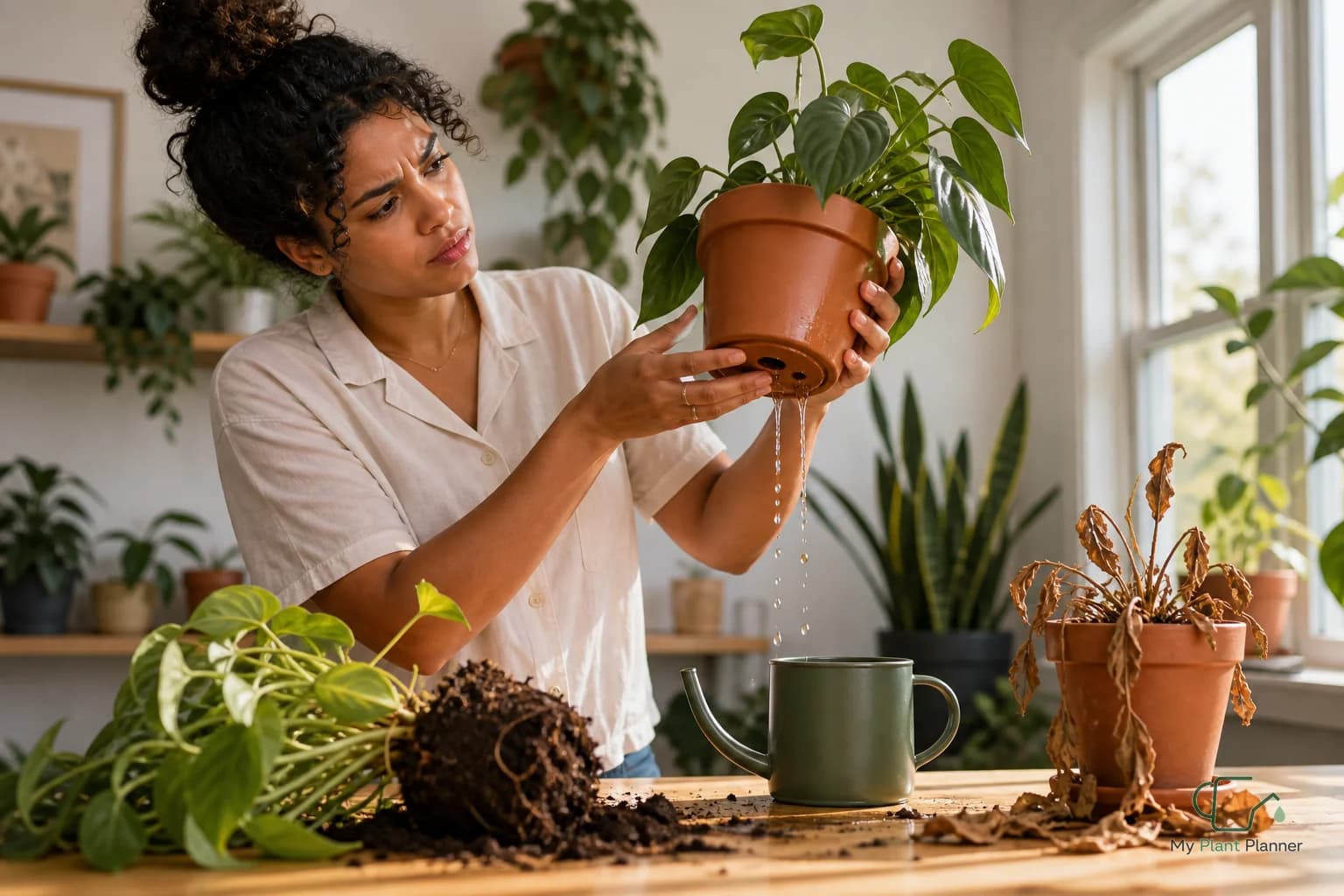
A plant that is soaked one week and crispy the next is frustrating because both problems can look like neglect. Limp leaves, curled edges, yellowing, dry tips, and sad stems do not point to one neat answer.
They point to a watering rhythm that is out of sync with the plant and the room.
The direct answer
If your indoor plant goes from soggy to bone dry, you are probably watering by reaction instead of using a check window.
The fix is not to pick a stricter weekly schedule. It is to set a window for when you check the plant, then water only if the soil and pot tell you it is ready.
For many common leafy houseplants, a reasonable starting check window might be every 5 to 10 days in bright light, warm rooms, or smaller pots. In lower light, cooler rooms, plastic pots, dense soil, or larger pots, that same plant may need checking closer to every 10 to 21 days.
That is not a watering promise. It is a reminder window. The plant still gets the final vote.
Why the swing happens
The soggy then dry cycle usually comes from one of these context shifts.
Light changes drying speed
Bright indirect light helps a plant use water faster. Low light slows the whole system down. If you keep watering a low light plant like it lives beside a bright window, the soil can stay wet too long.
If the plant later gets a warmer week, more sun, or stronger airflow, the top of the pot may dry fast and make you feel behind again.
For a deeper look, read How light level changes your indoor plant watering schedule.
Pot size changes the root zone
A small pot dries faster because there is less soil holding water. A large pot can stay wet around the roots even when the top looks dry.
This is where people get fooled. A dry surface does not always mean a dry root zone. In a deep or oversized pot, the bottom half can still be damp.
See How pot size affects indoor plant watering frequency if your plant recently moved into a bigger container.
Drainage changes everything
Water needs a way out. A pot with no drainage hole, a decorative cachepot that holds runoff, or a saucer left full of water can keep roots sitting wet longer than expected.
That wet stretch can stress the plant. Then the owner sees sad leaves and waters again. The cycle gets worse.
Soil mix can hold too much water
Dense, compacted soil behaves differently from a chunky mix with perlite, bark, or other air pockets. Heavy soil may look fine on top while staying wet lower down.
If you always feel like the pot is either swampy or rock dry, the mix may be part of the problem.
Indoor climate is not steady
Air conditioning, heaters, fans, humid rooms, dry rooms, summer sun, winter darkness, and closed blinds all change how quickly soil dries.
This is why fixed schedules fail. Your calendar does not know your room got colder.
Common mistakes that make it worse
Watering every time leaves look tired
Leaves can droop from dry soil. They can also droop when roots are stressed from staying wet. Soft or sad leaves are a clue, not permission to pour.
Check the soil first.
Giving tiny sips
Small sips can wet the top layer while leaving deeper roots dry. Then the plant looks thirsty again quickly, so you water again, but never evenly.
When the plant is ready, water thoroughly until excess drains out. Then empty the saucer or outer pot.
Waiting until the whole pot is bone dry
Some plants tolerate a full dry down better than others. Snake plants, ZZ plants, and many succulents can handle longer dry stretches. Peace lilies, pothos, monsteras, and many leafy tropical plants usually prefer not to be left crispy dry for long.
The tradeoff is simple: watering too soon can keep roots wet, but waiting too long can stress leaves and stems. You are aiming for ready, not punished.
Trusting only the top inch
The top inch rule is useful in small pots. It gets weaker in large, deep, or dense pots.
Use more than one signal: soil feel, pot weight, drainage behavior, and how long the pot has stayed damp.
Questions to check before you water
Ask these before adding water:
- Is the top soil dry, damp, or still cool and moist?
- If I check a little deeper, does the root zone still feel damp?
- Does the pot feel light compared with right after watering?
- Is this plant in bright indirect light, low light, or direct sun?
- Is the pot large for the plant size?
- Does water drain freely from the bottom?
- Has the room recently changed because of heat, AC, fans, or season?
- Did the plant improve after the last watering, or did it look worse?
One answer rarely tells the whole story. A light pot plus dry soil is stronger evidence than a droopy leaf by itself.
A simple reset checklist
Use this for the next two or three watering cycles.
- Pick a check window based on the plant and room, not a fixed watering day.
- Check soil moisture before watering.
- Feel the pot weight when freshly watered so you know what heavy feels like.
- Feel it again a few days later so you learn the dry weight.
- Water thoroughly only when the plant is ready.
- Let excess water drain out fully.
- Empty the saucer or decorative outer pot.
- Write down what happened so you can adjust the next check window.
If the soil is still wet when your reminder goes off, wait. If it is drying faster than expected for two cycles in a row, shorten the check window slightly.
When to be more cautious
Be slower with water if the plant is in low light, a large plastic pot, a cool room, or dense soil. These conditions can make wet soil linger.
Be ready to check sooner if the plant is in bright light, a warm room, a small terracotta pot, or near steady airflow. These conditions can dry a pot faster.
Do not use this article to diagnose pests, disease, or permanent damage. Watering rhythm is one common cause of soggy then crispy stress, but it is not the only possible cause.
Give the plant a cleaner pattern
Most indoor plants do better with a repeatable check habit than a dramatic rescue pour.
Check within a sensible window. Confirm with soil and pot weight. Water fully when needed. Let it drain. Adjust after a couple of cycles.
That is calmer than guessing, and it gives your plant a better shot at settling into your actual home.
Want a starting check window based on plant type, light, pot size, season, and indoor climate? Try My Plant Planner.
Practical note
This article is general indoor plant care information. Watering windows are starting points, not guarantees. Your plant, pot, soil, light, season, and home climate can all change the right timing.
My Plant Planner gives general indoor plant-care guidance. Always check soil and plant condition before watering.