August 31, 2026/5 min read
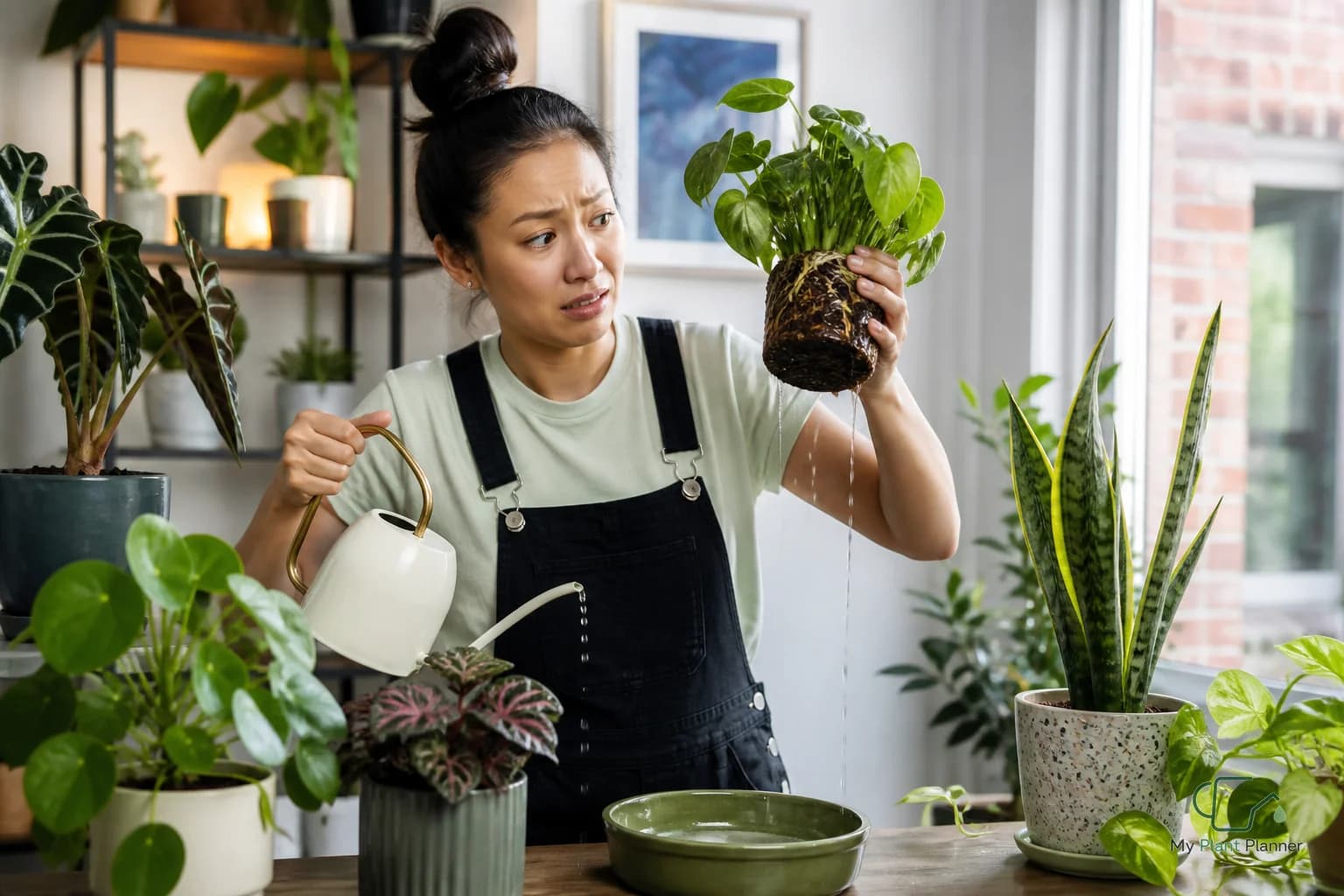
What yellow leaves and crispy edges say about watering
Yellow leaves and crispy edges do not always mean the same watering fix. Check soil depth, drainage, light, and recent watering before changing your routine.
August 30, 2026/4 min read
Weekly Review: Stop Watering the Drama
Droopy leaves, dry topsoil, missed checks, and the overwatering reset that keeps things calm.
August 29, 2026/5 min read
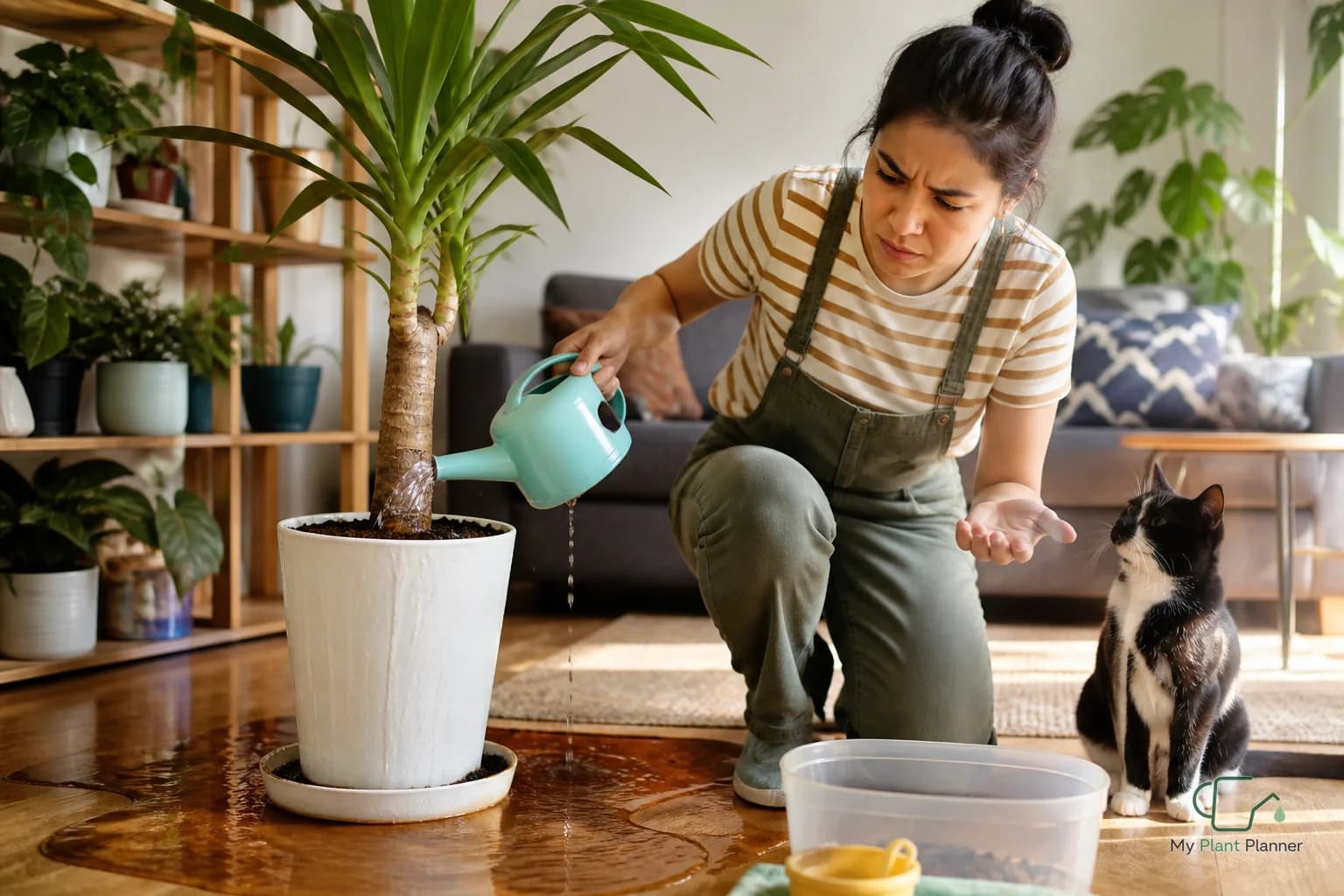
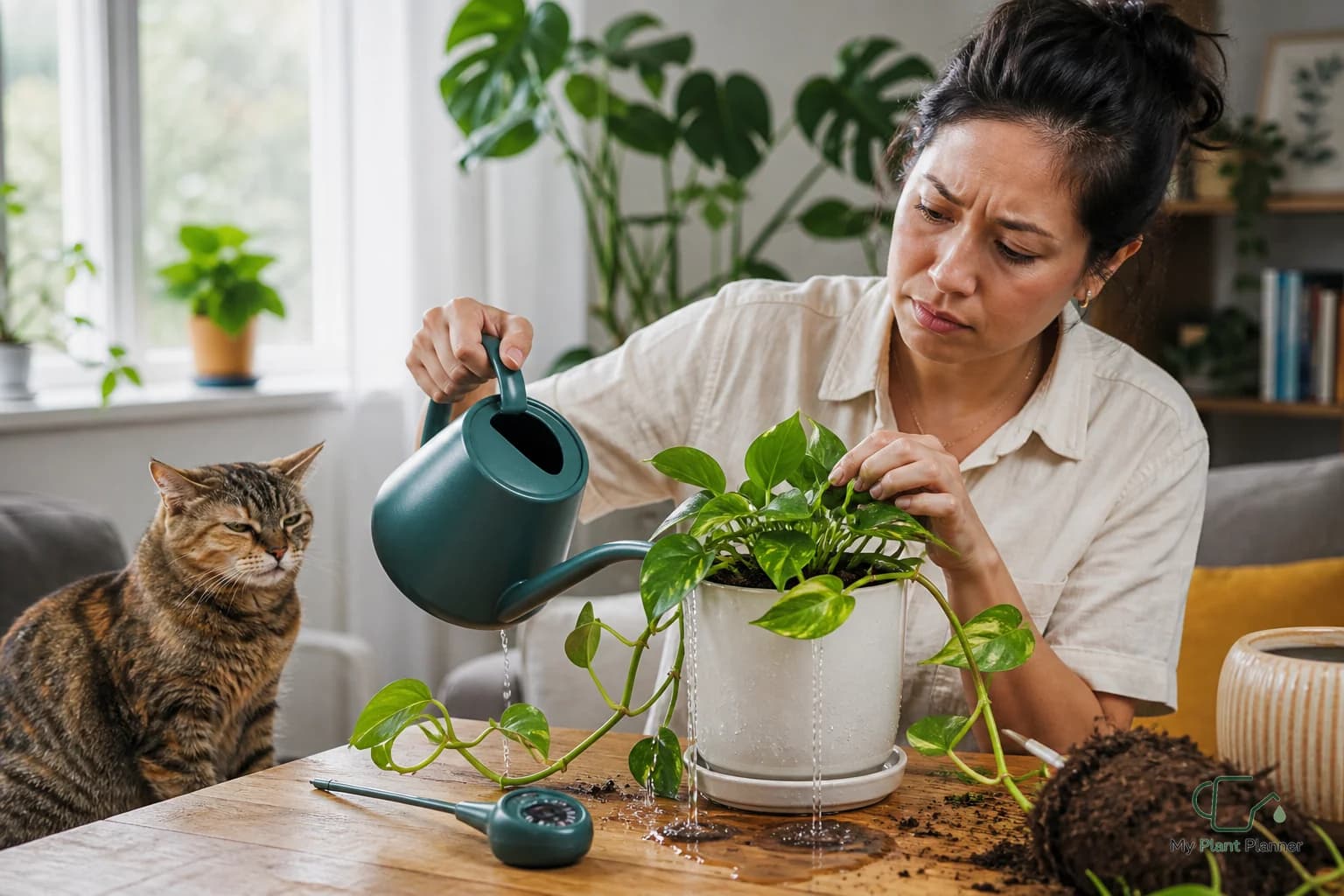
What to do after you accidentally overwater a houseplant indoors
Accidentally overwatering a houseplant is usually fixable if you drain the pot, stop overcorrecting, and reset the next watering check around the soil, plant, light, and pot.
August 28, 2026/5 min read
Before you water a struggling houseplant, check these three things
A simple three point check to use before watering a houseplant that looks droopy, tired, or off.
August 27, 2026/5 min read
How to get back on track after missing a houseplant watering check
Missed a watering check? Do not panic water everything. Use soil depth, pot weight, drainage, and plant type to set a safer next check window.
August 26, 2026/5 min read
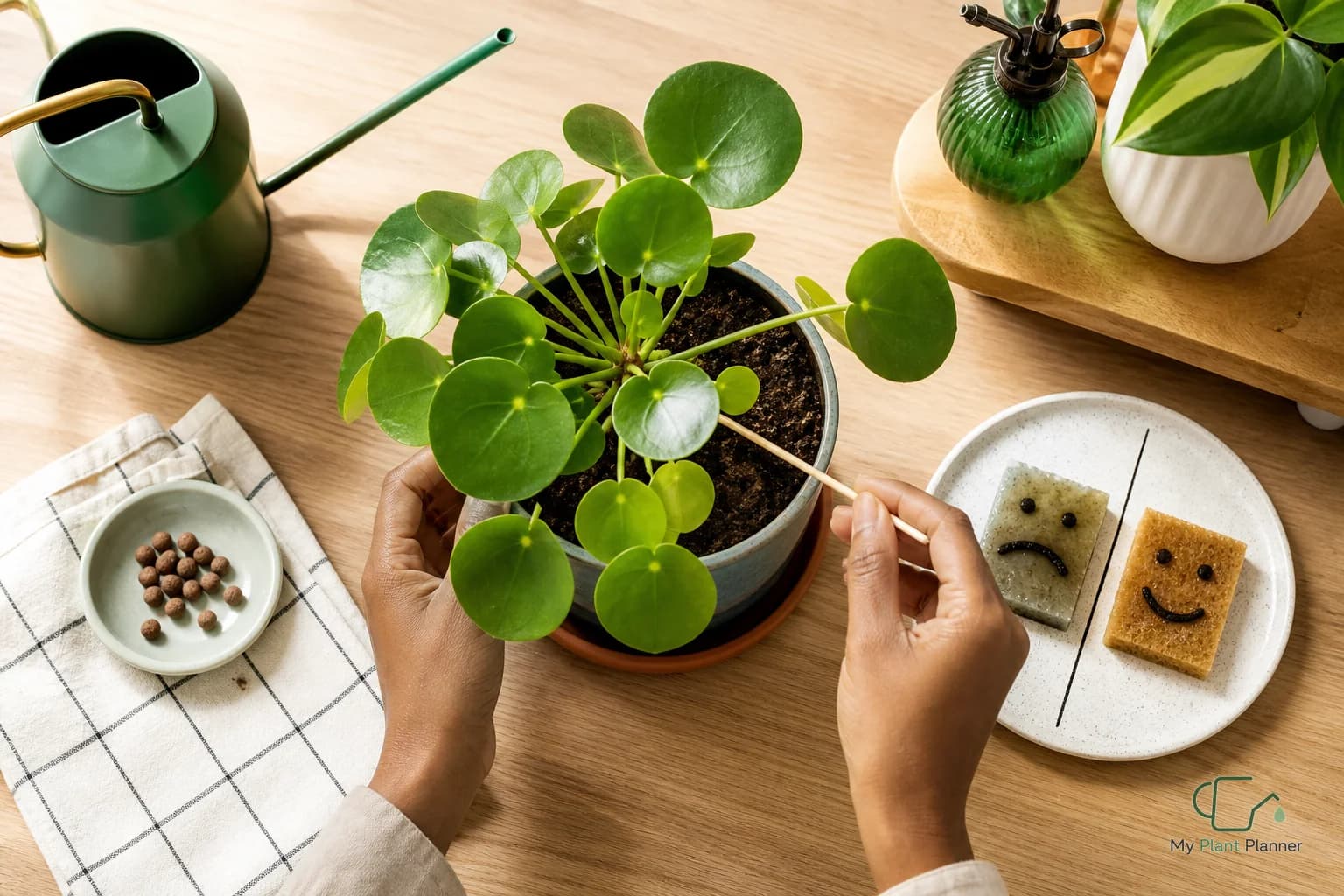
Top inch dry does not always mean your houseplant needs water
A dry top inch is a clue, not a command. Learn how to check the root zone before watering your indoor plants.
August 25, 2026/5 min read
Why leaf symptoms alone are bad watering advice
Leaf symptoms are clues, not watering instructions. Learn what to check before you add more water to a stressed indoor plant.
August 24, 2026/5 min read
Why overwatering and underwatering look alike indoors
Droopy leaves do not automatically mean a houseplant needs water. Learn why overwatering and underwatering can look similar, and what to check before you decide.
August 23, 2026/4 min read
Weekly Review: Stop Watering by Calendar Guilt
Use pot weight, soil depth, and room conditions to find a better watering check window.
August 22, 2026/5 min read
How to use pot weight to decide when to water indoor plants
Pot weight is one of the simplest ways to catch watering problems early. Use it with soil checks, light, pot size, and season to build a safer indoor watering rhythm.
August 21, 2026/5 min read
Stop switching your houseplant between too much water and not enough
A simple way to stop bouncing between soggy soil and dry leaves: use a watering check window, then let the plant and pot decide.
August 20, 2026/5 min read
Why the same watering schedule fails in different rooms
A watering schedule that works in one room can be too wet or too dry in another. Use room conditions to set a better check window.
August 19, 2026/5 min read
How to tell when watering is making your houseplant worse
A stressed houseplant is not always asking for water. Learn the checks that show when watering may be making the problem worse.
August 18, 2026/5 min read
Why your indoor plant goes from soggy to bone dry
Learn why indoor plants can swing from soggy soil to crispy dry stress, and how to reset with a practical watering check window.
August 17, 2026/5 min read
When to wait before watering an indoor plant
A simple way to decide when waiting is smarter than watering, especially when leaves look tired but the soil is not ready.
August 16, 2026/4 min read
Weekly Review: Stop Watering Sad Leaves on Sight
Soft leaves, yellow leaves, and damp soil can all point in different directions. Check before you pour.
August 15, 2026/5 min read
How to fix a houseplant watering routine that is not working
If your watering routine keeps missing the mark, stop chasing a perfect day. Build a check window around the plant, pot, light, and room instead.
August 14, 2026/5 min read
Dry soil or wet roots: how to decide if your indoor plant needs water
A droopy plant is not always thirsty. Learn how to read soil, pot weight, light, and drainage before deciding whether to water.
August 13, 2026/5 min read
Why soft houseplant leaves do not always mean more water
Soft leaves can point to dry soil, wet soil, low light, or a pot that is staying heavy too long. Here is how to check before you water.
August 12, 2026/5 min read
How to set a watering check window for indoor plants
A watering check window gives indoor plant owners a safer starting point than a fixed weekly watering day.
August 11, 2026/5 min read
Why houseplant leaves turn yellow after watering
Yellow leaves after watering can point to wet soil, low light, poor drainage, natural leaf aging, or recovery from dryness. Here is how to check before watering again.
August 10, 2026/5 min read
Why your houseplant looks thirsty when the soil is still wet
Sad leaves and wet soil do not always mean your plant needs more water. Learn what to check before watering again.
August 9, 2026/4 min read
Weekly Review: Stop Watering Sad Plants on Autopilot
A practical check window for plants that look thirsty but may not need water yet.
August 8, 2026/5 min read
Why is my houseplant soil still wet after a week?
Soil that stays wet for a full week is a watering signal, not a command to panic. Here is what to check before you water again.
August 7, 2026/5 min read
Should you water a drooping houseplant?
Drooping leaves can mean dry soil, wet roots, heat stress, or a recent change. Here is how to check before you water.
August 6, 2026/5 min read
Is your houseplant overwatered or underwatered
Droopy leaves do not always mean more water. Learn how to compare soil moisture, leaf texture, pot weight, drainage, and indoor conditions before you decide.
August 5, 2026/5 min read
How often should you water an aloe vera indoors
Aloe vera does not need a weekly watering habit. Start with a dry soil check window, then adjust based on light, pot size, season, and drainage.
August 4, 2026/5 min read
How often should you water a spider plant indoors
Spider plants usually need a flexible watering check window, not a fixed weekly routine. Here is how to adjust for light, pot size, season, and soil dryness.
August 3, 2026/5 min read
How often should you water a calathea indoors
Calatheas like moisture, but they still need air around their roots. Learn a safe indoor watering check window and what to adjust first.
August 2, 2026/4 min read
Weekly Review: Your plant does not know it is Sunday
Philodendrons, fiddle leaf figs, ZZ plants, monsteras, and the watering mistake hiding in plain sight.
August 1, 2026/5 min read
How often should you water a philodendron indoors
Philodendrons do better with a watering check window than a fixed calendar day. Here is how to adjust by light, pot size, season, and indoor climate.
July 31, 2026/5 min read
How often should you water a fiddle leaf fig indoors
A practical fiddle leaf fig watering guide for indoor growers who want a safer check window instead of a rigid weekly schedule.
July 30, 2026/5 min read
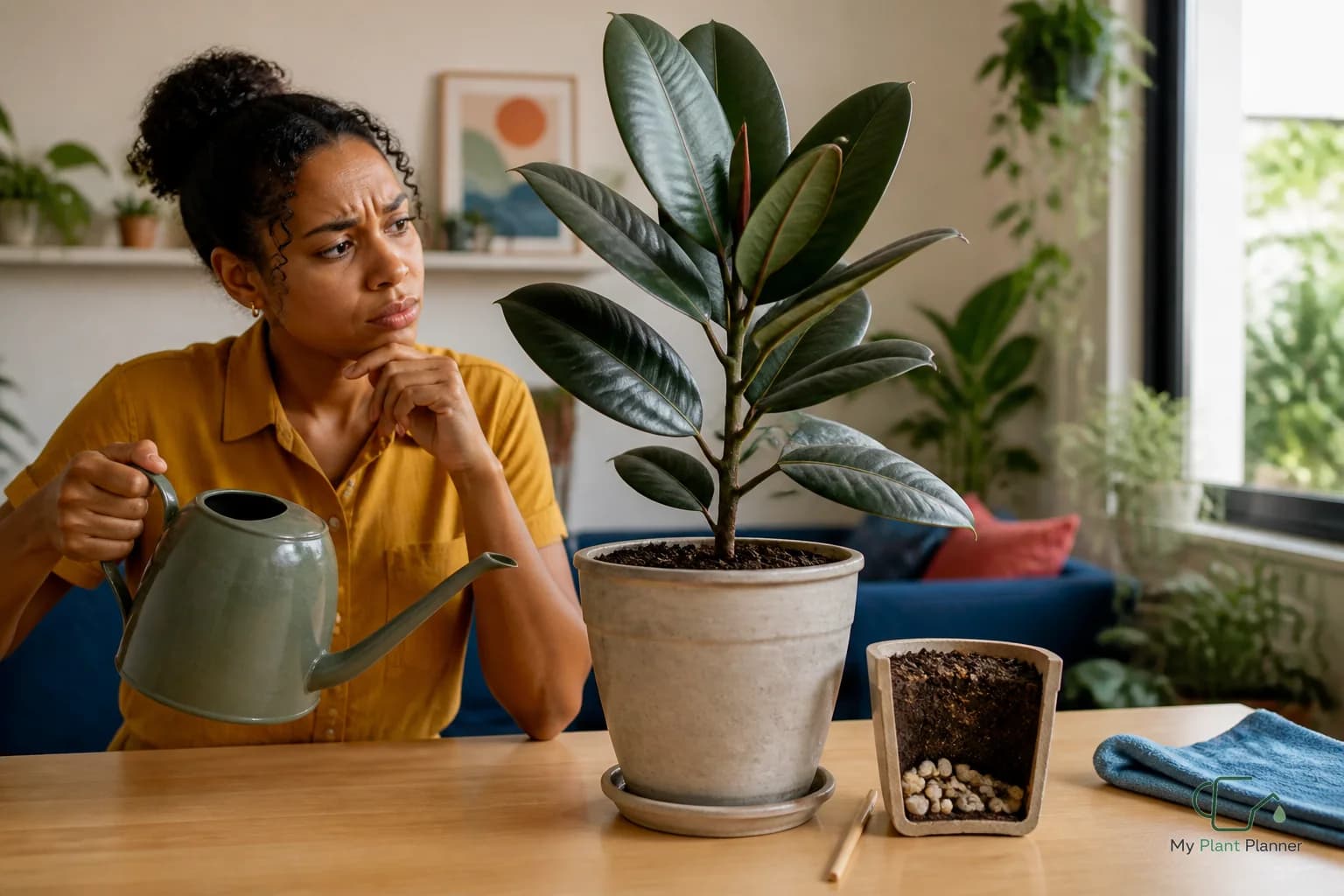
Rubber plant watering: how to set a safe indoor check window
A practical rubber plant watering guide for setting a safe indoor check window, reading the soil, and avoiding the weekly watering trap.
July 29, 2026/5 min read
How often should you water a ZZ plant indoors
ZZ plants are built to handle dry stretches. Start by checking every 2 to 4 weeks, then water only when the soil is dry well down into the pot.
July 28, 2026/5 min read
How often should you water a monstera indoors
Monsteras like a thorough drink, then a real drying period. Start with a check window based on light, pot size, season, and indoor climate instead of watering by habit.
July 27, 2026/5 min read
Underwatering signs in common houseplants
Underwatering is not just droopy leaves. Learn the soil, pot, and leaf clues that help you decide when an indoor plant is actually ready for water.
July 26, 2026/4 min read
Weekly Review: Stop Watering on Autopilot
A weekly plant care review about replacing autopilot watering with soil depth, pot weight, light, and plant-specific checks.
July 25, 2026/5 min read
How pot size affects indoor plant watering frequency
Pot size changes how fast indoor plant soil dries. Use it to set a smarter watering check window, then confirm with the soil before watering.
July 24, 2026/5 min read
What time of day should you water indoor plants
Morning is usually the safest time to water indoor plants, but the soil still gets the final vote.
July 23, 2026/5 min read
Overwatering signs in common houseplants
Overwatering is not just watering too much once. Learn the signs, the context that changes risk, and how to adjust your next watering check.
July 22, 2026/5 min read
How light level changes your indoor plant watering schedule
Light changes how quickly indoor plants use water. Use bright, medium, or low light to set a smarter watering check window.
July 21, 2026/5 min read
How to tell if an indoor plant needs water
A practical guide to checking soil depth, pot weight, leaf behavior, light, pot size, and indoor climate before watering houseplants.
July 20, 2026/5 min read
Why watering houseplants once a week is often too much
A practical guide to replacing automatic weekly watering with soil checks, pot weight, light level, season, and drainage cues.
July 19, 2026/4 min read
Weekly Review: Check Before You Pour
A weekly plant care review with practical watering check windows for peace lily, pothos, and snake plant, plus a reminder to check before you pour.
July 19, 2026/5 min read
How often should you water a peace lily indoors
Peace lilies droop dramatically, but drooping is not always a watering command. Start with a check window and let soil moisture confirm when to water.
July 18, 2026/5 min read
How often should you water pothos
A practical pothos watering guide for indoor homes, with check windows that adjust for light, pot size, season, and soil dryness.
July 17, 2026/5 min read
How often should you water a snake plant indoors
Snake plants can handle dry stretches, but soggy soil causes trouble. Start with a 2 to 4 week check window and water only when the pot has dried well.