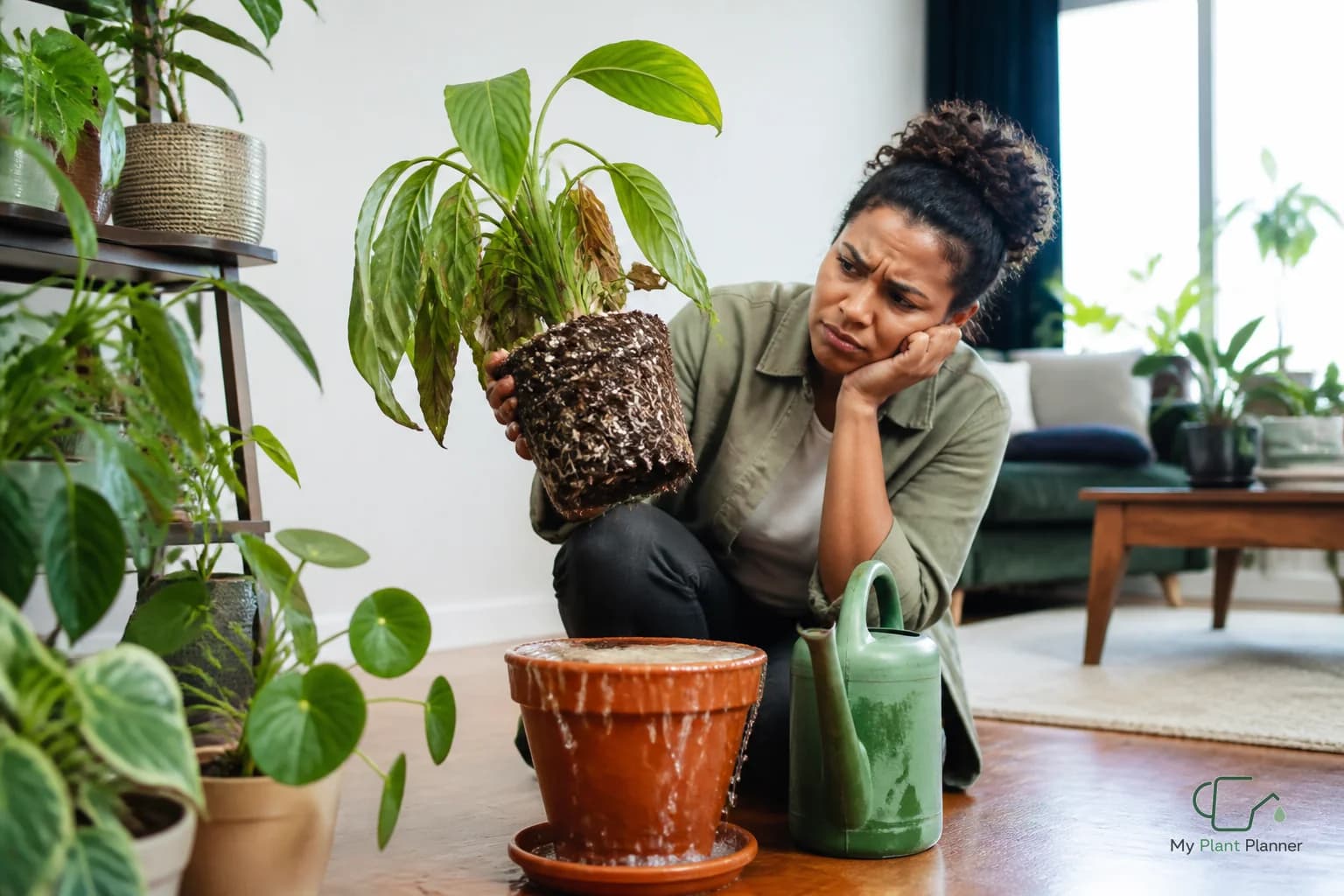
If your houseplant looks limp, curled, or tired while the potting mix still feels damp, the obvious move is to water it. That move can backfire.
Leaves can look thirsty for more than one reason. Sometimes the plant is dry. Sometimes the roots are sitting in wet soil and struggling to take up water well. The symptoms can look annoyingly similar from across the room.
This is where a lot of plant owners get pushed into a bad loop: sad leaves, more water, wetter soil, sadder leaves.
Direct answer
A houseplant can look thirsty while the soil is still wet because wet soil does not automatically mean the plant is using that water well.
Roots need air as well as moisture. When potting mix stays wet for too long, the spaces that normally hold oxygen can stay filled with water. That can make the plant act stressed even though the pot is not dry.
So the safest answer is not water again right away. Treat wet soil plus thirsty-looking leaves as a pause signal. Check the soil depth, pot weight, drainage, light level, and recent indoor conditions before adding more water.
You are not trying to find a perfect watering date. You are trying to find a practical next check window.
Why wet soil can still lead to thirsty-looking leaves
The plant care internet makes this sound cleaner than it is. Dry plant equals droopy leaves. Wet plant equals yellow leaves. Real homes are messier.
A plant may look thirsty while the soil is wet when:
- The lower part of the pot is still damp even if the top feels only slightly moist.
- The potting mix is dense and dries slowly.
- The pot has poor drainage or a saucer holding leftover water.
- The plant is in lower light, so it is using water slowly.
- The room is cooler than usual, especially near a window or air conditioner.
- The plant was watered on a calendar instead of after a soil check.
- The plant type naturally prefers to dry more between waterings.
That last one is a big one. A snake plant, ZZ plant, pothos, peace lily, and calathea do not all want the same rhythm. Treating them like they do is how people turn a helpful routine into a soggy one.
If you want a refresher on checking the plant instead of guessing from the leaves, read How to tell if an indoor plant needs water.
The context factors that change your next check window
When soil is still wet, do not only ask when did I water last. Ask why has it stayed wet.
Light is usually the first place to look. Plants in bright indirect light often use water faster than the same plant tucked across the room. A pothos near a bright window and a pothos in a dim hallway may need very different check windows.
Pot size matters too. A small plant in a big pot has more wet mix around the roots than it can use quickly. That does not mean the plant is doomed. It does mean the next watering check should probably be later, not sooner.
Indoor climate also changes the pace. Summer heat, winter heating, air conditioning, humidity, and cool rooms all shift how fast the soil dries. A schedule that worked in June may be too aggressive in a cool, low light room in November.
Drainage is the blunt one. If water cannot leave the pot, or if the saucer stays full, the plant is not getting a normal wet and dry cycle. It is sitting in a wet pocket.
For a deeper look at slow drying soil, see Why is my houseplant soil still wet after a week?.
Common mistakes when leaves look sad
The biggest mistake is treating sad leaves as a watering order.
Drooping, curling, soft leaves, and dull leaves can show up with both dry and overly wet soil. They are clues, not instructions.
Another mistake is checking only the surface. The top inch can dry while the lower pot stays damp. This happens a lot in deeper pots, decorative cachepots, and dense mixes.
A third mistake is using tiny sips to avoid overwatering. Small splashes can wet the top but fail to give the root zone a clean, even watering when the plant actually is ready. Then the owner waters more often, the top stays weirdly damp, and the roots never get a clear cycle.
And yes, the once a week habit causes trouble here. Weekly watering feels responsible because it is easy to remember. But the plant does not care what day it is.
Questions to check before you water again
Before adding water to a plant that already has damp soil, run through these questions:
- Is the top only dry, or is the soil still damp 2 inches down?
- Does the pot feel heavy compared with when it is ready for water?
- Is there water sitting in the saucer or decorative outer pot?
- Has the plant been in lower light than usual lately?
- Is the room cooler, more humid, or less airy than usual?
- Is this a plant that prefers to dry down more, like a snake plant or ZZ plant?
- Did the leaves change right after watering, or were they already declining before?
If several answers point toward slow drying, wait and check again. If the soil is evenly dry at the correct depth for that plant type, then water thoroughly and let excess drain away.
Simple reset checklist
Use this when the plant looks thirsty but the soil is still wet:
- Pause before watering again.
- Check moisture below the surface with a finger, wooden skewer, or moisture meter.
- Lift the pot and compare its weight to how it feels when dry.
- Empty any water from the saucer or decorative outer pot.
- Make sure the pot has drainage holes.
- Move the plant closer to bright indirect light if that fits the plant type.
- Check again in 2 to 4 days instead of watering immediately.
- After the next two watering cycles, adjust your check window earlier or later based on how fast the soil actually dries.
That last step is where confidence comes from. Not from memorizing one schedule, but from watching the same plant through a couple of cycles.
When to be more cautious
If the soil stays wet for many days, the pot smells sour, stems feel mushy, or the plant keeps declining after you stop watering, do not assume one more drink will fix it. Those signs can point to a root zone problem, but you cannot diagnose the full issue from one symptom.
At that point, inspect the pot, drainage, and roots if you are comfortable doing that. If the plant is valuable or declining fast, get local help from a nursery or experienced plant person.
For most casual plant owners, though, the first fix is simpler: stop letting leaves boss you around. Wet soil means slow down, check deeper, improve drainage, and set a calmer next check window.
If you want a starting point based on plant type, light, pot size, season, and indoor climate, try My Plant Planner. It will not promise an exact watering date, but it can give you a practical window for when to check next.
Practical note
This article is general indoor plant care information. Watering windows are starting points, not guarantees. Your plant, pot, soil, light, season, and home climate can all change the right timing.
My Plant Planner gives general indoor plant-care guidance. Always check soil and plant condition before watering.