
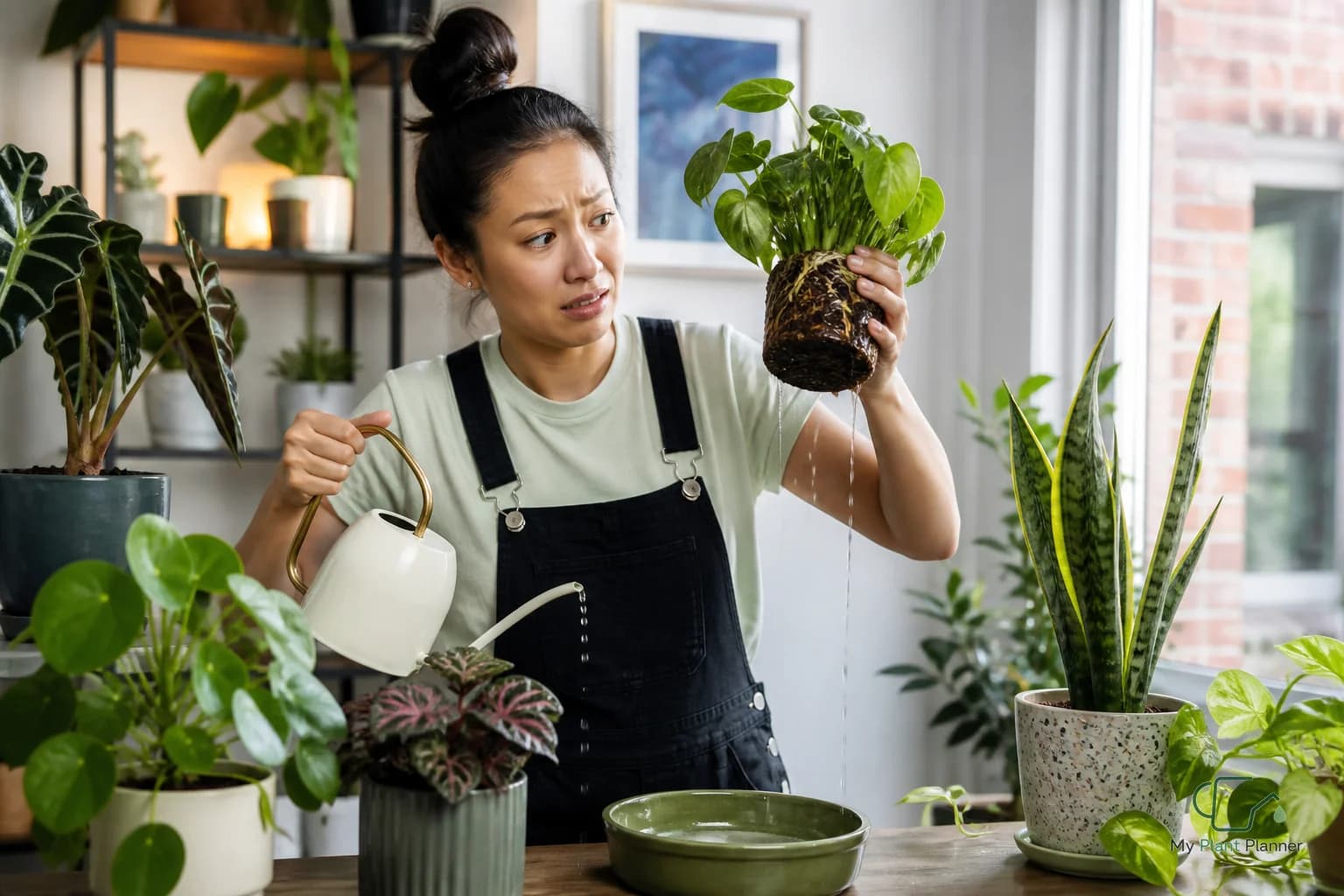
Watering once a week sounds neat. It fits a calendar. It feels like you are being consistent. The problem is that plants do not dry out because seven days passed. They dry out because light, roots, pot size, soil, temperature, airflow, and season pulled moisture from the pot.
For some houseplants, a weekly drink is fine during active growth in bright light. For others, it is how you slowly turn decent care into soggy roots.
Direct answer
Weekly watering is too much for some houseplants because their pots have not dried enough by day seven. If the soil is still damp below the surface, adding more water can keep the root zone wet for too long.
That does not mean you should ignore your plants for weeks. It means the weekly habit should become a weekly check, not an automatic watering day.
A better pattern is: check the soil, feel the pot weight, look at the plant, then decide whether to water. My Plant Planner uses this same idea with watering check windows. The window gives you a sensible time to inspect the plant, not a promised watering date.
If you want the broader framework, read How to set a watering check window for indoor plants.
The factors that make weekly watering risky
The same plant can need different timing in two homes, or even two rooms. These are the big variables.
Low light slows water use. A pothos across the room from a window will usually dry more slowly than one near bright indirect light. Less light means less growth and less water movement.
Large pots stay wet longer. Extra soil holds extra moisture. A small plant in a big decorative pot may look fine on top while the lower soil stays damp.
Cool rooms slow drying. Winter rooms, basements, offices, and drafty corners often keep soil wet longer than expected.
Dense soil holds water. Heavy mixes can stay damp even when the top inch looks dry. That is why surface checks can mislead you.
Some plants are built for slower watering. Snake plants, ZZ plants, aloe, and many succulent leaning plants often prefer longer dry down periods than leafy tropical plants. A weekly drink can be too frequent, especially in lower light. For a plant specific example, see How often should you water a ZZ plant indoors.
What people get wrong about consistency
Consistency is useful. Rigidity is not.
A fixed weekly schedule treats every week like the plant used the same amount of water. It probably did not. A cloudy week, a cooler room, a larger pot, or a slower season can all stretch the drying time.
The tradeoff is simple: calendar watering feels easier, but it hides what is happening in the pot. Check windows take a little more attention, but they help you avoid repeatedly watering soil that is already damp.
Another mistake is watering lightly every week to be safe. Tiny sips can leave dry pockets in some mixes while still keeping the upper soil annoyingly damp. When a plant is ready for water, water thoroughly until excess drains, then let the pot dry to the right level for that plant.
Drainage matters too. A pot without drainage is much less forgiving. If extra water has nowhere to go, weekly watering becomes a gamble.
Questions to ask before your weekly watering habit
Before you pour, ask a few boring questions. Boring is good here. Boring saves plants.
Is the soil still damp below the surface? Do not judge only by the top dusting of dry soil. Check deeper with a finger, wooden skewer, or moisture meter used carefully.
Does the pot still feel heavy? A heavy pot often means there is still water lower down. Compare the weight after watering with the weight several days later.
Has the plant been in bright enough light to use water? If it has been in a dim corner, slow down.
Is it winter or a cooler indoor season? Many indoor plants use less water when growth slows.
Is the plant in a pot that is too large for its root ball? More unused soil means more stored moisture.
Did you water thoroughly last time? If yes, the pot may not need another full soak yet.
A simple weekly check routine
Use your weekly plant time as an inspection habit, not a watering command.
- Check the soil at the depth that matters for the plant, not just the surface.
- Lift the pot if you can and notice whether it feels light or still heavy.
- Look for drainage issues, standing water, or a cachepot holding runoff.
- Compare the plant to its normal state, not to one dramatic leaf.
- Water only if the soil has dried enough for that plant type.
- When you water, soak evenly and let extra water drain away.
- After two or three cycles, adjust the check window earlier or later.
For many beginners, this is the shift that makes plant care calmer: you are not trying to guess the perfect day. You are building a rhythm that catches the plant when it is likely to be ready.
When weekly watering might still be fine
Weekly watering is not automatically wrong. A thirsty plant in a small pot, bright indirect light, warm room, and active growing season may be ready around that pace.
Peace lilies, spider plants, calatheas, and some philodendrons may ask for more frequent checks than a ZZ plant or snake plant. Even then, the answer is not to blindly water every seven days forever. The answer is to check more often and let the pot tell you what changed.
If a plant dries fast every week and looks stable after watering, your window may be close. If the soil is still wet on day seven, stretch the next check later instead of topping it up.
Closing check
A weekly reminder is useful. A weekly pour is where things go sideways.
Use the calendar to remember your plants exist. Use the soil, pot weight, light level, season, and plant type to decide whether they need water.
If you want a starting point tailored to your plant, pot, light, season, and indoor climate, try My Plant Planner: https://myplantplanner.com/?utm_source=mdx. Treat the result as a check window, then adjust after a couple of real watering cycles.
Watering check checklist
- Check the soil before watering instead of trusting the calendar alone.
- Note the plant type, light level, pot size, and season.
- Water only when the recommended top layer of soil is dry.
- Make sure the pot has drainage and do not let roots sit in standing water.
- Adjust the next check window after two watering cycles.
Practical note
This article is general indoor plant care information. Watering windows are starting points, not guarantees. Your plant, pot, soil, light, season, and home climate can all change the right timing.
My Plant Planner gives general indoor plant-care guidance. Always check soil and plant condition before watering.