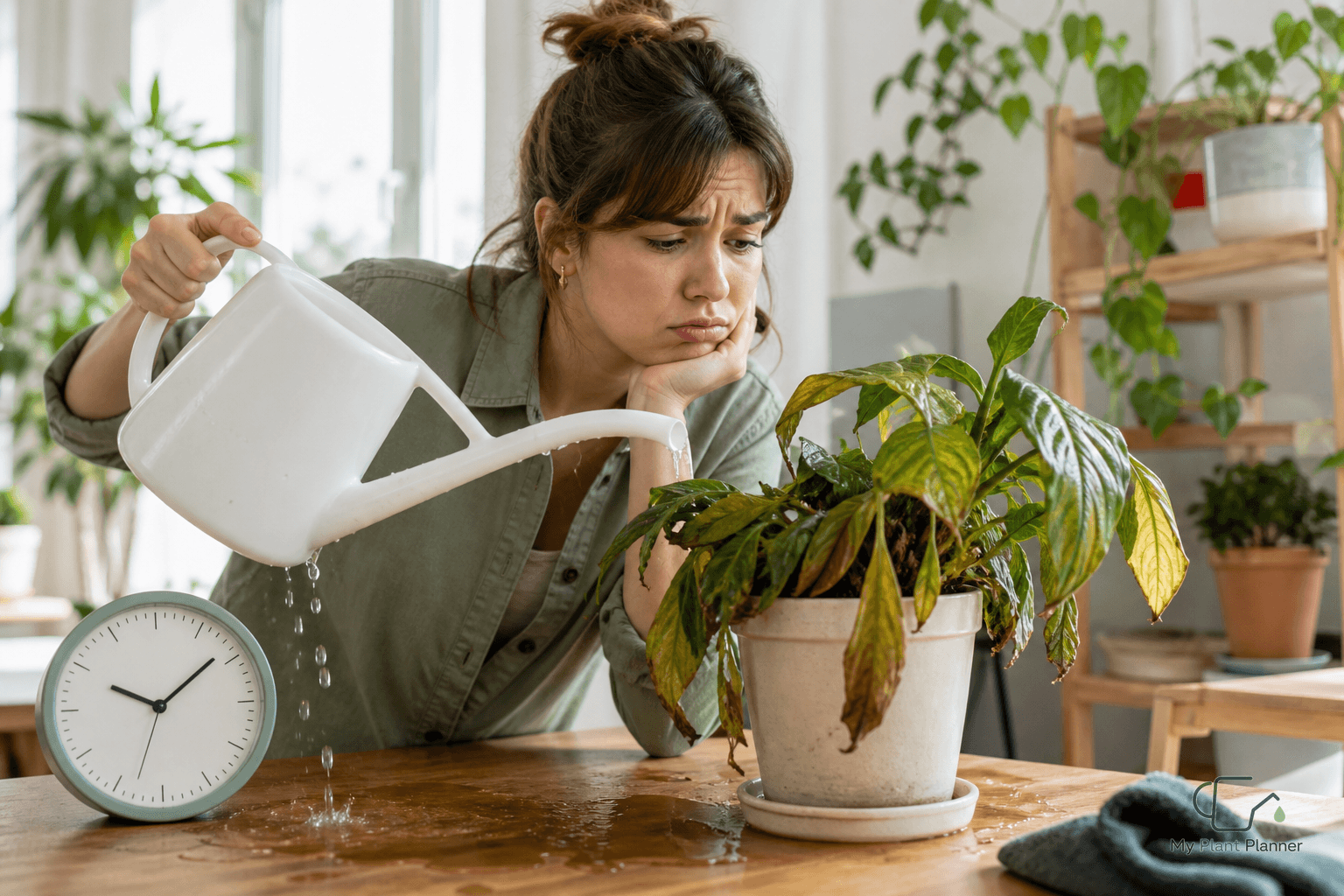
A once a week watering routine sounds responsible. It is easy to remember, easy to put on a calendar, and just wrong often enough to quietly ruin a plant.
The problem is not the number seven. The problem is treating every plant, pot, room, and season like they dry at the same speed. They do not.
The direct answer
Watering houseplants once a week is often too much when the plant is in lower light, a large pot, dense soil, a cool room, or a slower growing season. In those conditions, the soil may still be holding plenty of moisture when the next weekly reminder hits.
That does not mean weekly watering is always bad. Some thirsty plants in bright light can need water around that often, especially in warm months. But for many common indoor plants, a weekly habit should be a check window, not an automatic watering schedule.
A better rule is simple: check the soil first, then water only if the plant and pot are ready.
Why seven days does not mean the same thing in every home
Houseplants do not use water on a calendar. They use water based on light, growth, pot conditions, and indoor climate.
Light is the big one. A plant near a bright window usually dries faster than the same plant across the room. Bright indirect light can push more growth, which usually means more water use. Low light slows the whole system down. The soil stays damp longer, and watering again on schedule can stack moisture in the pot.
Pot size matters too. A small pot can dry quickly because there is less soil holding water. A large pot can stay wet longer, especially if the root ball is small compared with the container. That oversized decorative pot may look good, but it can make watering harder.
Soil mix changes the window. Chunky, airy mixes tend to dry faster. Heavy mixes hold water longer. If the pot has poor drainage or sits inside a cachepot with leftover water at the bottom, the weekly pour becomes even riskier.
Season matters. Many indoor plants slow down in winter or during darker stretches. Less light usually means less water use. Summer can shorten the check window, but air conditioning, humidity, and window placement still change the answer.
If you want plant specific examples, compare a slow drying plant like snake plant with a faster drinking trailing plant. We covered that difference in How often should you water a snake plant indoors and How often should you water pothos.
What people get wrong about weekly watering
The first mistake is watering because the reminder went off. A reminder is useful. It should tell you to check the plant, not force you to water it.
The second mistake is judging only the top of the soil. The surface can look dry while the lower half of the pot is still damp. That is common in deeper pots, glazed ceramic pots, and lower light rooms.
The third mistake is giving every plant the same amount. A small plant in a nursery pot and a large plant in a wide container do not need the same pour. Watering well usually means watering until moisture reaches the root zone and excess can drain out, but that only helps if the pot has drainage and you empty any standing water.
The fourth mistake is trying to fix drooping with water every time. Drooping can happen from dryness, but it can also happen when roots are sitting too wet. Do not diagnose from one symptom alone. Check the soil, pot weight, recent watering history, and light level before acting.
Questions to check before you water
Before you water on a weekly schedule, ask a few quick questions.
Is the top inch or two of soil actually dry? For plants that prefer to dry more deeply, check farther down if you can.
Does the pot still feel heavy? A heavy pot often means there is still moisture inside. Lift the pot after watering and again when it is dry enough to water. That comparison teaches you more than a calendar does.
Is the plant in bright light or low light? The same plant may need a shorter check window near a bright window and a longer one in a dim corner.
Is the season changing? A schedule that worked in July may be too frequent in December.
Does the pot drain freely? If water cannot leave the pot, frequency advice gets less useful. Drainage is not a fancy plant collector detail. It is basic survival equipment.
A simple checklist for replacing weekly watering
Use this instead of automatic once a week watering:
- Set a reminder to check the plant, not to water it automatically.
- Feel the soil below the surface before adding water.
- Lift the pot and notice whether it feels light or still heavy.
- Check that the pot has drainage holes.
- Empty standing water from saucers or outer pots after watering.
- Shorten the check window in brighter, warmer conditions.
- Lengthen the check window in lower light, cooler rooms, or winter.
- Adjust after two or three watering cycles instead of changing everything after one weird week.
For many casual plant owners, this is enough. You do not need a moisture meter, a spreadsheet, or a perfect plant shelf setup. You need a repeatable way to notice when the plant is actually ready.
A cautious way to think about frequency
If you currently water everything once a week, do not panic and stop watering for a month. Just change the job of your weekly reminder.
When it goes off, check the soil and pot weight. If the plant is ready, water thoroughly and let the extra drain. If the soil is still damp, wait a few days and check again. After a couple of cycles, you will start to see the plant’s actual rhythm in your home.
That rhythm is the point. A watering plan should fit your plant, light, pot size, season, and indoor climate. A fixed weekly schedule mostly fits your calendar.
If you want a calmer starting point, use My Plant Planner to build a practical watering check window for your plant and room conditions.
Practical note
This article is general indoor plant care information. Watering windows are starting points, not guarantees. Your plant, pot, soil, light, season, and home climate can all change the right timing.
My Plant Planner gives general indoor plant-care guidance. Always check soil and plant condition before watering.