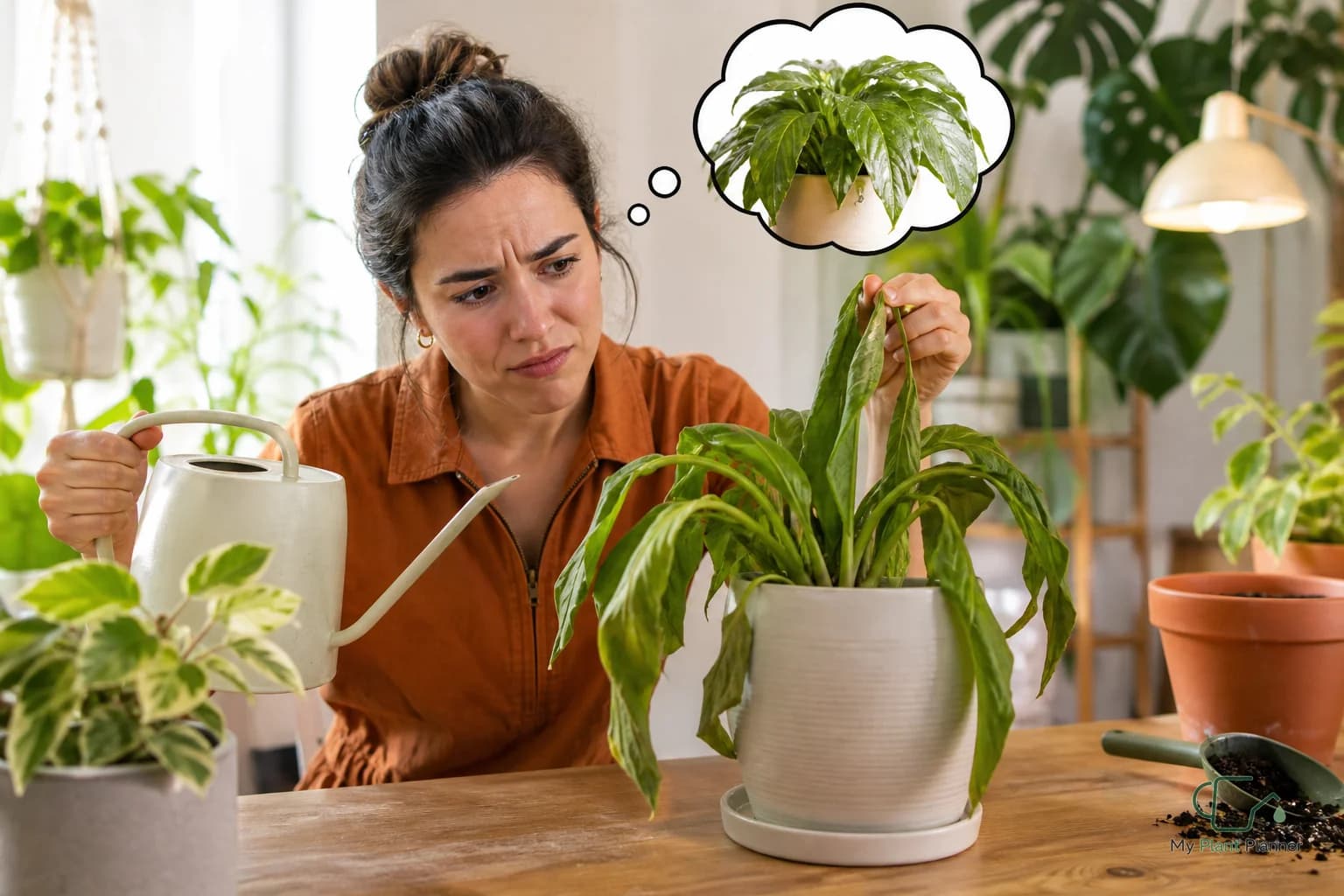
Soft leaves are one of those plant cues that feels obvious until it is not. A pothos leaf can go limp when the soil is dry. A peace lily can flop hard enough to look dramatic. But soft leaves can also show up when the potting mix is still wet and the roots are not moving water well.
Same symptom. Opposite watering decision.
That is why leaf feel alone is a risky way to water indoor plants. Soft leaves should start a check, not end the discussion.
The short answer
Do not water just because the leaves feel soft.
Check the potting mix first. If the soil is dry at the depth that makes sense for that plant, water thoroughly and let the excess drain. If the soil is still damp or wet, wait and improve the conditions that help the pot dry: more light if appropriate, better airflow, an empty saucer, and a pot that is not sitting inside a wet cachepot.
Your watering plan should be a check window, not a fixed promise. Plant type, light level, pot size, season, and indoor climate all change how quickly the soil dries. After a couple of cycles, adjust the window based on what the soil and plant actually did.
For a broader routine, read How to tell if an indoor plant needs water.
What soft leaves can mean
Soft leaves usually point to a water movement problem, but that problem can start in different places.
If the soil is dry, the plant may not have enough available water. Leaves may feel limp, thinner, or less firm than usual. The pot may feel lighter than normal. Some plants also curl slightly or develop dry edges, though leaf edges can react to other stress too.
If the soil is wet, the issue may be that the roots are sitting in too much moisture for too long. The plant can look thirsty even though the pot is not ready for more water. This is where people get trapped. They see soft leaves, add water, and make the wet pot stay wet longer.
Soft leaves can also follow a sudden change: moving a plant farther from a window, turning on air conditioning, repotting into a larger pot, or switching to a denser soil mix. None of those details proves what is happening, but they change the watering call.
Context that changes the watering call
Light is a big one. A plant in bright indirect light usually uses water faster than the same plant in a dim corner. If you moved a plant away from a window, the old watering rhythm may now be too frequent.
Pot size matters too. A small pot dries faster because there is less soil holding moisture. A large pot can keep the lower mix damp long after the surface looks dry. That is especially common when a small root ball is placed into a much bigger container.
Drainage changes everything. A pot with no drainage hole gives excess water nowhere useful to go. A nursery pot placed inside a decorative cachepot can also hold hidden water at the bottom. The top may look normal while the lower roots stay wet.
Season and indoor climate count as well. Summer heat, winter heating, humid rooms, dry air, and fans all shift the drying pattern. Your plant is not being inconsistent. Your room is.
If you are trying to separate wet soil stress from dry soil stress, Overwatering signs in common houseplants can help you compare the clues without jumping to a single cause.
Common mistakes that make soft leaves worse
The first mistake is watering on leaf mood alone. Leaves are useful clues, but they are not a moisture meter.
The second mistake is giving tiny sips over and over. Small splashes can keep the upper soil damp without evenly hydrating the root zone. If the plant truly needs water, water thoroughly and let extra water drain away.
The third mistake is ignoring the bottom of the pot. A surface that feels dry does not always mean the lower mix is dry. Use a finger, wooden skewer, or moisture meter carefully, and check deeper when the pot is large.
The fourth mistake is keeping the same weekly habit after conditions change. Weekly watering is too much for some plants in low light, oversized pots, cool rooms, or slow drying soil. The calendar is a reminder to check, not an order to water.
Questions to ask before watering
Ask these before you pour:
- When did I last water, and did the plant drain fully?
- Is the soil dry only on top, or dry deeper down too?
- Does the pot feel lighter than it did after the last watering?
- Is there water sitting in the saucer or cachepot?
- Did the plant recently move to lower light?
- Is the pot much larger than the root ball?
- Has the room become cooler, more humid, or less sunny?
- Does this plant usually recover after watering, or are the leaves staying soft even when the soil is wet?
You do not need a perfect answer to every question. You are looking for the strongest signal: dry pot that needs water, or wet pot that needs time.
Simple soft leaf watering checklist
Use this when a plant looks limp or feels soft:
- Feel the top inch or two of soil.
- Check deeper for larger pots or moisture loving plants.
- Lift the pot and compare the weight to how it feels after watering.
- Look for standing water in the saucer or decorative outer pot.
- If the soil is appropriately dry, water until excess runs out, then empty the saucer.
- If the soil is damp or wet, do not add more water yet.
- Give the plant suitable light and airflow while the pot dries.
- Recheck on your next reasonable check window, not every hour.
- Note what happened so you can adjust after a couple of cycles.
That last step is boring, which is why it works. Plants do not need you to panic. They need you to notice patterns.
Adjust your check window without overcorrecting
One soft leaf episode does not mean your whole routine is wrong. It may mean the plant hit a dry point earlier than expected. It may also mean the soil stayed wet longer than expected.
If the plant was dry when you checked, shorten the next check window a little. If the soil was still wet, lengthen the next check window and look at light, pot size, and drainage. Make one change at a time when you can. If you change the pot, the location, the soil, and the watering rhythm all at once, you will not know what helped.
Soft leaves are a prompt to inspect, not an instruction to pour. Check the soil, respect the pot, and adjust with evidence.
If you want a practical starting window based on your plant type, light, pot size, season, and indoor climate, try My Plant Planner.
Practical note
This article is general indoor plant care information. Watering windows are starting points, not guarantees. Your plant, pot, soil, light, season, and home climate can all change the right timing.
My Plant Planner gives general indoor plant-care guidance. Always check soil and plant condition before watering.