If your houseplant soil is still wet after a week, pause before you reach for the watering can.
A lot of plant trouble starts with a well meant habit: watering because it has been seven days. The plant may not care. Your room may be dim, the pot may be too big, the soil may be heavy, or the plant may simply be using less water this season.
Wet soil after a week does not automatically mean the plant is doomed. It does mean your current watering rhythm is probably too tight for that plant in that spot.
The direct answer
If the soil still feels wet after a week, do not water again yet.
Wait until the soil reaches the dryness level that plant prefers, then use that timing as your next check window. For many common houseplants, that means checking again in a few days, not forcing another soak on day seven.
The big move is simple: switch from a fixed watering day to a watering check window.
Instead of “I water this plant every Sunday,” think “I start checking this plant around day 10 to 14 in this room, and I water only if the soil is ready.”
That small shift prevents a lot of soggy pot problems.
If you want the bigger argument against calendar watering, read Why watering houseplants once a week is often too much.
Why soil stays wet longer than expected
Soil dries when water leaves the pot through plant use, evaporation, and drainage. Slow one of those down and the pot can stay damp much longer than you expected.
Common reasons include:
- Low light: Plants in lower light use less water. The soil may stay wet because the plant is not photosynthesizing and transpiring as quickly.
- Large pot: Extra soil holds extra moisture. If the root ball is small compared with the pot, the plant cannot use water from all that soil quickly.
- Dense potting mix: Heavy, compacted, or peat rich mixes can hold water for a long time.
- Poor drainage: A pot without a drainage hole, a blocked hole, or water sitting in a decorative cachepot can keep roots wet.
- Cool indoor temperatures: Cooler rooms slow evaporation and plant water use.
- Seasonal slowdown: Many indoor plants use less water in winter or during low growth periods.
- Recent repotting: Fresh potting mix may hold more water than the old root packed pot did.
This is why two identical pothos plants can need different check windows in two different rooms. Same plant, different conditions.
Wet surface is not the same as wet root zone
The top of the soil can lie in both directions.
Sometimes the surface dries fast while the lower pot stays wet. Other times the top looks dark and damp because the room is cool or the mix is dense, even though the middle is only lightly moist.
Check deeper before deciding.
Use one or two of these methods:
- Push a finger into the soil if the pot size allows.
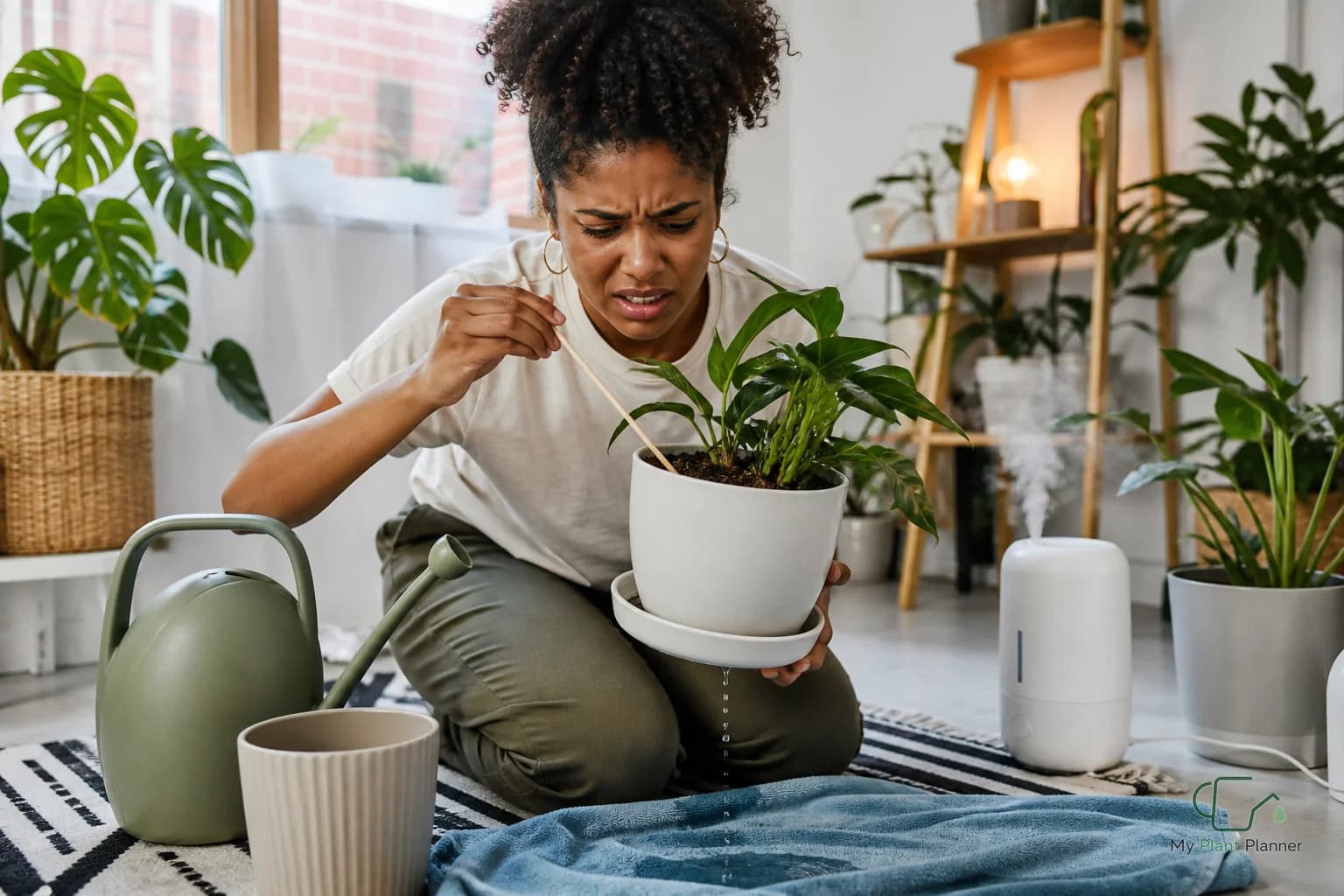
- Use a wooden skewer or chopstick and see if damp soil clings to it.
- Lift the pot and compare its weight with how it feels when drier.
- Check the drainage tray or outer pot for standing water.
For a broader walkthrough, see How to tell if an indoor plant needs water.
What people get wrong
The first mistake is watering again because the schedule says so.
If the pot is still wet, adding more water does not “freshen it up.” It extends the wet period. For plants that prefer to dry partly between waterings, that can push them into a stress zone.
The second mistake is assuming all wet soil means overwatering already happened. Not always. A single slow drying week may just tell you the plant is in lower light, the pot is oversized, or the weather changed.
The third mistake is moving straight to dramatic fixes. You do not always need to repot, cut roots, fertilize, or relocate the plant in a panic. Start with observation. Drainage, soil depth, light, and timing usually tell you a lot.
Questions to ask before you water again
Before adding water, run through these questions:
- Does this pot have at least one open drainage hole?
- Is there water sitting in the saucer or decorative outer pot?
- Is the soil wet only on top, or wet deeper down too?
- Has the plant moved to lower light recently?
- Is the room cooler than usual?
- Is the pot much larger than the root ball?
- Is the plant a slower drinking type, like a snake plant or ZZ plant?
- Did you recently repot into fresh, moisture holding mix?
- Is this happening once, or every watering cycle?
One slow week is information. A pot that stays wet cycle after cycle needs a changed plan.
Simple checklist for wet soil after a week
Use this as a calm reset:
- Do not water while the soil is still wet.
- Check moisture below the surface, not just by sight.
- Empty any standing water from saucers or cachepots.
- Make sure the drainage hole is open.
- Move the plant only if the current spot is clearly too dim for its type.
- Wait a few days and check again.
- Record when the soil finally reaches the right dryness level.
- Set your next check window later than before.
- After two or three cycles, adjust again based on what the plant and soil are doing.
The goal is not to find a perfect forever date. The goal is to stop watering blind.
How to reset the watering window
Once the soil finally dries to the level your plant prefers, water if needed and note how long it took.
If you checked at seven days and the soil was still wet, then checked at ten days and it was lightly moist, your next starting check might be around day ten, not day seven.
For drought tolerant plants like snake plants, ZZ plants, and many succulents, the window may need to be even wider indoors. For thirstier plants, the soil may only need to dry partly before watering. The plant type still matters.
Light also matters. A plant near a bright window may use water faster than the same plant across the room. A plant in a big ceramic pot may dry slower than one in a small nursery pot. Your watering plan has to respect the actual setup, not the care tag.
When to be more cautious
Be extra careful if wet soil comes with multiple stress signs, such as yellowing leaves, limp growth, a sour smell from the soil, or a pot that feels heavy for many days. Those signs do not prove one single cause, but they are enough reason to stop watering and inspect the setup closely.
If the pot has no drainage hole, treat that as a design problem, not a watering skill problem. It is very hard to manage moisture safely when excess water has nowhere to go.
A better rule than weekly watering
If your houseplant soil is still wet after a week, your plant is giving you useful feedback: the next check should probably be later, and the setup may be holding more water than expected.
Do not punish yourself for it. Just adjust.
Check the soil, confirm drainage, widen the window, and watch the next couple of cycles. That is how a watering plan gets safer.
Need a starting check window for a specific plant in your actual room conditions? Try My Plant Planner and use the result as a practical starting point, then adjust after a few real soil checks.
Practical note
This article is general indoor plant care information. Watering windows are starting points, not guarantees. Your plant, pot, soil, light, season, and home climate can all change the right timing.
My Plant Planner gives general indoor plant-care guidance. Always check soil and plant condition before watering.