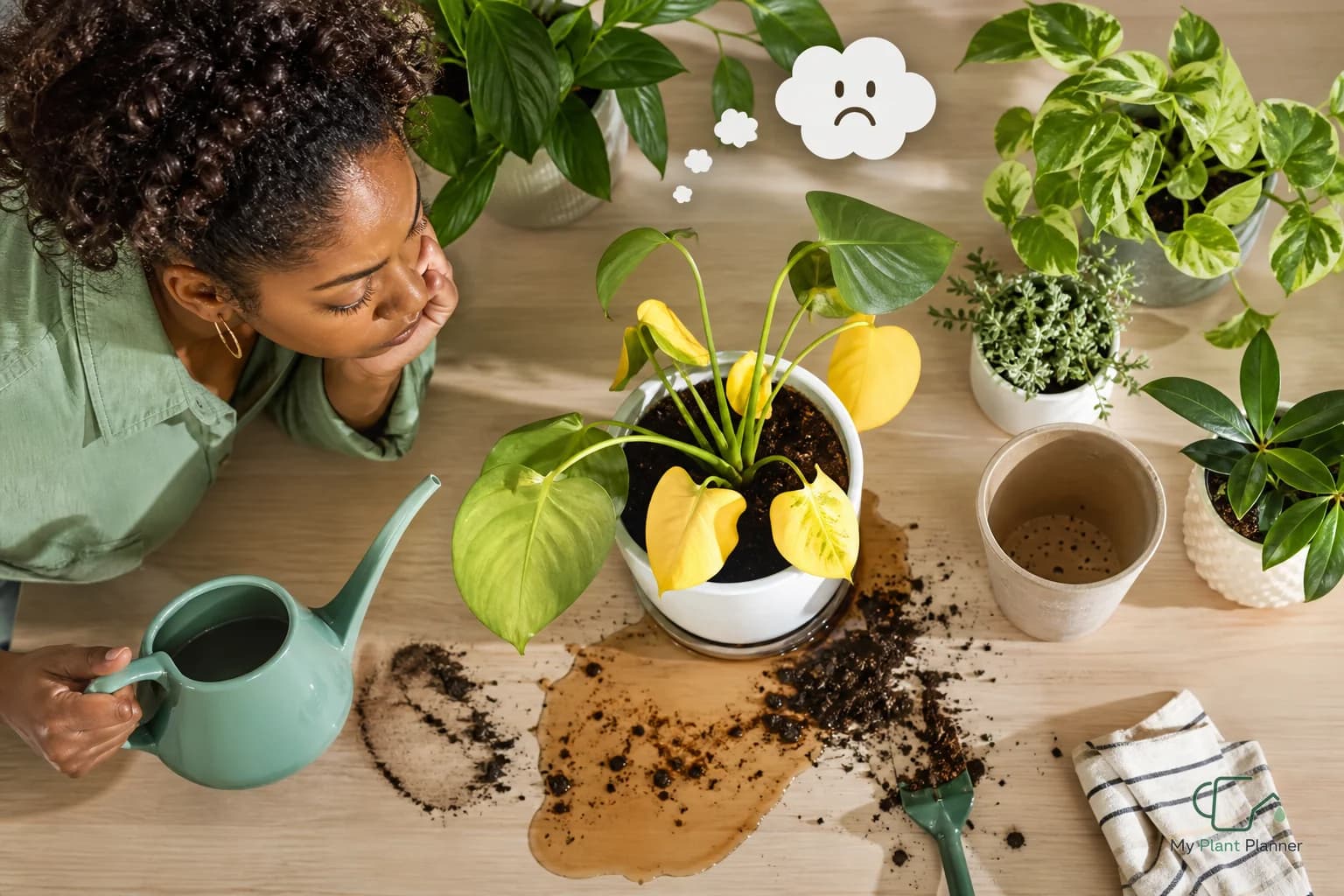
Yellow leaves right after watering feel like a betrayal. You did the plant care thing. You gave it water. Now it looks worse.
When houseplant leaves turn yellow after watering, the timing is a clue to check the soil and pot before assuming the plant wants another drink.
The annoying part is that yellow leaves can point in different directions. Sometimes the plant was already stressed before you watered. Sometimes the soil stayed wet too long. Sometimes an older leaf was going to yellow no matter what you did.
What you should not do is treat yellow leaves as an automatic request for more water.
The direct answer
If a houseplant turns yellow after watering, pause before watering again. Check the soil below the surface, look at the pot drainage, and think about how long the soil stayed wet after the last watering.
Yellow leaves after watering often mean one of these things:
- The root zone stayed too wet for too long.
- The plant was watered before it had used the previous moisture.
- Low light slowed the plant down, so water sat in the pot.
- The pot or soil mix is holding more water than the plant can handle.
- An older leaf is naturally aging and dropping.
- The plant was very dry, then watered, and is still recovering.
That last one matters. A yellow leaf is not always proof that you overwatered. It is a clue, not a verdict.
For a broader symptom check, see Overwatering signs in common houseplants.
Why watering can be followed by yellow leaves
Plants do not react to water like a light switch. A leaf that yellows today may be responding to stress from several days or weeks ago.
The most common pattern is simple: the surface looked dry, so the plant got watered, but the middle or bottom of the pot was still damp. That creates a pot that looks ready from the top but is still wet where the roots are.
Roots need moisture, but they also need air. When soil stays saturated, the root zone gets less oxygen. Many common indoor plants will show stress as yellowing, limpness, soft stems, or slower growth.
Light makes this worse. A pothos in bright indirect light can use water faster than the same pothos in a dim corner. Same plant, same pot, different room, different check window.
Pot size matters too. A small plant in a large pot can sit in wet soil for a long time because the roots are not big enough to pull moisture from the whole pot.
Check these context factors before blaming the last watering
Start with the soil, not the calendar.
Push a finger, wooden chopstick, or moisture meter probe below the top inch or two. The top can dry while the root zone stays damp. If the lower soil feels cool, sticky, or wet, do not water again yet.
Then check the pot. Does it have drainage holes? Is water sitting in the decorative outer pot? Did the plant drain fully after watering, or did it sit in runoff?
Next, look at the light. If the plant is far from a window, tucked behind curtains, or in a north facing room, it may need a longer drying window than you expect.
Season also changes the rhythm. In cooler months, many indoor plants slow down and use less water. A check window that felt safe in summer can become too frequent when growth slows.
If you are still building confidence with soil checks, How to tell if an indoor plant needs water is a good companion guide.
Common mistakes that make yellow leaves worse
The first mistake is watering again because the leaves look sad. If the soil is wet and leaves are yellowing, adding water usually makes the gamble worse.
The second mistake is judging only the top of the soil. Dry surface soil does not guarantee a dry pot.
The third mistake is leaving water in a cachepot or saucer. Drainage holes help, but they do not help much if the pot sits in a puddle after watering.
The fourth mistake is treating every yellow leaf as a crisis. One yellow lower leaf on an otherwise growing plant can be normal aging. Several yellow leaves at once, especially with wet soil, deserves more attention.
The fifth mistake is forcing a fixed weekly watering schedule. Weekly watering can work for some plants in some homes. It can also be too much for slow growing plants, large pots, low light rooms, or cooler indoor conditions.
Questions to ask before the next watering
Use these questions before you reach for the watering can:
- Is the soil dry at the depth this plant prefers, or only dry on top?
- Did the pot feel heavy before the last watering?
- Did excess water drain out freely?
- Was any runoff left sitting in the saucer or outer pot?
- Has the plant recently moved to lower light?
- Is the plant in a pot much larger than its root ball?
- Are the yellow leaves mostly older lower leaves, or newer growth too?
- Is the plant still pushing healthy new leaves?
The answers help you decide whether to lengthen the check window, improve drainage, move the plant to better light, or simply wait.
A simple yellow leaf watering checklist
Before watering a yellowing houseplant again, run this quick checklist:
- Check soil below the surface, not just the top.
- Wait if the lower soil is still damp or cool.
- Empty saucers and decorative pots after watering.
- Make sure the nursery pot has drainage holes.
- Compare the plant size to the pot size.
- Give low light plants longer between watering checks.
- Remove fully yellow leaves if they come away easily.
- Watch the next two watering cycles before making big changes.
That last step is boring, but it works. One watering does not tell the whole story. Two or three cycles show whether the plant is drying at a healthy pace.
When to adjust the watering check window
If the soil is still wet many days after watering and leaves keep yellowing, set a longer check window. Do not jump from watering every seven days to watering every thirty days unless the plant type calls for that kind of dry period. Make a modest adjustment and observe.
If the soil dries very fast and leaves are yellowing with crispy edges or severe wilting, the plant may be going too dry between checks. In that case, shorten the check window slightly and water thoroughly when the soil has reached the right dryness level for that plant.
For most casual plant owners, the goal is not a perfect date. The goal is a repeatable check window that keeps you from guessing every time a leaf changes color.
A cautious final note
Yellow leaves after watering are a signal to investigate, not a reason to panic. Your plant may need less frequent watering, better drainage, more light, or just time to shed an older leaf.
Start with the soil. Check the pot. Adjust after a couple of cycles. That beats pouring more water into a pot that may already be too wet.
If you want a practical starting point for your specific plant, pot, light, season, and indoor climate, try the free My Plant Planner watering check tool at My Plant Planner.
Practical note
This article is general indoor plant care information. Watering windows are starting points, not guarantees. Your plant, pot, soil, light, season, and home climate can all change the right timing.
My Plant Planner gives general indoor plant-care guidance. Always check soil and plant condition before watering.