A lot of indoor plant trouble starts with one tiny decision: watering because the plant looks a bit sad.
Sometimes that is the right call. Sometimes it is how you turn damp soil into soggy roots.
The better move is not to ignore your plant. It is to pause long enough to check whether the root zone is actually ready for more water.
The short answer
Wait before watering an indoor plant if the soil below the surface still feels damp, the pot still feels heavy, the plant is sitting in low light, or you watered recently and nothing has changed except the leaves looking tired.
That does not mean the plant is fine forever. It means water is not the next move yet.
For most common houseplants, watering works better as a check window than a fixed appointment. You check the soil, pot weight, light, and recent conditions. Then you decide. If you want the full basics, this guide on How to tell if an indoor plant needs water is a good next read.
What changes the wait time
Indoor plants do not dry on a calendar. They dry based on the plant, the pot, the room, and the season.
A plant in bright indirect light usually uses water faster than the same plant in a dim corner. A small nursery pot may dry quickly. A large decorative pot can stay damp for much longer, especially if the plant has a small root system compared with the pot size.
Season matters too. In cooler months, many indoor plants grow more slowly and use less water. In summer, plants in brighter windows may dry faster, but air conditioning can also change the pattern.
The annoying part is also the important part: two pothos plants in the same home can need different check windows if one sits near a bright window and the other lives on a bookshelf.
Signs you should wait
Before you water, look for signs that the plant is not ready yet.
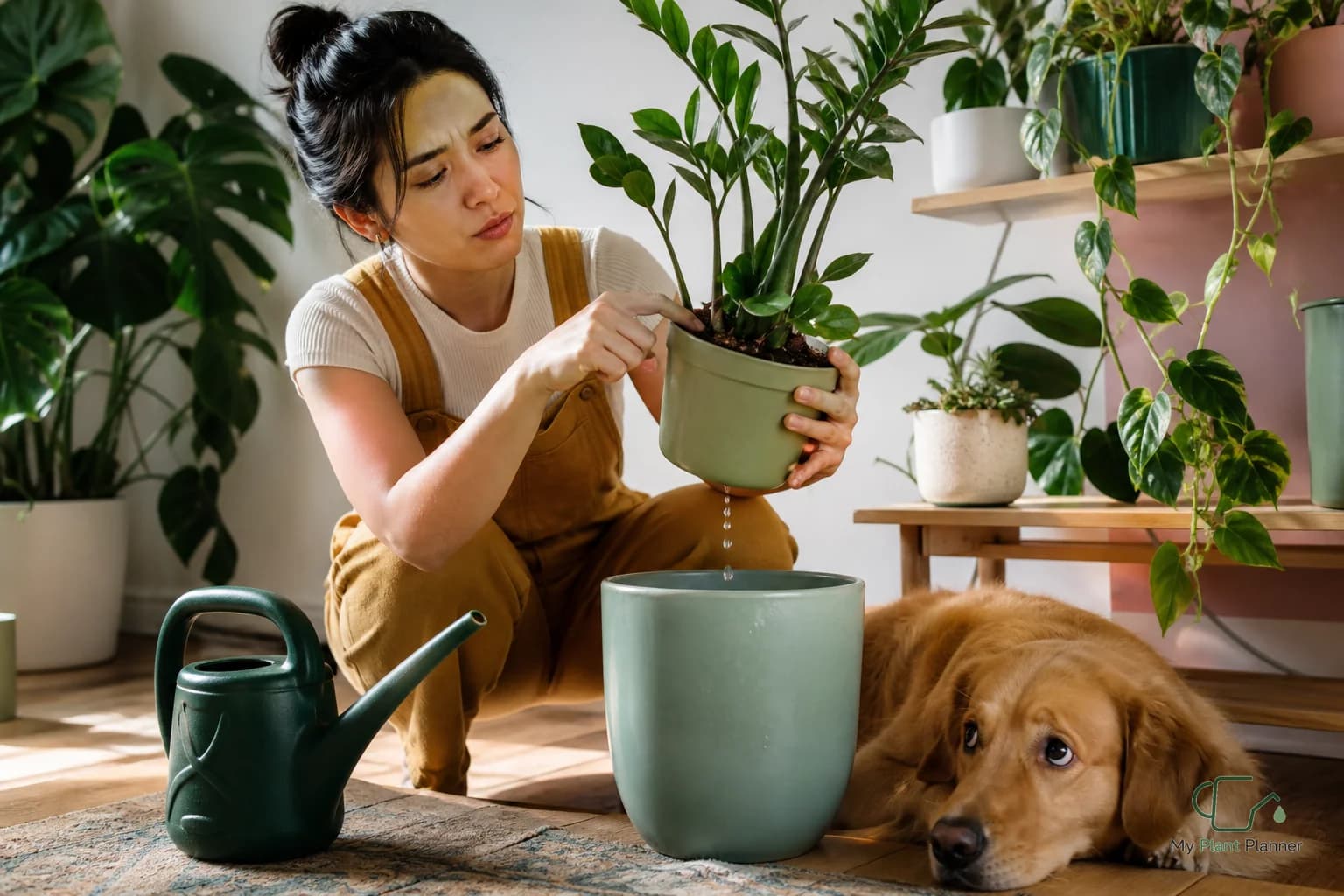
Wait if the top inch is dry but the soil deeper down still feels cool or damp. Topsoil can dry first while the root zone is still holding moisture.
Wait if the pot still feels noticeably heavy. This is especially useful after you water once and learn what the pot feels like full. A heavy pot usually means there is still moisture inside.
Wait if the plant is in a cachepot or decorative outer pot and you are not sure whether water collected at the bottom. Standing water can keep the lower soil wet even when the surface looks normal.
Wait if you watered recently and the leaves are drooping, soft, or yellowing. Those signs can happen for more than one reason. More water is not automatically the fix.
If you are trying to break a weekly watering habit, read Why watering houseplants once a week is often too much. Weekly watering sounds tidy, but plants do not care that Sunday is convenient.
Common mistakes that lead to watering too soon
The first mistake is trusting the surface only. Dry topsoil is useful information, not a final answer. For many plants, especially in larger pots, you need to check a little deeper.
The second mistake is watering every time a leaf droops. Drooping can mean thirst, but it can also show stress from wet soil, a recent move, temperature swings, or low light. Treat droop as a prompt to inspect, not a command to pour.
The third mistake is using the same schedule for every plant. A snake plant in low light and a peace lily in bright indirect light do not belong on the same watering rhythm.
The fourth mistake is forgetting drainage. If the pot has no drainage hole, or water sits in an outer pot, the safest check window becomes much slower. Water has fewer ways to leave, so the lower soil can stay wet for longer than expected.
Questions to ask before you water
Use these before you grab the watering can:
- When did I last water this plant?
- Is the soil dry only on top, or dry deeper down too?
- Does the pot feel light compared with right after watering?
- Is the plant in bright indirect light, medium light, or low light?
- Is the pot oversized for the plant?
- Does the pot have drainage, and did extra water drain away last time?
- Has the room been cooler, darker, or more humid than usual?
If several answers point toward slow drying, wait and check again soon. If the soil is drying deeper down and the pot feels light, watering may be reasonable.
A simple wait or water checklist
Use this quick check window instead of guessing:
- Check the soil with your finger, a wooden skewer, or a moisture meter.
- Compare pot weight if you know what the pot feels like wet and dry.
- Look at the plant type. Succulent-like plants usually want a longer dry period than thirstier foliage plants.
- Check light level. Lower light usually means slower water use.
- Confirm drainage. Empty any standing water from an outer pot or saucer.
- If the lower soil is damp, wait 2 to 3 days and check again.
- After watering, watch how the plant responds over the next couple of cycles and adjust the check window.
That last part is where people get impatient. One watering decision is just one data point. A better routine comes from noticing the pattern over a few cycles.
When waiting is not neglect
Waiting can feel wrong when a plant looks tired. But indoor plants are often harmed by extra water given too soon, especially in low light or oversized pots.
You are not trying to make the soil bone dry for every plant. You are trying to match the plant with the moisture level it prefers. A peace lily and a ZZ plant will not want the same dry-down. A plant in August sun will not act like the same plant in a dark winter room.
So pause before watering. Check the root zone, not just the mood of the leaves. If the clues say the plant is still sitting in moisture, waiting is care.
If you want a starting check window based on plant type, light, pot size, season, and indoor climate, try My Plant Planner. Use it as a starting point, then adjust after a couple of real watering cycles in your home.
Practical note
This article is general indoor plant care information. Watering windows are starting points, not guarantees. Your plant, pot, soil, light, season, and home climate can all change the right timing.
My Plant Planner gives general indoor plant-care guidance. Always check soil and plant condition before watering.