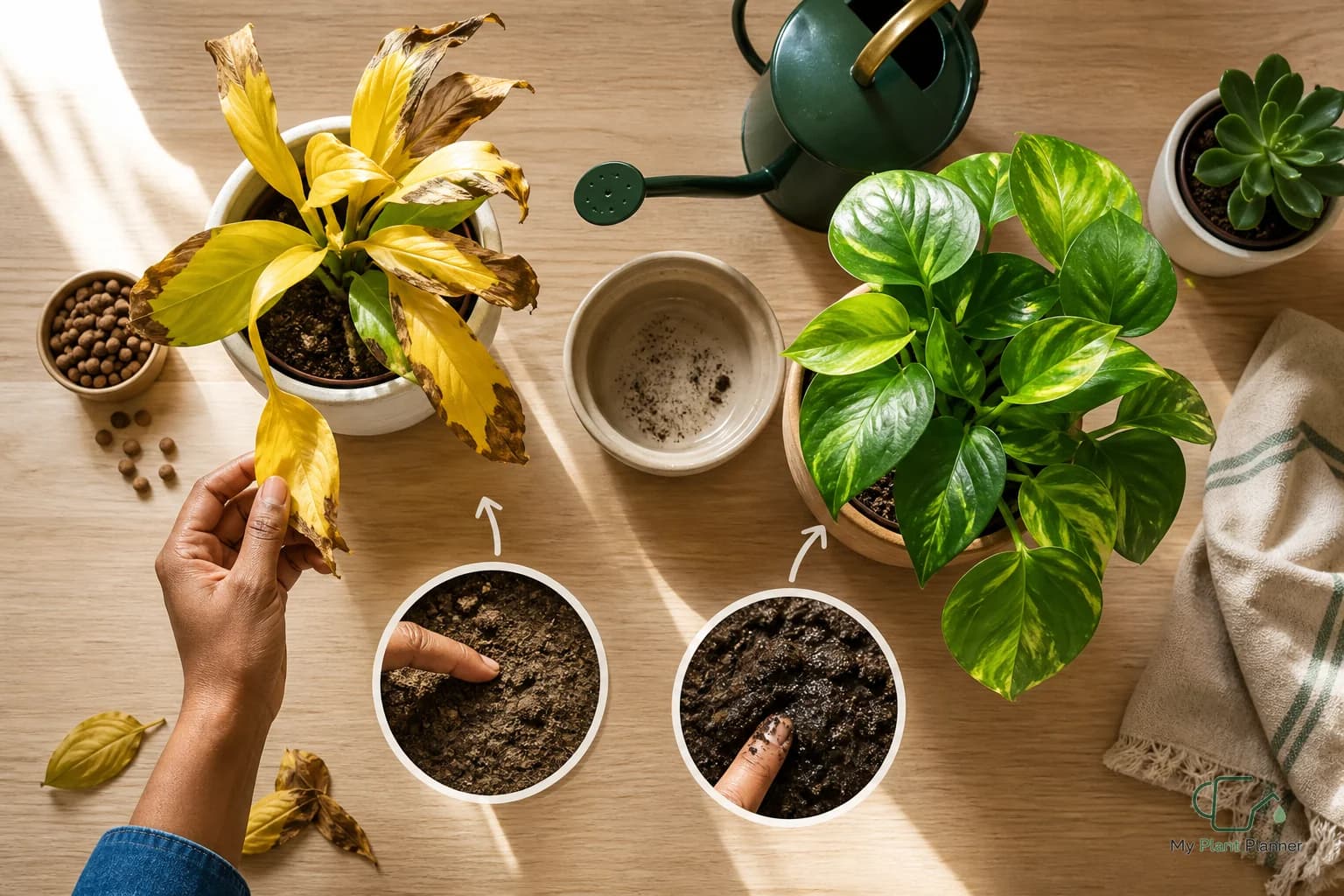
Yellow leaves and crispy brown edges are one of the most annoying houseplant combos because they seem to argue with each other.
Yellow can make you think, “Too much water.” Crispy edges can make you think, “Not enough water.” So people split the difference, water a little more often, and accidentally make the plant harder to read.
A leaf symptom is not a watering schedule. Treat it like a clue, then check the conditions around the roots.
What those symptoms say is simple: inspect the soil, drainage, and light before you change the watering routine.
The direct answer
Yellow leaves and crispy edges can happen when watering is too frequent, too shallow, too delayed, or poorly matched to the plant’s room conditions.
That means the next move is not automatically “water more” or “water less.” The next move is to check:
- how wet the soil is below the surface
- whether the pot drains freely
- how much light the plant is actually getting
- how long it has been since the last full watering
- whether the symptom is on old leaves, new leaves, or random leaves
If the soil is still damp deeper down, wait and improve drying conditions. If the pot is dry through most of the root zone, water thoroughly and set a shorter check window next time.
For a broader symptom comparison, see Is your houseplant overwatered or underwatered.
Why yellow and crispy can show up together
Watering problems do not always stay in neat lanes.
A plant that has stayed wet too long may have roots that are not working efficiently. The leaves can still look dry at the edges because the plant is not moving water well, even if the pot feels damp.
A plant that has gone too dry may drop or yellow older leaves while the edges on other leaves turn crisp. That does not mean every yellow leaf is a crisis. Older leaves age out. But if several leaves change at once, watering conditions deserve a closer look.
Indoor growing also stacks the deck. Low light slows drying. Big pots hold moisture longer. Dense soil stays wet near the bottom while the top looks dry. Heat vents and dry rooms can crisp leaf edges even when the soil is not ready for another drink.
That is why the soil check matters more than the leaf drama.
The context factors that change the answer
Soil depth
The top inch can dry while the middle of the pot is still moist. For medium and large pots, check deeper before watering. A finger, chopstick, or moisture meter used carefully can help you compare the top, middle, and lower root zone.
Pot size
A small nursery pot can dry quickly. A large decorative pot can stay wet much longer, especially if the plant’s root ball is small compared with the amount of soil around it.
Drainage
If water cannot leave the pot, the bottom layer can stay soggy. Cachepots are sneaky here. Always check that the inner pot is not sitting in collected water after watering.
Light level
Bright indirect light usually means the plant uses water faster than it would in a dim corner. Same plant, same pot, different room, different check window.
Plant type
A peace lily, pothos, snake plant, and calathea should not be checked on the same rhythm. Some plants prefer to dry more between watering. Others resent long dry stretches. The plant type sets the starting point, but your room edits the plan.
Common mistakes that make the symptom worse
The biggest mistake is watering from panic. One crispy edge appears, and the plant gets watered before the soil is checked. If the soil is still damp, that can push the plant toward a wetter root zone.
Another mistake is giving tiny sips. Shallow watering can wet the top while leaving deeper roots dry. Then the surface looks cared for, but the plant still struggles between checks.
A third mistake is keeping a fixed weekly schedule because it feels responsible. Weekly watering is too much for some indoor plants and not enough for others. The calendar should remind you to check, not force you to water.
Also watch for old damage. Crispy leaf edges do not turn green again. Yellowed leaves may not recover. Judge the next few weeks by new growth, soil behavior, and whether fresh damage slows down.
For yellowing after watering specifically, read Why houseplant leaves turn yellow after watering.
Questions to ask before watering again
Before you add water, pause for one minute and ask:
- Is the soil dry near the root zone, not just at the surface?
- Did the plant get a full watering last time, or only a small sip?
- Does the pot have drainage, and is it sitting in runoff?
- Has the room become darker, cooler, hotter, or drier recently?
- Are the yellow leaves mostly older lower leaves?
- Are new leaves also showing stress, or is this old damage?
- Has the plant been moved, repotted, or placed near a vent?
You are looking for a pattern, not a single perfect clue.
A simple watering checklist
Use this as a safer reset when your plant has yellow leaves and crispy edges:
- Check soil moisture below the top layer.
- If the middle of the pot is still damp, wait and check again in a few days.
- If most of the root zone is dry, water thoroughly until excess drains out.
- Empty any standing water from the saucer or outer pot.
- Put the plant back in the same light if that spot is otherwise working.
- Note how many days it took the soil to reach the right dryness.
- Use that number as your next check window, not a promise to water.
- Adjust after two or three cycles if the soil is drying too fast or staying wet too long.
That last part is where most people get better at plant care. You do not need a perfect instinct. You need a repeatable check.
A cautious way to move forward
Yellow leaves and crispy edges do not give you a single answer. They tell you to slow down and inspect the setup before changing the watering routine.
If the pot is wet, do not water just because the leaf edge is brown. If the pot is dry through the root zone, do not wait just because one yellow leaf scared you.
Set a starting check window based on the plant, light, pot size, season, and indoor climate. Then adjust after a couple of cycles based on what the soil actually does.
If you want help setting that first check window, try My Plant Planner. It gives you a practical watering check range for common indoor plants, then you fine tune it with real soil checks.
Practical note
This article is general indoor plant care information. Watering windows are starting points, not guarantees. Your plant, pot, soil, light, season, and home climate can all change the right timing.
My Plant Planner gives general indoor plant-care guidance. Always check soil and plant condition before watering.