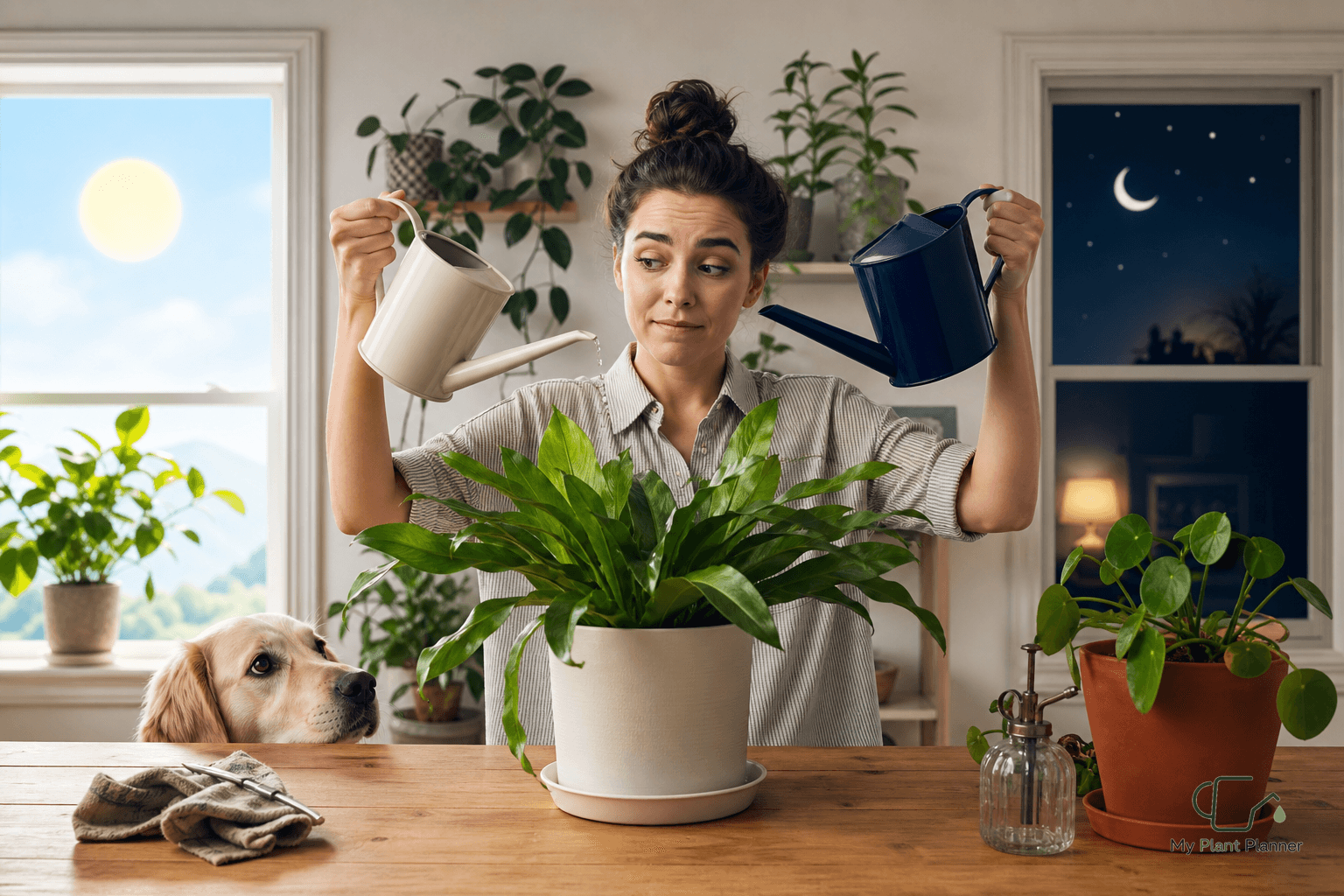
Indoor plant watering advice gets oddly strict about timing. Some people say only water in the morning. Others say never water at night. The better answer is less dramatic: timing helps, but it does not beat checking the soil.
If your plant is still wet, the perfect hour will not save it. If the soil is dry and the plant is ready, you have a lot more flexibility than people make it sound.
The direct answer
Morning is usually the best time of day to water indoor plants.
A morning watering gives the potting mix, plant, and any splashed leaves more time to dry during the brighter, warmer part of the day. That is especially useful in cooler homes, lower light rooms, winter, and pots that dry slowly.
Afternoon watering is usually fine too, especially if the plant needs water and your home is warm or bright.
Late evening or night watering is not automatically a disaster, but it is easier to overdo. If the soil stays wet overnight in a cool room, the plant may sit in damp conditions longer than it likes.
So the short version is:
- Best default: morning
- Usually fine: early to mid afternoon
- Use caution: late night, especially in cool or low light rooms
- More important than the clock: whether the soil is actually ready
For the soil side of the decision, use this guide next: How to tell if an indoor plant needs water.
Timing is a check habit, not a watering rule
The mistake is treating time of day like permission to water.
Morning does not mean every plant gets water. It means morning is a good time to check your plants. Some may be ready. Some may need three more days. Some may need another week.
That difference matters because indoor plants are not all moving water at the same speed. A peace lily in bright indirect light may dry faster than a snake plant in a dim corner. A small nursery pot may dry faster than a large ceramic planter. A plant near an air vent may dry faster than the same plant across the room.
Your watering routine should start with a check window, then a soil check. Not a calendar command.
What changes the best watering time
A few indoor conditions make morning watering more useful.
Light level
Plants in brighter light usually use water faster. They also get more drying help after watering. In lower light, the potting mix may stay wet longer, so morning watering is safer than watering late at night.
If you are still sorting out light levels, this is worth reading: How light level changes your indoor plant watering schedule.
Season
In summer, many homes are warmer and brighter, so plants may dry faster. In winter, indoor plants often slow down and stay damp longer. That does not mean no water. It means check less aggressively and be extra careful with late day watering.
Pot size and drainage
A large pot can hold moisture for a long time, especially if the plant has a small root system. A pot without drainage is even riskier because extra water has nowhere to go.
Good timing cannot fix a pot that traps water. If water collects at the bottom, the plant may look thirsty while the lower roots are sitting wet.
Indoor climate
Dry air, fans, heating vents, and air conditioning can all change how fast the pot dries. A plant in a warm, dry apartment may need a shorter check window than the same plant in a humid room.
Common mistakes with watering time
Watering every morning because it feels responsible
This is how a lot of indoor plants get overwatered. Daily attention is great. Daily watering is usually not.
If you like a morning routine, make it a morning check. Touch the soil. Lift the pot if you know its wet and dry weight. Look at the plant. Then decide.
Waiting until evening because the plant looked droopy all day
Some plants droop when dry. Some droop from heat, low light, transplant stress, or soil that is already too wet. A droopy plant is a reason to check, not proof that it needs water.
If the top soil is dry but the lower mix is still damp, wait. If the soil is dry deeper down and the pot feels light, water thoroughly and let excess drain.
Giving tiny sips at the right time
A careful splash every morning can create a weird problem: the top inch gets damp, but the root zone stays uneven. For many tropical houseplants, it is better to water thoroughly when the plant is ready, then let the mix dry to the right level before watering again.
Watering late at night in a cold room
This is not automatically fatal, but it raises the odds that the pot stays wet for longer. If your home gets chilly overnight or the plant sits in low light, late watering should be the exception, not the routine.
Questions to check before you water
Use these before you pour, no matter what time it is:
- Is the top inch or two of soil dry, or is it still damp?
- Does this plant prefer drying out more, like snake plant or ZZ plant?
- Is the pot heavy, light, or somewhere in between?
- Does the pot have a drainage hole?
- Is the plant in bright indirect light, medium light, or low light?
- Is the room warm and dry, or cool and humid?
- Did you water recently, and did the plant actually dry between waterings?
These questions beat any fixed watering hour.
Simple indoor plant watering time checklist
Use this as a low drama routine:
- Pick one or two morning check days each week.
- Check the soil before watering.
- Water only the plants that are actually ready.
- Water thoroughly until excess can drain from the pot.
- Empty saucers or cachepots after drainage finishes.
- Skip plants that still feel damp.
- Recheck skipped plants in a few days.
- Adjust after two or three watering cycles based on how fast each pot dries.
That last step is where confidence comes from. You are not trying to guess the perfect schedule forever. You are learning how each plant behaves in your home.
A safe starting point
If you want one simple habit, make it this: check indoor plants in the morning, then water only the ones with soil that has dried to the right level for that plant.
Morning is helpful because it gives you a margin of safety. But the soil still gets the final vote.
If you watered at night once, do not panic. Just avoid making late watering your default for slow drying pots, cool rooms, or low light corners. Watch how the soil dries over the next few days and adjust your next check window.
Want a starting check window based on plant type, light, pot size, season, and indoor climate? Try My Plant Planner and use it as a practical baseline, then fine tune after a couple of cycles.
Practical note
This article is general indoor plant care information. Watering windows are starting points, not guarantees. Your plant, pot, soil, light, season, and home climate can all change the right timing.
My Plant Planner gives general indoor plant-care guidance. Always check soil and plant condition before watering.