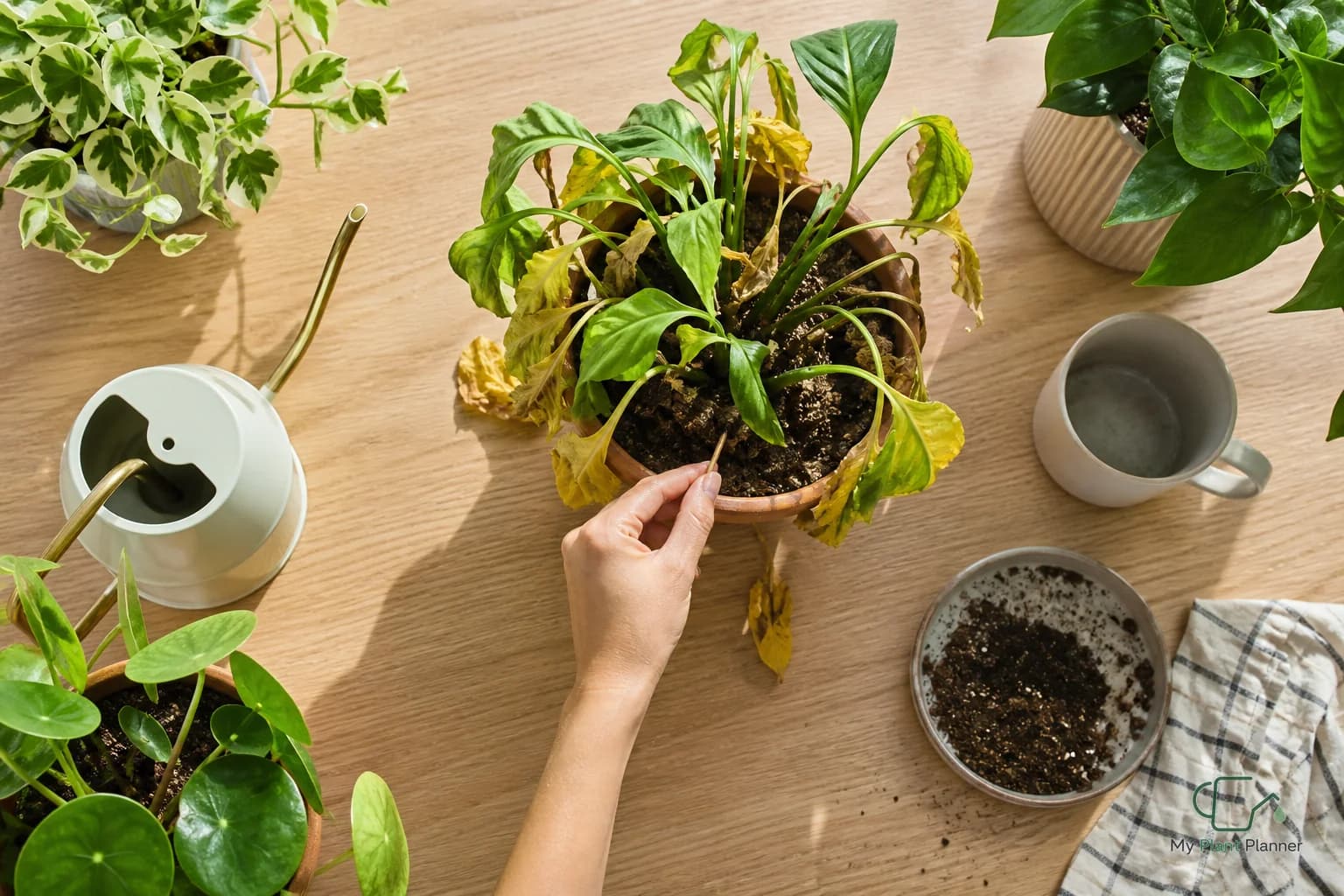
A thirsty plant can look dramatic, but drama is not proof. Drooping leaves, crispy tips, and curled foliage can point toward underwatering, but they can also show up when light, heat, pot size, or drainage are off.
The better move is to stop treating one sad leaf like a verdict. Look for a pattern across the plant, the pot, and the soil.
Direct answer
Common underwatering signs in houseplants include very dry soil, a pot that feels unusually light, drooping that improves after watering, curling or folding leaves, crispy brown edges, slower growth, and soil pulling away from the sides of the pot.
One sign alone is not enough. A peace lily may flop when thirsty, while a snake plant may barely react until it has been dry for a while. Thin leaved tropical plants usually complain faster than succulents or thick leaved plants.
Use these signs as a reason to check the soil, not as permission to pour water on autopilot.
If you want a broader check method, read How to tell if an indoor plant needs water.
What underwatering usually looks like
Underwatering means the plant is not getting enough usable moisture for its current conditions. That can happen because you wait too long between waterings, but it can also happen because water runs down the sides of a dried out root ball and never soaks the middle.
Watch for these common clues:
- The top few inches of soil are dry and the pot feels light.
- Leaves droop, curl, fold, or look thinner than usual.
- Leaf edges turn crispy rather than soft or mushy.
- Older leaves yellow, dry, and drop after repeated dry stretches.
- Soil shrinks away from the pot wall.
- Water races through the pot almost immediately.
- The plant perks up within a day or two after a thorough watering.
That last point is useful, but do not overread it. Some plants recover visibly. Others respond slowly.
Context matters more than the calendar
A plant can be underwatered on a weekly schedule in one home and overwatered on the same schedule in another. The calendar is only a reminder to check.
These factors change how quickly a plant dries:
Light level: Bright indirect light usually dries soil faster than a dim corner. More light often means more growth, more water use, and a shorter check window.
Pot size: Small pots dry faster because there is less soil holding moisture. Oversized pots may stay wet deep down even when the surface looks dry.
Plant type: Pothos, philodendron, peace lily, and calathea often show thirst more clearly than snake plants, ZZ plants, and many succulents.
Season: Many indoor plants use less water in winter when days are shorter and growth slows. Summer heat, fans, and air conditioning can dry pots faster.
Indoor climate: Dry air, warm rooms, vents, and terracotta pots all push soil toward drying faster.
If light seems to be the main variable, How light level changes your indoor plant watering schedule is a good next read.
Common mistakes when people suspect underwatering
The biggest mistake is panic watering every droopy plant. Drooping can come from dry soil, but it can also come from soggy roots, heat stress, recent repotting, or a plant sitting in harsh direct sun.
Another mistake is giving tiny sips. A splash on the surface may make you feel productive, but the deeper roots may stay dry. If the plant actually needs water and the pot has drainage, water the soil evenly until excess starts to drain, then empty the saucer.
People also miss hydrophobic soil. When potting mix gets extremely dry, it can repel water at first. You might water, see liquid run out the bottom, and assume the plant is soaked. In reality, the root ball may still be dry in the center. Slow watering, watering in rounds, or bottom soaking for a short period can help rehydrate the mix. Let it drain well afterward.
The sneakiest mistake is changing the schedule after one weird week. A hot weekend, open window, or skipped watering can throw off one cycle. Adjust after you see the same pattern a couple of times.
Questions to check before watering
Before you water a plant that looks thirsty, ask:
- Is the soil dry below the surface, or only on top?
- Does the pot feel lighter than it did after watering?
- Are the leaves crispy, curled, or limp?
- Did the plant improve after the last thorough watering?
- Is it sitting in brighter light, warmer air, or near a vent?
- Is the pot very small for the plant?
- Does water run straight through without soaking in?
You do not need fancy tools. Your finger, the pot weight, and a quick look at the leaves will catch a lot.
Simple underwatering checklist
Use this when a plant looks thirsty:
- Check soil moisture with your finger or a wooden chopstick.
- Lift the pot and compare its weight to how it feels after watering.
- Look for crispy edges, curled leaves, or dry soil pulling from the pot.
- Water thoroughly if the soil is dry enough for that plant type.
- Let extra water drain and empty the saucer.
- Check again over the next day or two for recovery.
- Shorten the next check window by a few days if the plant dried out too far.
- Repeat for two or three cycles before making a big schedule change.
A practical example: if you usually check a pothos every 10 days and it is repeatedly bone dry by then, start checking around day 7 instead. That is not a fixed watering day. It is a better inspection window.
When underwatering is not the only issue
If a plant looks dry but the soil is still wet, pause. Adding more water can make things worse. Soft stems, mushy leaves, sour smelling soil, or fungus gnats can point to a different moisture problem, though you should avoid treating any single symptom as a final diagnosis.
If the soil is dry but the plant keeps declining after careful watering adjustments, look at the whole setup: light, pot drainage, root crowding, temperature swings, and whether the plant type matches the room.
A calmer way to water
Underwatering is usually fixable when you catch the pattern early. The goal is not to memorize a perfect date. The goal is to build a check rhythm that matches your plant, pot, light, season, and room.
Start with a reasonable watering check window, test the soil, water thoroughly when the plant is ready, and adjust after a couple of cycles.
If you want help setting that starting window, try My Plant Planner. It gives you a practical indoor watering check window based on plant type, light, pot size, season, and indoor climate.
Practical note
This article is general indoor plant care information. Watering windows are starting points, not guarantees. Your plant, pot, soil, light, season, and home climate can all change the right timing.
My Plant Planner gives general indoor plant-care guidance. Always check soil and plant condition before watering.