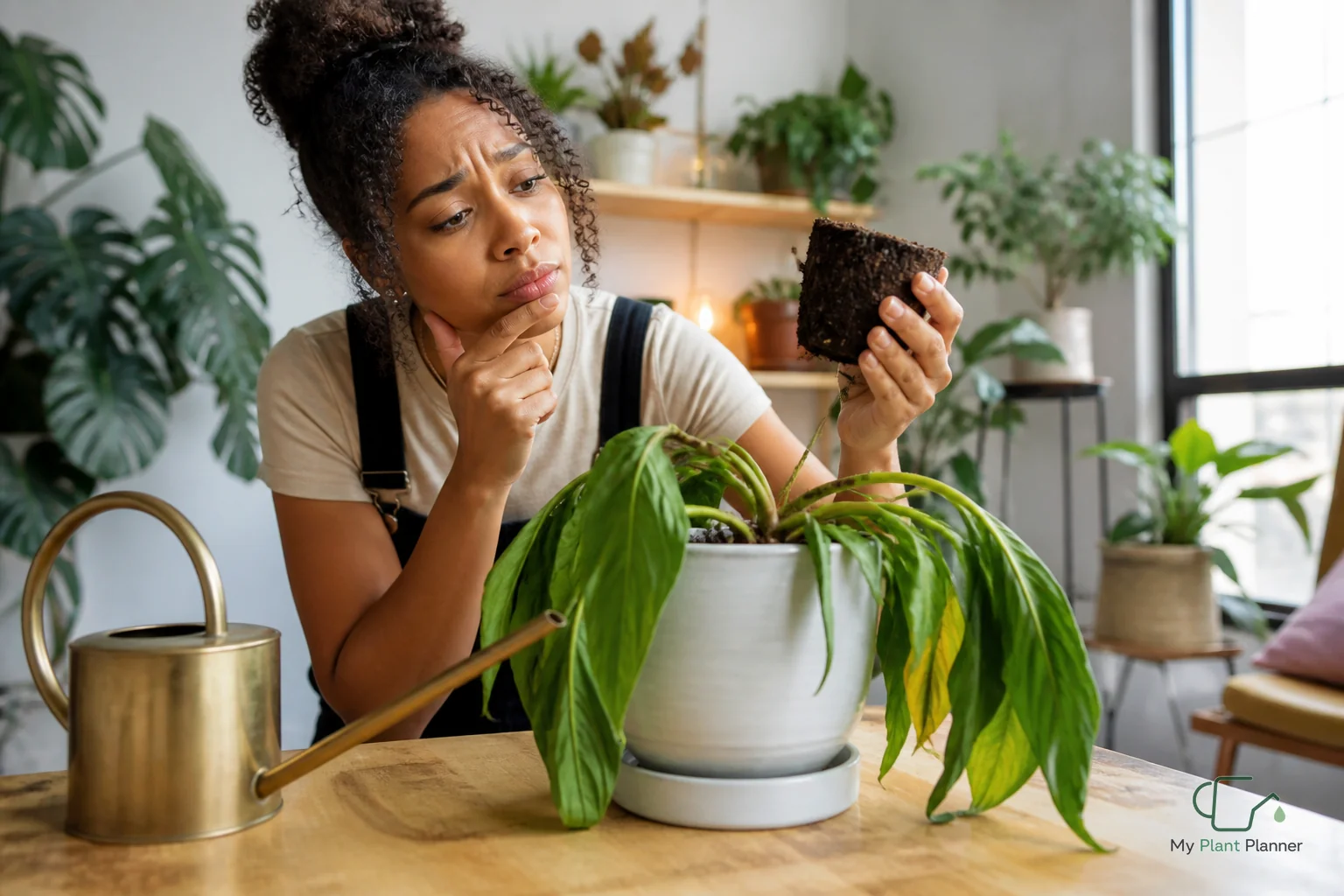
A drooping houseplant is annoyingly vague. It can mean the plant is dry. It can also mean the roots are too wet and struggling. If you water every time a leaf flops, you can turn a small problem into a bigger one.
The better move is slower and less dramatic: check the soil, check the pot, think about what changed, then decide.
The short answer
Do not water a drooping houseplant just because it is drooping.
Water if the soil has dried to the right depth for that plant, the pot feels noticeably lighter, and the plant is within its normal watering check window.
Wait if the soil is still damp, the pot feels heavy, the plant was watered recently, or the droop appeared after a cold draft, hot sun, repotting, or a sudden light change.
Droop is a symptom. It is not a schedule.
If you want a broader refresher on reading soil and plant signals, see How to tell if an indoor plant needs water.
Why droop happens
Most casual plant owners treat droop like a low fuel light. That works sometimes, especially with thirsty plants like peace lilies. But it fails badly with plants that hate sitting wet.
Drooping can happen when:
- The soil is too dry and the plant cannot move enough water into the leaves
- The soil is too wet and the roots are not functioning well
- The plant is reacting to heat, direct sun, or a cold draft
- The plant was recently repotted or moved
- The pot has poor drainage
- The plant is in lower light and drying much more slowly than expected
That is why the soil check matters more than the leaf drama.
The context factors that change the answer
Plant type
A peace lily may droop quickly when it gets dry. A snake plant or ZZ plant may not show much at all until conditions are already off. Pothos, philodendron, and spider plants often sit somewhere in the middle.
Succulent leaning plants usually need more caution. If a snake plant droops and the soil is damp, more water is usually the wrong next move.
Soil depth
Do not judge only the top dusting of soil. The top can look dry while the lower pot is still wet.
For many common tropical houseplants, checking the top inch or two is a decent starting point. For drought tolerant plants, you may need the mix to dry much farther down before watering.
Pot weight
Pick up the pot after watering and again when it is dry enough to check. You will learn the difference faster than you think.
A heavy pot plus droopy leaves is a warning to pause. A light pot plus dry soil is a stronger sign that watering may be due.
Light and season
A plant in bright indirect light usually dries faster than the same plant across the room. Winter, cloudy stretches, air conditioning, and cooler rooms can all slow drying.
This is where fixed weekly watering gets people in trouble. Weekly can be too often for a plant in low light and too slow for a thirsty plant in a warm bright spot.
For the weekly watering trap, read Why watering houseplants once a week is often too much.
Common mistakes with drooping plants
Watering the second you see a floppy leaf
This is the classic panic move. It feels kind, but it skips the only question that matters first: is the soil actually ready for water?
If the answer is no, watering adds stress instead of solving it.
Checking only the surface
Dry topsoil is not proof the whole pot is dry. Stick a finger into the mix, use a wooden chopstick, or learn the pot weight. Surface checks are useful, but shallow.
Ignoring the cachepot
A decorative outer pot can hide standing water. If the nursery pot sits in a puddle, the roots stay wet even if the top looks normal.
After watering, let excess water drain fully. Then empty the saucer or outer pot.
Treating every plant like a peace lily
Peace lilies are famous for dramatic drooping. Many other plants are not asking for the same treatment. A rubber plant, snake plant, aloe, or ZZ plant generally wants more drying time than a peace lily.
Plant type matters. The same symptom does not mean the same action.
Questions to check before watering
Before you water a drooping houseplant, ask:
- When did I last water it?
- Is the soil dry at the depth this plant prefers?
- Does the pot feel light or still heavy?
- Is there water sitting in the saucer or decorative pot?
- Did the plant recently move to brighter, darker, hotter, or colder conditions?
- Did I repot it recently?
- Is this plant known to droop when thirsty, or is it usually drought tolerant?
If two or three answers point to dry soil, watering is reasonable. If the answers point to damp soil, wait and improve airflow or drainage instead of adding more water.
A simple drooping plant checklist
Use this before you pour:
- Check the soil below the surface
- Lift the pot and notice whether it feels light or heavy
- Look for standing water in the saucer or cachepot
- Check whether the plant was watered in the last few days
- Consider light, season, heating, cooling, and recent moves
- Water only if the soil is dry enough for that plant type
- After watering, let the pot drain fully
- Recheck the plant over the next day or two, not every ten minutes
One more thing: some plants perk up quickly after watering, but not all of them. Leaves can take time to respond. Do not keep adding water because the plant did not recover on your preferred timeline.
When waiting is the safer move
Waiting is often smarter when the plant is drooping but the soil is damp.
That does not mean ignore the plant. It means stop adding water until the pot gives you better information. Make sure drainage is clear. Empty any standing water. Move the plant away from harsh direct sun, cold glass, heater blasts, or air conditioner vents if those are in play.
If the plant continues declining, there may be a problem beyond watering. Avoid guessing with certainty from one symptom. Droop can overlap with several issues.
Build a calmer watering rhythm
A drooping plant is asking you to check, not panic.
Set a watering check window based on the plant, pot size, light, season, and indoor climate. Then use soil and pot weight to decide what to do on check day. After a couple of cycles, adjust the window if the plant is drying faster or slower than expected.
If you want help setting that first check window, try My Plant Planner. It gives you a practical indoor watering starting point so you are not guessing from one sad leaf.
Practical note
This article is general indoor plant care information. Watering windows are starting points, not guarantees. Your plant, pot, soil, light, season, and home climate can all change the right timing.
My Plant Planner gives general indoor plant-care guidance. Always check soil and plant condition before watering.