Rubber plants are forgiving, but they are not fans of soggy soil. The mistake is usually not one big watering. It is watering again before the pot has had a fair chance to dry.
A rubber plant, also sold as Ficus elastica, does best when you treat watering as a check window instead of a calendar command. Your home, pot, light, and season all change the pace.
The safe version of that window gives the roots time to breathe before the next drink. It is less about stretching the plant dry and more about avoiding a second watering while the middle of the pot is still damp.
The direct answer
For most indoor rubber plants, start by checking the soil every 7 to 14 days.
That range is a safe indoor check window, not a command to water every time the reminder comes up.
In bright indirect light, many rubber plants are ready to be checked around every 7 to 10 days. In medium light, start closer to every 10 to 14 days. In lower light, cool rooms, or heavy pots, the check window may stretch closer to 14 to 21 days.
That is not a promise that your plant needs water on day 10. It is a reminder to inspect the pot. Water when the top few inches of soil feel dry and the pot feels noticeably lighter than it did after the last watering.
For a safer check, look below the surface before you pour. The top can feel dry while the root zone is still holding enough moisture.
When you do water, water thoroughly until excess drains from the bottom, then let the pot drain fully. Do not let the nursery pot or decorative cover pot sit in standing water.
What changes the rubber plant watering window
Rubber plants have thick leaves and woody stems, so they can handle a little drying between waterings better than many softer leaf plants. They still need consistent care, just not constant water.
The biggest factors are simple.
Light level: Brighter indirect light usually means faster drying. Lower light slows growth and keeps soil wet longer. If you are still sorting out your room, this guide on How light level changes your indoor plant watering schedule is a useful companion.
Pot size: A tiny pot dries fast. A large pot with extra soil can stay damp around the roots for much longer. The plant may look big above the soil, but the water math happens inside the pot. For more on that, read How pot size affects indoor plant watering frequency.
Drainage: A pot with drainage holes gives you room to water properly. A pot without drainage turns every watering into a gamble. If you love the decorative pot, keep the plant in a nursery pot inside it and remove it to water.
Season: Rubber plants often dry faster during warm, bright months and slower during cooler, darker months. Indoor heat and air conditioning can also change the rhythm.
Soil mix: Dense, old, compacted soil holds water longer. A lighter indoor potting mix with some drainage material usually gives you more margin for error.
Common mistakes with rubber plant watering
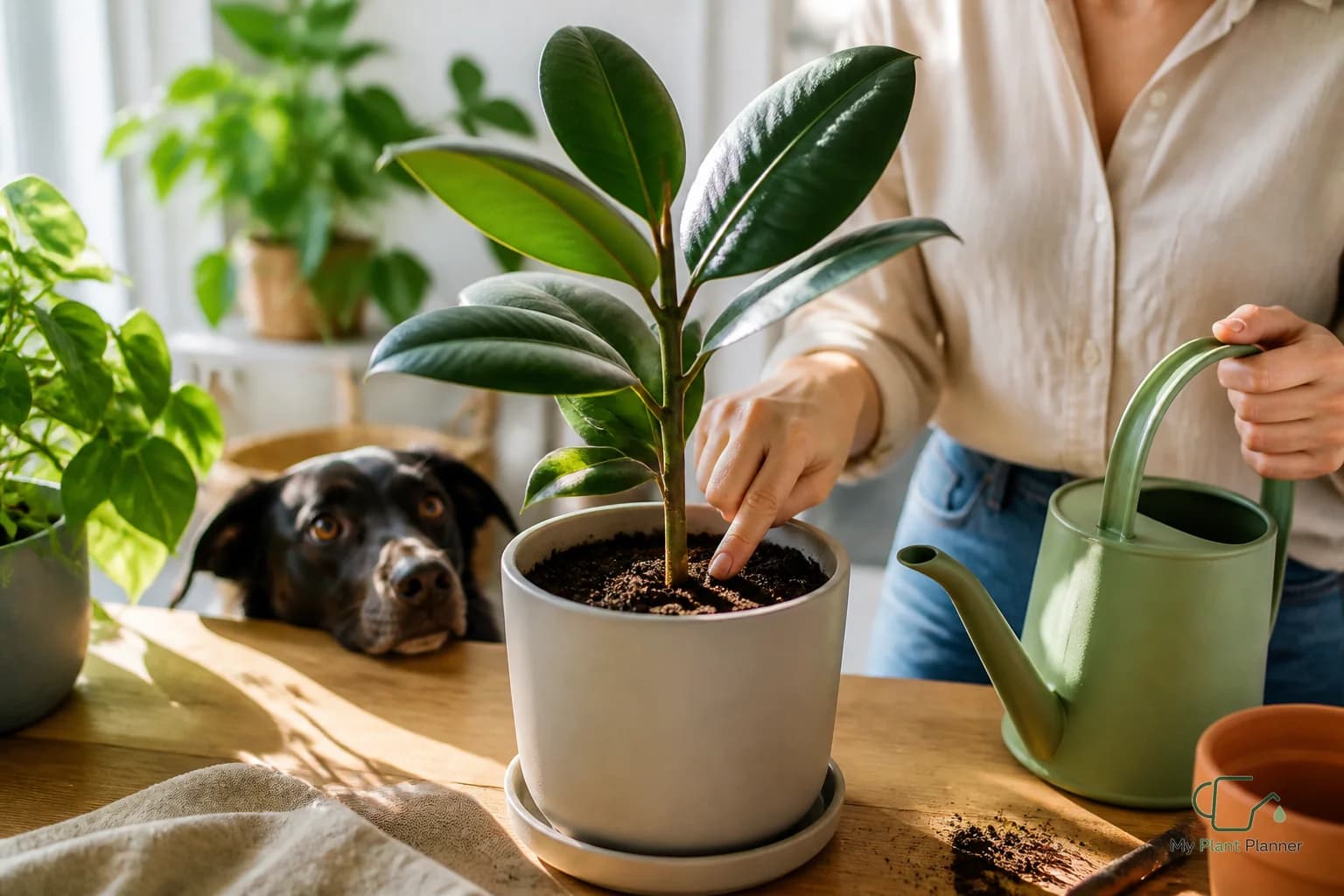
The biggest mistake is watering because the top surface looks dry. The surface can dry while the middle of the pot is still damp. Push a finger down a couple of inches if the pot size allows it. For deeper pots, use a wooden skewer or moisture meter as a second opinion, not a judge and jury.
Another mistake is giving tiny sips. A splash on top can wet the surface while leaving the lower root area dry. If the plant is ready for water, water evenly and thoroughly, then let it drain.
People also overcorrect after seeing a yellow leaf or a droopy leaf. A single leaf does not tell the whole story. Yellowing, drooping, and leaf drop can happen for more than one reason, including changes in light, temperature, root stress, or watering rhythm. Check the soil before changing the routine.
And yes, the weekly watering habit causes trouble here. Some rubber plants in bright rooms may be ready around a week. Others will still be damp. The plant does not care what day it is.
Questions to check before you water
Before you add water, ask five quick questions.
- Does the top few inches of soil feel dry, not just the surface?
- Does the pot feel lighter than it did after the last full watering?
- Is the plant in bright indirect light, medium light, or lower light?
- Does the pot have drainage holes?
- Has the room been warmer, cooler, brighter, or darker than usual lately?
If the soil still feels damp, wait a few more days and check again. Waiting is not neglect when the pot is still holding moisture.
A simple rubber plant watering checklist
Use this as a starting routine for the next couple of cycles.
- Set a first check window of 7 to 14 days after watering.
- Check deeper than the soil surface.
- Water when the top few inches are dry and the pot feels lighter.
- Water until extra water drains out of the bottom.
- Empty any saucer or cover pot after watering.
- Write down how many days it took to dry.
- Adjust the next check window earlier or later based on what actually happened.
After two or three rounds, you will usually see your plant’s pattern. A rubber plant near a bright window might keep asking for checks around day 8. One across the room in a larger pot might be closer to day 16. Both can be normal.
A careful way to adjust
If your rubber plant is staying wet for a long time, do not keep watering on schedule. Give it more time, check drainage, and consider whether the pot is too large or the light is too low.
If the soil is drying very quickly, check whether the plant is root crowded, sitting in strong sun, near a vent, or in a small terracotta pot. You may need a shorter check window, but still let the soil guide the final call.
The safest rhythm is boring in the best way: check, feel, water fully when ready, drain, repeat. Rubber plants reward consistency, not panic.
If you want a starting check window built around your plant type, light, pot size, season, and indoor climate, try My Plant Planner. Treat it as a practical starting point, then adjust after a couple of real watering cycles.
Practical note
This article is general indoor plant care information. Watering windows are starting points, not guarantees. Your plant, pot, soil, light, season, and home climate can all change the right timing.
My Plant Planner gives general indoor plant-care guidance. Always check soil and plant condition before watering.