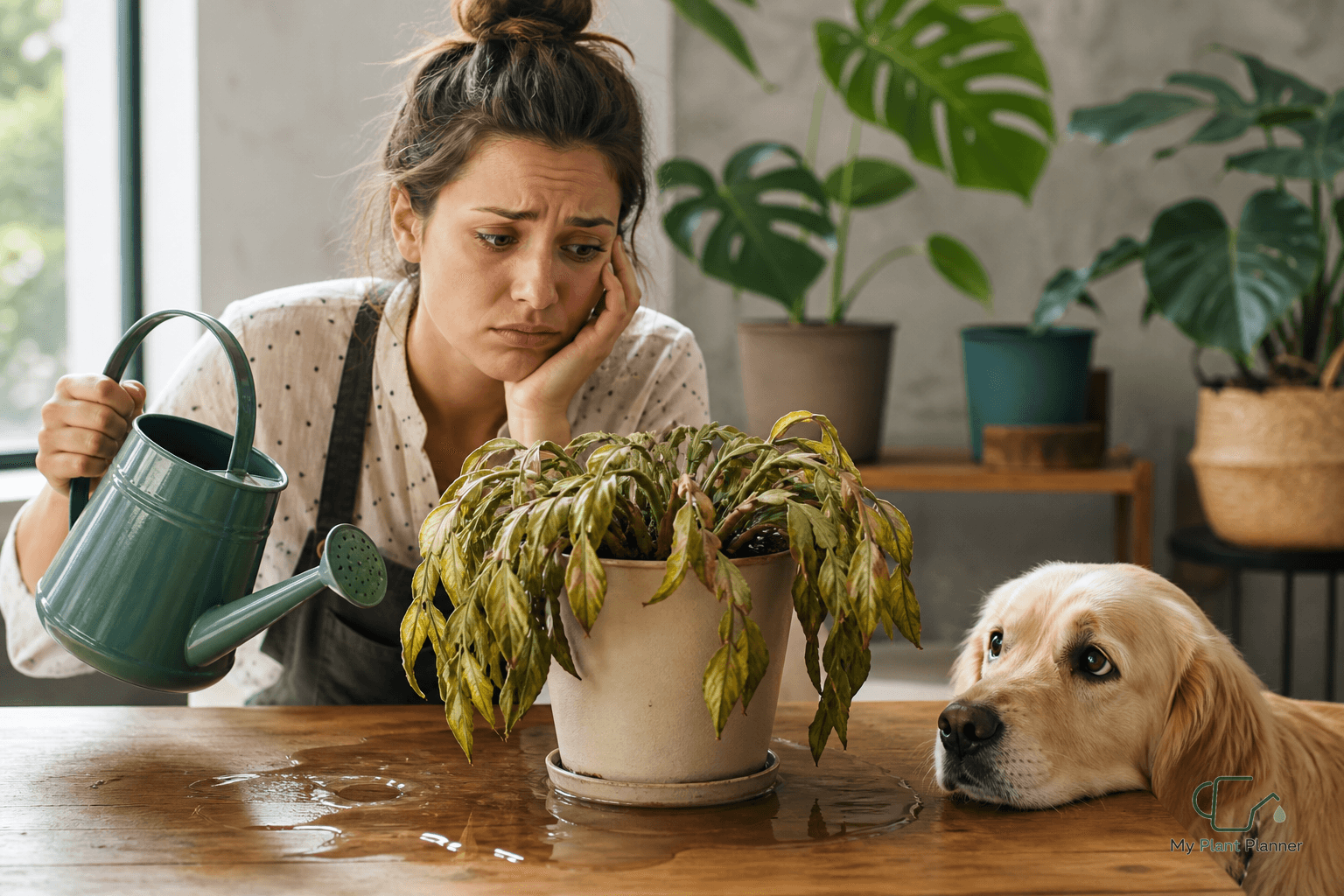
A droopy leaf does not automatically mean your plant wants more water. That is where a lot of indoor plant owners get trapped. They see a sad plant, water it again, and accidentally make the root zone even wetter.
Overwatering is one of the most common houseplant problems, but the signs are easy to misread because they overlap with underwatering, low light, cold rooms, and normal older leaf loss.
The direct answer
Common overwatering signs in houseplants include soil that stays wet for several days, yellowing leaves, soft or mushy stems, limp growth, leaf drop, and a pot that feels heavy long after watering.
But one sign by itself is not proof. A yellow leaf can happen for plenty of reasons. The better question is: does the plant look stressed while the soil is still damp?
If the answer is yes, pause before watering again. Check the soil depth, drainage hole, light level, pot size, and recent watering pattern. Overwatering is less about one generous drink and more about roots sitting in damp soil too often.
What overwatering actually means
Overwatering does not always mean you poured too much water at once. A thorough watering can be healthy if the pot drains well and the plant has time to dry appropriately.
The real issue is frequency plus slow drying conditions.
A plant can be overwatered when:
- The soil is watered again before it has dried enough
- The pot has no drainage hole
- The plant sits in water inside a cachepot or saucer
- The room is cool or humid, so moisture lingers
- The plant is in low light and using water slowly
- The pot is much larger than the root system
That is why a fixed weekly schedule can backfire. If you want the bigger breakdown, read Why watering houseplants once a week is often too much.
Signs your houseplant may be getting too much water
Soil stays wet too long
This is the sign to take seriously. If the top inch dries but the soil below still feels wet many days later, your plant may not be ready for another drink.
Use your finger, a wooden chopstick, or a moisture meter as a rough check. Do not rely only on the calendar.
Leaves turn yellow while the soil is damp
Yellowing leaves can happen from age, stress, light changes, or watering problems. The overwatering clue is yellowing paired with consistently damp soil.
Older lower leaves yellowing one at a time can be normal. Several yellow leaves appearing while the pot is wet deserves a closer look.
Stems or leaf bases feel soft
Soft, mushy, or weak stems can be a warning sign that the root zone has been too wet. Do not diagnose the whole plant from one soft bit, but do stop watering until you understand what the soil is doing.
The plant droops after watering
This one tricks people. A thirsty plant can droop, but an overwatered plant can droop too. If the plant is limp and the soil is wet, more water is usually the wrong move.
For a broader check method, use How to tell if an indoor plant needs water.
The pot feels heavy for days
Lift the pot after watering, then again a few days later. If it still feels heavy and cool, the soil may be holding a lot of moisture. This is especially useful for nursery pots inside decorative planters.
Context that changes the risk
The same watering rhythm can be fine for one plant and too much for another.
Plant type
Snake plants, ZZ plants, succulents, and cacti usually prefer longer dry periods. Peace lilies, ferns, and many calatheas usually dislike drying out completely, but they still do not want stale wet soil.
Light level
More light usually means faster water use. Lower light usually means slower drying. If you move a plant away from a bright window, your old watering rhythm may become too frequent.
Pot size
A big pot around a small root ball can stay wet for too long. The plant cannot use all that moisture quickly, so the lower soil remains damp even when the top looks dry.
Season
Many indoor plants use less water in winter or during cooler, darker stretches. Summer heat, brighter windows, and active growth can shorten the check window.
Drainage
A drainage hole is not optional if you want easier watering. Without one, extra water has nowhere to go, and the bottom of the pot can stay soggy while the top looks harmless.
Common mistakes that make overwatering worse
The biggest mistake is watering because the plant looks sad without checking the soil first.
Other common traps:
- Watering every plant on the same day
- Adding a little splash every few days instead of checking the root zone
- Letting water sit in the saucer
- Using a decorative pot with no drainage
- Keeping a low light plant on a summer watering rhythm all year
- Repotting into a much larger pot and keeping the same schedule
None of these mean you are bad at plant care. They mean your system is too blunt. Plants do better with check windows than rigid rules.
Questions to ask before watering again
Before you add water, ask:
- Is the top inch dry, damp, or wet?
- What does the soil feel like lower down?
- Does the pot still feel heavy?
- Is there standing water in the saucer or outer pot?
- Has the plant been in lower light lately?
- Is the room cooler or more humid than usual?
- Is this plant the type that likes to dry between watering?
- Did the symptoms show up while the soil was still damp?
If several answers point to damp soil and slow drying, wait. Recheck in a few days instead of watering on reflex.
Simple overwatering checklist
Use this when you are unsure:
- Check soil moisture before watering
- Empty saucers and decorative outer pots after watering
- Make sure the pot has a drainage hole
- Move the plant closer to suitable light if it has been sitting too dark
- Stretch the next watering check window by a few days
- Track what happens over the next two watering cycles
- Adjust slowly instead of changing soil, pot, light, and water all at once
If the soil is staying wet for a long time, focus first on drainage, light, and waiting longer between checks. If the plant declines quickly or the stem feels badly mushy, consider getting local plant shop advice with the plant in hand.
A calmer way to water
Overwatering is not solved by never watering. It is solved by matching your check window to the plant, pot, light, season, and room conditions.
Your goal is not a perfect date. Your goal is a reliable moment to check the soil and decide.
My Plant Planner can help you build a practical watering check window based on your plant type, light, pot size, season, and indoor climate. Start here: My Plant Planner.
Practical note
This article is general indoor plant care information. Watering windows are starting points, not guarantees. Your plant, pot, soil, light, season, and home climate can all change the right timing.
My Plant Planner gives general indoor plant-care guidance. Always check soil and plant condition before watering.