Droopy leaves are annoying because they look urgent. Most people see a sad plant and reach for the watering can. Sometimes that helps. Sometimes it makes the problem worse.
Overwatering and underwatering can look weirdly similar from across the room. The better move is to stop guessing from leaf shape alone and check the growing conditions around the plant.
The short answer
Your houseplant is more likely underwatered if the soil is dry deeper down, the pot feels light, leaves feel thin or crispy, and the plant perks up after a careful watering.
Your houseplant is more likely overwatered if the soil stays wet for days, the pot feels heavy, leaves feel soft or yellowing, and the container has poor drainage or sits in low light.
That still is not a diagnosis. It is a starting read. Plants respond to light, pot size, soil mix, season, humidity, temperature, and how long the roots have been sitting in their current conditions.
If you want the deeper symptom lists, compare these guides after you check the soil: Overwatering signs in common houseplants and Underwatering signs in common houseplants.
Why overwatering and underwatering get confused
Both problems can interrupt water movement through the plant.
When a plant is too dry, there is not enough available moisture for the roots to pull up. Leaves may droop, curl, crisp, or feel papery.
When a plant stays too wet, the roots can struggle to function well. Even though water is present, the plant may still droop because the roots are stressed by soggy conditions and low oxygen around them.
That is why the phrase “my plant is drooping” is not enough. Drooping is a clue, not an answer.
The soil tells you more than the leaves do.
Check these factors before you water
Soil moisture below the surface
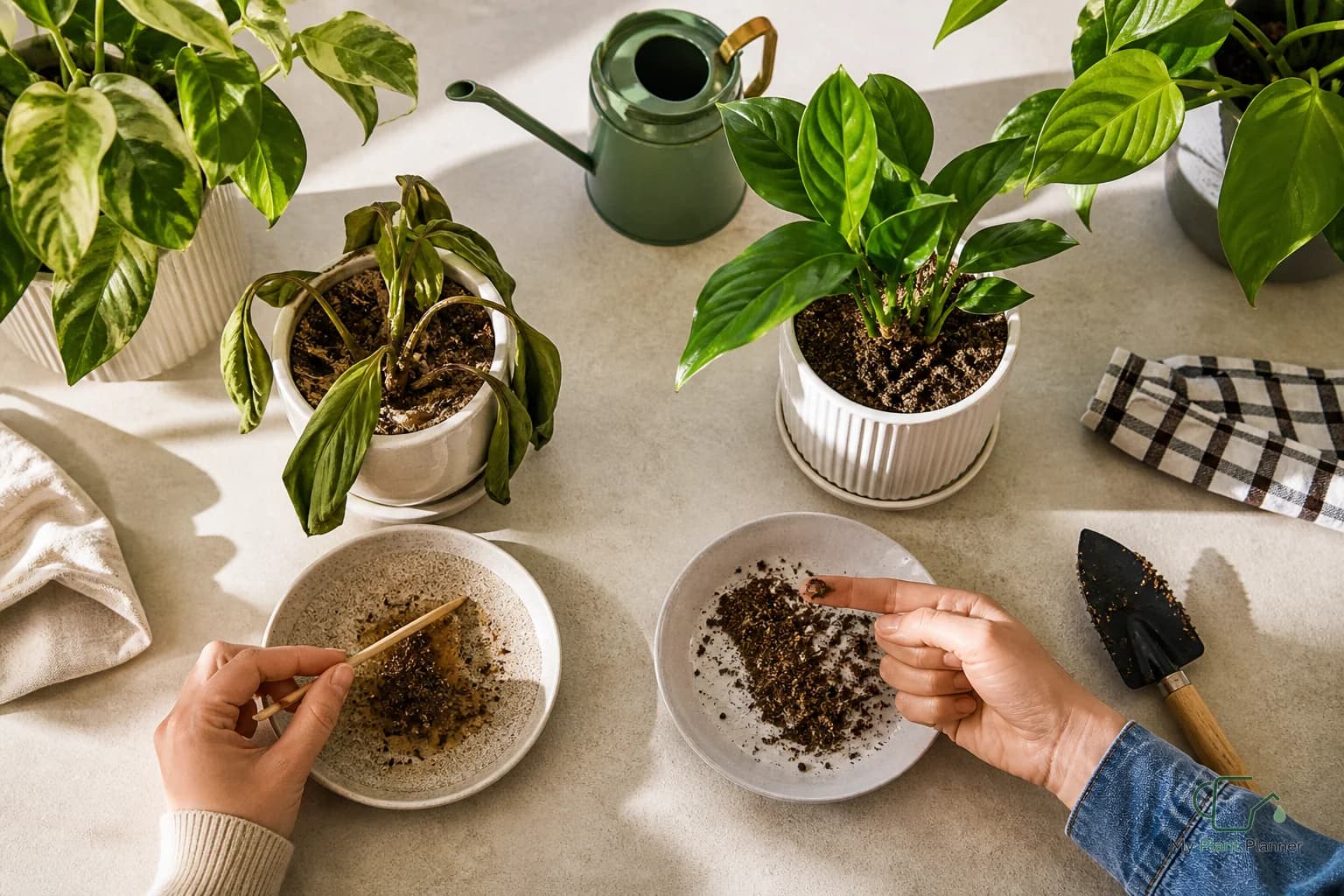
Do not judge only by the top of the soil. The surface can look dry while the lower half of the pot is still damp.
Use a finger, wooden chopstick, bamboo skewer, or moisture meter as a rough check. For many common indoor plants, you want to know whether the top inch or two is dry, or whether the dryness goes deeper.
A snake plant or ZZ plant may want a much longer dry period than a peace lily or calathea. The right check window depends on the plant.
Pot weight
Pick up the pot after watering and again when it is mostly dry. This is one of the fastest ways to build plant sense.
A very light pot with dry soil points toward underwatering. A heavy pot that has stayed damp for several days points toward overwatering risk.
Leaf texture
Crispy, papery edges often show up when a plant has been too dry, exposed to strong sun, or sitting in very dry indoor air.
Soft, limp, yellowing leaves often show up when soil has been too wet, especially if drainage is weak. But do not use one leaf as proof. Older leaves naturally age and yellow.
Drainage
If the pot has no drainage hole, every watering is riskier. Extra water has nowhere easy to go.
If the plant sits in a saucer full of runoff, the bottom of the pot can stay soggy even when the top looks fine. Empty the saucer after watering.
Light level and season
A plant in bright indirect light usually uses water faster than the same plant in a dim corner. Summer growth often changes the check window too. In winter, many indoor plants slow down and stay wet longer.
This is where fixed schedules cause trouble. “Every Saturday” sounds organized, but the plant may not care what day it is.
Common mistakes that make the wrong problem worse
The biggest mistake is watering every droopy plant immediately. If the soil is already wet, more water does not rescue it.
Another mistake is giving tiny sips every few days. That can keep the top layer damp without properly hydrating the root ball. When a plant is actually dry and ready, water thoroughly until excess drains out, then let the pot move back toward its preferred dryness range.
People also repot too fast. Repotting can help in some cases, especially with poor drainage or compacted soil, but it is stressful. First, check whether your watering rhythm, light level, and drainage setup are the obvious issue.
And yes, moisture meters can lie. They are useful as one signal, not the judge and jury. Use them with finger checks, pot weight, and the plant’s recent history.
Questions to ask before deciding
Ask these in order:
- When did I last water this plant?
- Was that a full watering, or just a small splash?
- Is the soil dry only on top, or dry deeper down?
- Does the pot feel light or heavy compared with right after watering?
- Is the plant in bright indirect light, medium light, or low light?
- Does the pot have a drainage hole?
- Has the room been hotter, colder, drier, or darker lately?
- Is this plant known to prefer drying out, or does it like more even moisture?
Those answers usually beat panic watering.
A simple check before you act
Use this quick checklist when a plant looks off:
- Check the soil below the surface, not just the top crust.
- Lift the pot and notice whether it feels unusually light or heavy.
- Look at leaf texture: crispy and thin, or soft and yellowing.
- Check the drainage hole and empty any standing saucer water.
- Think about light level and season before following last month’s rhythm.
- If the soil is dry for that plant type, water thoroughly and let it drain.
- If the soil is still wet, wait and improve airflow or light if possible.
- Recheck in a few days instead of making three changes at once.
The goal is not to create a perfect rule. The goal is to make fewer bad guesses.
What to do next
If the plant seems underwatered, water slowly and evenly until water runs from the drainage hole. Let it drain fully. Then watch how quickly the soil dries over the next cycle.
If the plant seems overwatered, do not add more water just because the leaves look sad. Let the soil dry to the right level for that plant, make sure the pot drains, and avoid leaving it in standing water.
For the next two or three cycles, write down when you checked, what the soil felt like, and whether you watered. That boring little note is how you find the pattern for your home.
Keep the stakes simple
A struggling plant does not need a dramatic rescue plan every time. It usually needs a better check window.
Overwatered and underwatered plants can look alike, so slow down before you pour. Check the soil, feel the pot, look at the leaves, and adjust based on what changed indoors.
If you want a calmer starting point, use My Plant Planner to build a practical watering check window based on plant type, light, pot size, season, and indoor climate.
Practical note
This article is general indoor plant care information. Watering windows are starting points, not guarantees. Your plant, pot, soil, light, season, and home climate can all change the right timing.
My Plant Planner gives general indoor plant-care guidance. Always check soil and plant condition before watering.