Most people check the top of the soil, see it looks dry, and reach for the watering can. That works sometimes. It also causes a lot of soggy roots in pots that are dry on top and wet underneath.
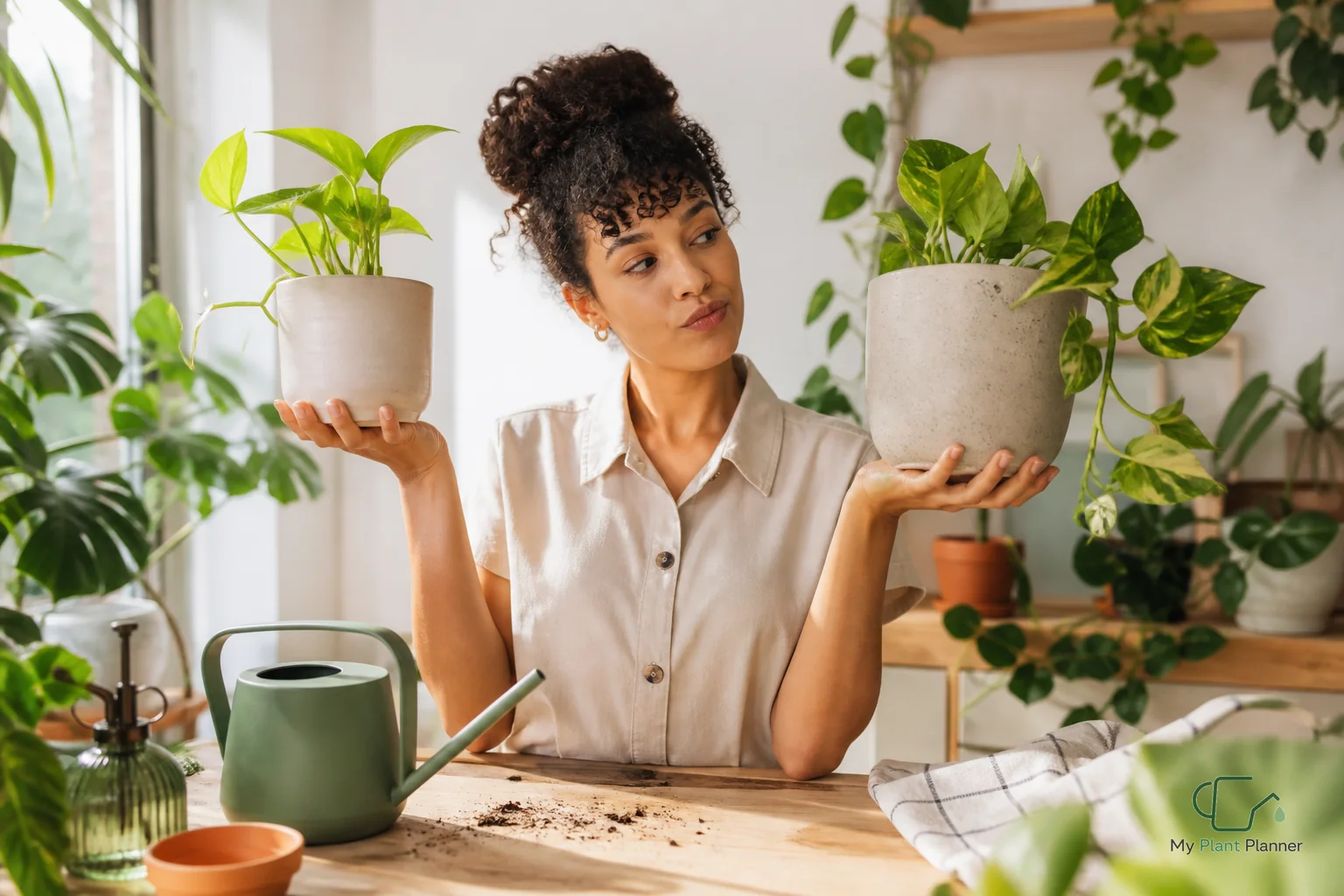
Pot weight gives you another clue. Not a perfect answer, not a plant whisperer trick, just a practical way to feel how much water is still sitting in the pot before you add more.
If your watering routine keeps bouncing between limp leaves, wet soil, and panic watering, learning the weight of the pot can calm the whole thing down.
The direct answer
Use pot weight as a starting signal, then confirm with the soil.
A recently watered pot usually feels noticeably heavier. As the plant uses water and moisture evaporates, the pot gets lighter. When the pot feels much lighter than it did after watering, check the soil before watering again.
For many common indoor plants, that means:
- Lift the pot after a proper watering and notice the heavy feel.
- Lift it again every few days during the normal check window.
- When it feels light, check the soil a couple inches down if the pot is deep enough.
- Water only if the soil dryness matches what that plant prefers.
This is not about memorizing one exact weight. You are training your hand to notice the difference between freshly watered, partly dry, and actually ready to check.
If the pot still feels heavy, slow down. The surface may be dry, but the lower soil can still be holding water.
Why pot weight works indoors
Indoor plants do not dry on a neat weekly schedule. Light, pot size, soil mix, room temperature, humidity, and season all change the pace.
A snake plant in a large ceramic pot across the room from a window may stay heavy for a long time. A pothos in brighter light in a smaller nursery pot may lose moisture faster. Same apartment, different watering reality.
Pot weight helps because it reflects the whole container, not just the top crust of soil. That matters because the top layer dries first. The lower half of the pot is where hidden moisture often sits.
If you want a broader read on visual and soil clues, use this with How to tell if an indoor plant needs water. Pot weight is strongest when it is one clue, not the only clue.
Key factors that change the feel
Pot material
Plastic nursery pots are easy to read because they are light. A wet plastic pot and a dry plastic pot often feel very different.
Ceramic, clay, and decorative cachepots can hide the difference because the container itself is heavy. You can still use pot weight, but the contrast may be smaller.
Pot size
Large pots hold more soil and more water. They can stay heavy long after the top looks dry. Small pots dry faster and show weight changes sooner.
This is why moving a plant into a larger pot can wreck an old watering rhythm. The plant did not suddenly become difficult. The moisture storage changed. For more on that, see How pot size affects indoor plant watering frequency.
Soil mix
Dense soil holds water longer and feels heavy longer. Chunkier mixes with bark, perlite, or other airy material often drain faster and change weight more clearly.
If the pot stays heavy for many days and the soil smells stale or looks constantly wet, do not solve that by watering less forever. Check drainage, pot size, and soil texture too.
Light level
More light usually means faster water use. Lower light usually means slower water use. A plant in a dim corner may keep a heavy pot for much longer than the same plant near bright indirect light.
The plant is not being lazy. It is using less water because it has less light to power growth.
Common mistakes with pot weight
The biggest mistake is treating a light pot as automatic permission to water. A light pot means check. It does not mean dump water immediately.
Another mistake is only lifting the pot when something looks wrong. You learn the pattern faster if you lift it right after watering, halfway through drying, and near the next watering check. Three reference points are better than one panic check.
People also forget about cachepots. If your plant sits inside a decorative outer pot, lift the inner nursery pot when possible. Water trapped in the outer pot can keep the root zone wetter than the topsoil suggests.
And yes, some plants are dramatic. Peace lilies, fittonias, and some calatheas can wilt when they get dry, but they can also look rough from stress that is not solved by another soak. Pot weight helps you avoid rewarding every sad leaf with more water.
Questions to ask before you water
Before you water based on pot weight, run through a few quick checks:
- Does the pot feel light compared with right after watering?
- Is the soil dry at the depth this plant prefers, not just on the surface?
- Does the pot have drainage holes?
- Is the plant in bright, medium, or low indoor light?
- Is the room warmer, cooler, drier, or more humid than usual?
- Has the plant recently moved to a larger pot?
- Did the last watering drain through properly, or did water sit in the pot?
You do not need a full investigation every time. You are just trying to avoid the classic mistake: watering because one clue shouted louder than the rest.
A simple pot weight checklist
Use this for one or two watering cycles until the pattern starts to feel obvious.
- Water the plant thoroughly only when the soil check says it is ready.
- Let extra water drain away instead of leaving the pot sitting in runoff.
- Lift the pot after watering and remember the heavy feel.
- Check again halfway through the expected watering window.
- When the pot feels much lighter, check the soil below the surface.
- Water only if the soil is dry enough for that plant type.
- If the pot stays heavy for too long, inspect drainage, pot size, light, and soil mix.
- Adjust the next check window after a couple of cycles.
For large floor plants, do not strain yourself trying to lift the whole thing. Gently tilt the pot if it is safe, use a moisture check deeper in the soil, or compare how the pot feels when nudged. The goal is information, not a pulled back.
Use the weight, then stay flexible
Pot weight is one of the better beginner watering habits because it slows you down. It makes you ask, "Is there still water in this pot?" before you add more.
But it is still a guide. A heavy pot can mean moisture. It can also mean a heavy ceramic container. A light pot can mean dry soil. It can also mean a tiny plastic pot that needs a deeper soil check before you decide.
After a couple of cycles, you will usually see the pattern: how fast that plant dries in that room, in that pot, during that season. That is the routine worth trusting, not a random weekly reminder.
If you want a starting check window based on plant type, light, pot size, season, and indoor climate, try My Plant Planner. Use it as a practical starting point, then let the pot and soil teach you the final adjustment.
Practical note
This article is general indoor plant care information. Watering windows are starting points, not guarantees. Your plant, pot, soil, light, season, and home climate can all change the right timing.
My Plant Planner gives general indoor plant-care guidance. Always check soil and plant condition before watering.