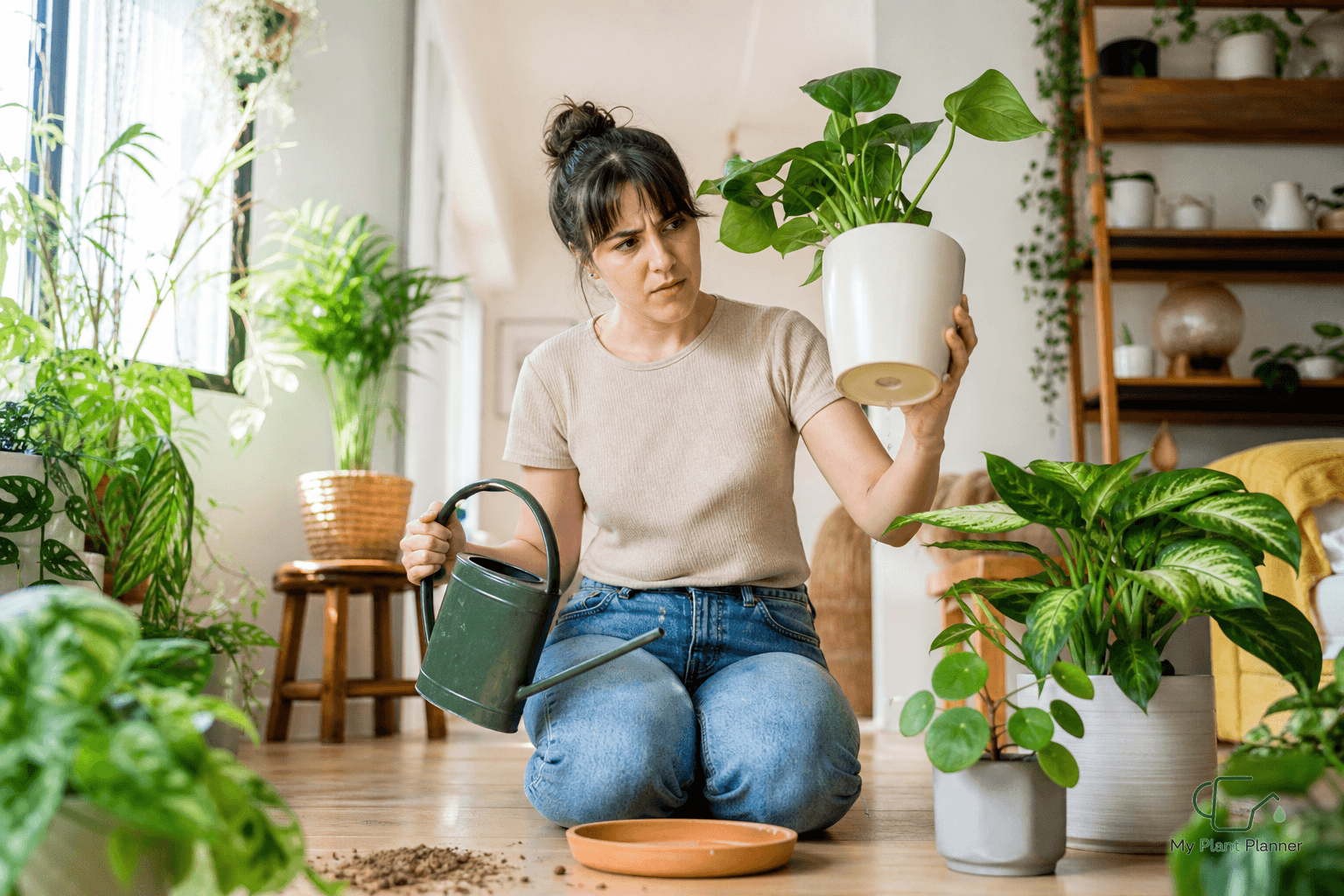
Most houseplant watering mistakes start with one bad assumption: if the plant looks sad, it must be thirsty.
Sometimes, yes. Sometimes the roots are sitting in wet soil and adding more water makes the mess worse. The better move is to check a few simple signals before you water, then adjust after you see how your plant responds.
The direct answer
An indoor plant probably needs water when the soil has dried to the right depth for that plant, the pot feels noticeably lighter than it did after watering, and the leaves are showing mild thirst signals that match the plant's normal pattern.
That is the short version. The catch is that different plants want different drying levels.
A snake plant usually wants the mix to dry much more than a peace lily. A pothos may be ready when the top inch or two has dried, especially in bright indirect light. A succulent in a large pot near a cool window may need a much longer wait.
So do not ask only, "Has it been a week?" Ask, "What is the soil doing today?"
If you are trying to break the fixed calendar habit, this is worth reading next: Why watering houseplants once a week is often too much.
What to check before you water
Start with the soil, not the leaves.
Push your finger into the potting mix if the pot is small enough. For deeper pots, use a wooden skewer, chopstick, or moisture meter as a rough guide. The surface can look dry while the lower half of the pot is still damp, especially in bigger containers.
Then pick up the pot if you can. A freshly watered pot feels heavier. A ready to check pot usually feels lighter. This takes a little practice, but it is one of the simplest ways to learn your plant's rhythm.
Look at the leaves last. Leaves can help, but they are not a perfect truth machine.
Possible thirst signals include:
- Slight drooping on plants that normally stand upright
- Softer leaves than usual
- Curling or folding leaves on some plants
- Potting mix pulling slightly away from the sides of the pot
- A pot that feels light compared with right after watering
Possible too much water signals can overlap:
- Drooping while the soil is still wet
- Yellowing leaves, especially if the pot stays damp for days
- Mushy stems or limp growth
- A sour smell from the potting mix
Those signs do not prove one exact problem. They are clues. The soil check tells you which direction to investigate.
The factors that change the answer
Watering is not just about plant type. Your room changes the schedule.
Light is the big one. A plant in bright indirect light usually uses water faster than the same plant in a dim corner. More light means more growth and more evaporation from the potting mix. Less light means the plant slows down, and wet soil hangs around longer.
Pot size matters too. Small pots dry faster. Large pots can stay wet in the middle long after the top looks dry. This is where beginners get trapped: they water because the surface is dusty, but the roots are still sitting in moisture below.
Pot material also changes the pace. Terra cotta breathes and dries faster. Plastic and glazed ceramic hold moisture longer. Neither is automatically better. You just have to water differently.
Season and indoor climate matter more than people expect. In summer, brighter windows and active growth can shorten the check window. In winter, cooler rooms and lower light often stretch it. Heating and air conditioning can also dry leaves and soil faster, depending on where the plant sits.
Plant type still matters, of course. If you want a plant specific example, How often should you water pothos shows how light, pot size, and season change the check window for one common beginner plant.
Common mistakes that make watering harder
The first mistake is watering on autopilot. A weekly reminder is fine if it means "check the plant." It is risky if it means "pour water every Friday no matter what."
The second mistake is giving tiny sips. A splash on the surface can leave deeper roots dry while making you think the plant was watered. When a plant is actually ready, water thoroughly until excess drains out, then let the pot drain fully.
The third mistake is leaving water in a decorative cachepot or saucer. Drainage only helps if the extra water has somewhere to go. If the nursery pot sits in a puddle, the bottom of the root ball can stay wet too long.
The fourth mistake is treating all droop as thirst. Peace lilies are famous for dramatic droop, but even they should not be watered blindly if the soil is still wet. Snake plants may not show obvious thirst until they have been dry for quite a while. Pothos can droop from thirst, stress, or soggy roots. Same symptom, different cause.
Questions to ask before watering
Before you grab the watering can, run through a quick set of questions:
- Is the soil dry at the depth this plant prefers?
- Does the pot feel lighter than it did after the last full watering?
- Is the plant in brighter or lower light than usual?
- Has the season changed recently?
- Is the pot large for the plant's root system?
- Does the pot have drainage, and is the saucer empty?
- Did the plant perk up after the last watering, or did it stay limp?
That last question is underrated. If the plant looked worse after watering, your next move should be slower and more careful, not another pour.
A simple watering checklist
Use this as a beginner friendly routine:
- Check the soil below the surface, not just the top crust.
- Lift the pot or tilt it gently to feel the weight.
- Look for mild leaf changes, but do not trust leaves alone.
- Confirm the pot has drainage.
- Water thoroughly only if the plant is actually ready.
- Let extra water drain away.
- Note how many days passed since the last watering.
- Adjust the next check window after two or three cycles.
The goal is not to memorize a perfect number. The goal is to learn the pattern in your room.
Adjust after a couple of cycles
A good watering plan gives you a starting check window. It does not guarantee an exact watering date forever.
If the soil is still wet when your reminder goes off, wait and check again later. If the plant is consistently drying faster than expected, shorten the check window a bit. If it stays damp for days, stretch the window and make sure the pot drains well.
Houseplants are not asking you to be psychic. They just need you to stop watering by rumor.
Want a practical starting window based on your plant, light, pot size, season, and indoor climate? Try My Plant Planner and use the result as a check window, then confirm with the soil before you water.
Practical note
This article is general indoor plant care information. Watering windows are starting points, not guarantees. Your plant, pot, soil, light, season, and home climate can all change the right timing.
My Plant Planner gives general indoor plant-care guidance. Always check soil and plant condition before watering.