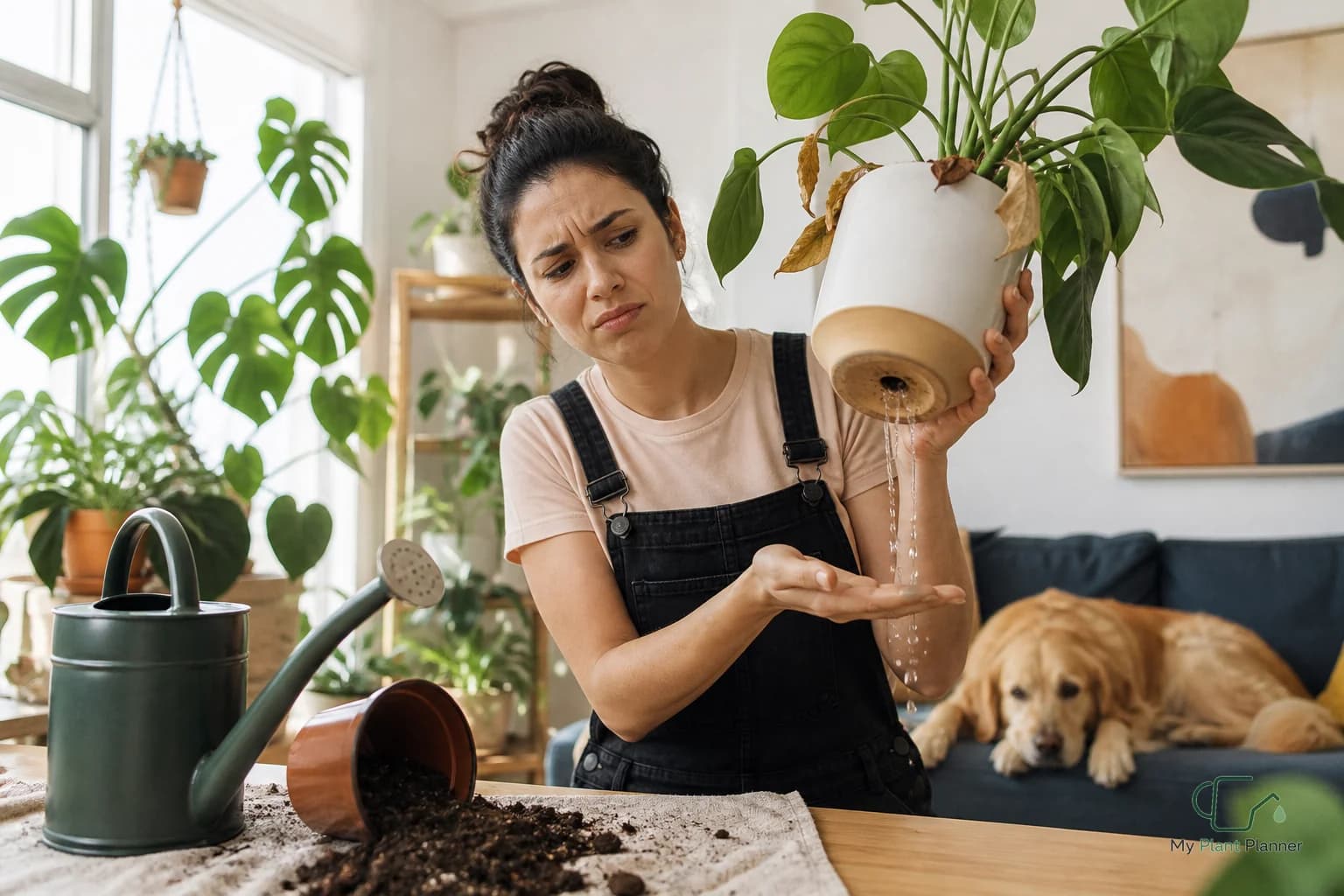
A messy watering routine usually starts with good intentions. You water on Sunday because that feels responsible. Then the soil is still damp on Thursday. Or the leaves droop two days after watering. Or one plant dries out fast while another sits wet like a sponge.
That does not mean you are bad at plants. It means your routine is too blunt for the actual conditions in your home.
The fix is not a stricter calendar. The fix is a calmer check routine that reacts to soil, light, pot size, drainage, and plant type.
The direct answer
If your houseplant watering routine is not working, stop trying to pick a perfect day. Set a check window instead.
A check window is the range of days when you inspect the plant, not an automatic watering appointment. For many common indoor plants, that means checking the soil every few days to every couple of weeks depending on the plant type, light level, pot size, season, and indoor climate.
Water only when the plant and soil are ready. If the top layer is dry but the lower soil is still damp, wait. If the pot feels very light and the soil has dried more than that plant prefers, water thoroughly and let the excess drain.
For a deeper read on reading the plant before you pour, use How to tell if an indoor plant needs water.
Why the old routine broke
Most failed watering routines are built around the calendar instead of the plant.
A pothos in bright indirect light near a warm window can dry faster than a snake plant in a dim corner. A peace lily in a small nursery pot may need checking sooner than a rubber plant in a large ceramic pot. Two plants in the same room can need different check windows because their roots, soil mix, pots, and leaves are doing different work.
The calendar is not useless. It can remind you to check. It just should not decide when water goes into the pot.
Context factors that change your check window
Plant type
Some plants tolerate drier soil better than others. Snake plants, ZZ plants, and many succulents usually prefer a longer dry-down period. Peace lilies and calatheas often dislike getting bone dry, but they still do not want to sit in heavy wet soil.
Light level
More light usually means faster water use. Lower light slows growth and slows drying. A plant that needed frequent checks in summer near a bright window may need a wider check window in a darker winter room.
Pot size
Large pots can hold moisture long after the top inch looks dry. Small pots can dry quickly, especially near heat, sun, or airflow. This is why finger checking only the surface can trick you.
Drainage
A pot with no drainage hole turns a normal watering into a riskier event. Water has nowhere clean to exit. If you use a cachepot, lift the nursery pot out after watering and empty any collected water.
Indoor climate
Air conditioning, heating, humidity, and fans all change drying speed. Dry indoor air can make leaves lose moisture faster. Cool rooms can keep soil wet longer. Both can happen in the same home.
What people usually get wrong
The big mistake is treating every symptom as a request for more water.
Drooping can happen when soil is too dry, but it can also happen when roots are sitting in wet soil and struggling. Yellowing leaves can follow overwatering, but they can also come from normal leaf aging, stress, or other care issues. Soft leaves do not automatically mean the plant is thirsty.
The second mistake is watering lightly every time you feel nervous. Tiny sips can leave the lower root zone dry on some plants, while frequent topping off can keep the upper soil constantly damp on others. Neither pattern gives you clean feedback.
The third mistake is changing everything at once. If you move the plant, repot it, fertilize it, prune it, and change the watering schedule in one weekend, you will not know which change helped or hurt.
If you are stuck between too wet and too dry, compare symptoms with Is your houseplant overwatered or underwatered.
Questions to ask before the next pour
Before watering, slow down for thirty seconds and ask:
- Is the top soil dry, damp, or wet?
- What does the soil feel like an inch or two down?
- Does the pot feel light, medium, or still heavy?
- Is this plant in bright light, medium light, or low light?
- Is the plant in a large pot that may still be wet below the surface?
- Did the last watering drain out freely?
- Has the season or room temperature changed recently?
You are not trying to run a lab. You are building a pattern. After two or three cycles, you will usually see whether the window needs to shrink, stretch, or stay put.
Simple reset checklist
Use this when your current routine feels unreliable:
- Pause automatic watering for one cycle.
- Check the soil depth, not just the surface.
- Lift the pot if possible and notice the weight.
- Make sure the pot has drainage or that excess water is removed.
- Write down the date you checked, not only the date you watered.
- If soil is still damp, wait and check again in a few days.
- If the plant is ready, water thoroughly until excess drains out.
- After watering, empty saucers and cachepots.
- Adjust the next check window based on how fast the soil dried.
- Avoid repotting or making major changes unless there is a clear reason.
Give the reset a couple of cycles
A better watering routine is not about never making a mistake. It is about making the next decision with better information.
Pick a starting check window, watch how your plant responds, and adjust after a couple of rounds. If the soil stays wet too long, stretch the window or review light, pot size, and drainage. If the plant dries faster than expected, check sooner next time.
My Plant Planner can help you build a practical starting check window using plant type, light level, pot size, season, and indoor climate. Try it here: My Plant Planner.
Practical note
This article is general indoor plant care information. Watering windows are starting points, not guarantees. Your plant, pot, soil, light, season, and home climate can all change the right timing.
My Plant Planner gives general indoor plant-care guidance. Always check soil and plant condition before watering.