Most indoor watering advice skips the pot, which is a problem. The container is not just decoration. It controls how much soil sits around the roots, how quickly that soil dries, and how much margin you have before a plant gets too wet or too dry.
A watering schedule that works in a 4 inch nursery pot can be too frequent in an 8 inch decorative pot. Same plant. Same room. Different risk.
The direct answer
Pot size affects watering frequency because it changes how much soil holds moisture around the plant.
Small pots usually dry faster because there is less soil to hold water. Large pots usually dry slower because there is more soil, especially if the root system does not fill the container yet.
As a starting point, check small indoor pots more often and large indoor pots less often. But do not water just because a calendar says so. Check the soil first, then adjust after a couple of watering cycles.
For many common houseplants, pot size changes the check window like this:
- Tiny pots, around 2 to 4 inches: check often because they can dry quickly
- Medium pots, around 5 to 7 inches: check on a steadier rhythm
- Large pots, 8 inches and up: check less often, but check deeper before watering
That is not a guaranteed schedule. It is a safer way to decide when to inspect the plant.
Why a bigger pot can be risky
People often move a struggling plant into a much bigger pot because it feels generous. More room, more soil, more support. The tradeoff is that extra soil can stay damp long after the roots have taken what they need.
Roots use water from the soil near them. If a small root ball sits inside a large ring of wet soil, that outer soil can stay moist for days. Indoors, where airflow and sunlight are limited, that moisture leaves slowly.
This is why an oversized pot can make a normal watering amount behave like overwatering. The mistake is not always that you poured too much water once. Sometimes the pot simply holds water longer than the plant can use it.
If you want more help reading wet soil risk, see Overwatering signs in common houseplants.
Small pots have the opposite problem
Small pots can dry out fast, especially near bright windows, heaters, fans, or air conditioning vents. Less soil means less water storage. A plant in a small terracotta pot may need checking sooner than the same plant in a glazed ceramic pot.
This does not mean small pots need a splash every day. Daily little drinks can keep the top damp while the lower roots never get an even soak. A better approach is to check the soil, water thoroughly when it is ready, let extra water drain, then wait until the plant is ready again.
Small pots give you less room for neglect. Large pots give you less room for impatience.
Pot material matters too
Pot size is not working alone. The material changes the drying speed.
Terracotta breathes. It lets moisture leave through the pot walls, so soil often dries faster. Plastic and glazed ceramic hold moisture longer. Cachepots, which are decorative outer pots without drainage, can also trap water if the inner pot sits in runoff.
Drainage is non negotiable for beginner friendly watering. A pot with a drainage hole gives extra water somewhere to go. A pot without drainage turns every watering into a guessing game, and beginners usually lose that game.
If you use a decorative outer pot, lift the nursery pot out after watering and dump any collected water. Roots should not sit in a puddle.
Light and season change the pot size effect
A large pot in bright indirect light may dry at a reasonable pace. The same pot in a dim corner may stay wet much longer.
Light drives water use. More light usually means the plant uses water faster. Less light usually means slower water use. Season matters too. Many indoor plants slow down in winter because days are shorter and homes are cooler or less consistent. That means the same pot may need a wider check window in winter than in summer.
If your watering timing feels random, light may be part of the reason. Read How light level changes your indoor plant watering schedule for the fuller breakdown.
Common pot size watering mistakes
The most common mistake is treating pot diameter like a watering command. A bigger pot does not automatically mean a bigger drink every time. It means there is more soil to evaluate.
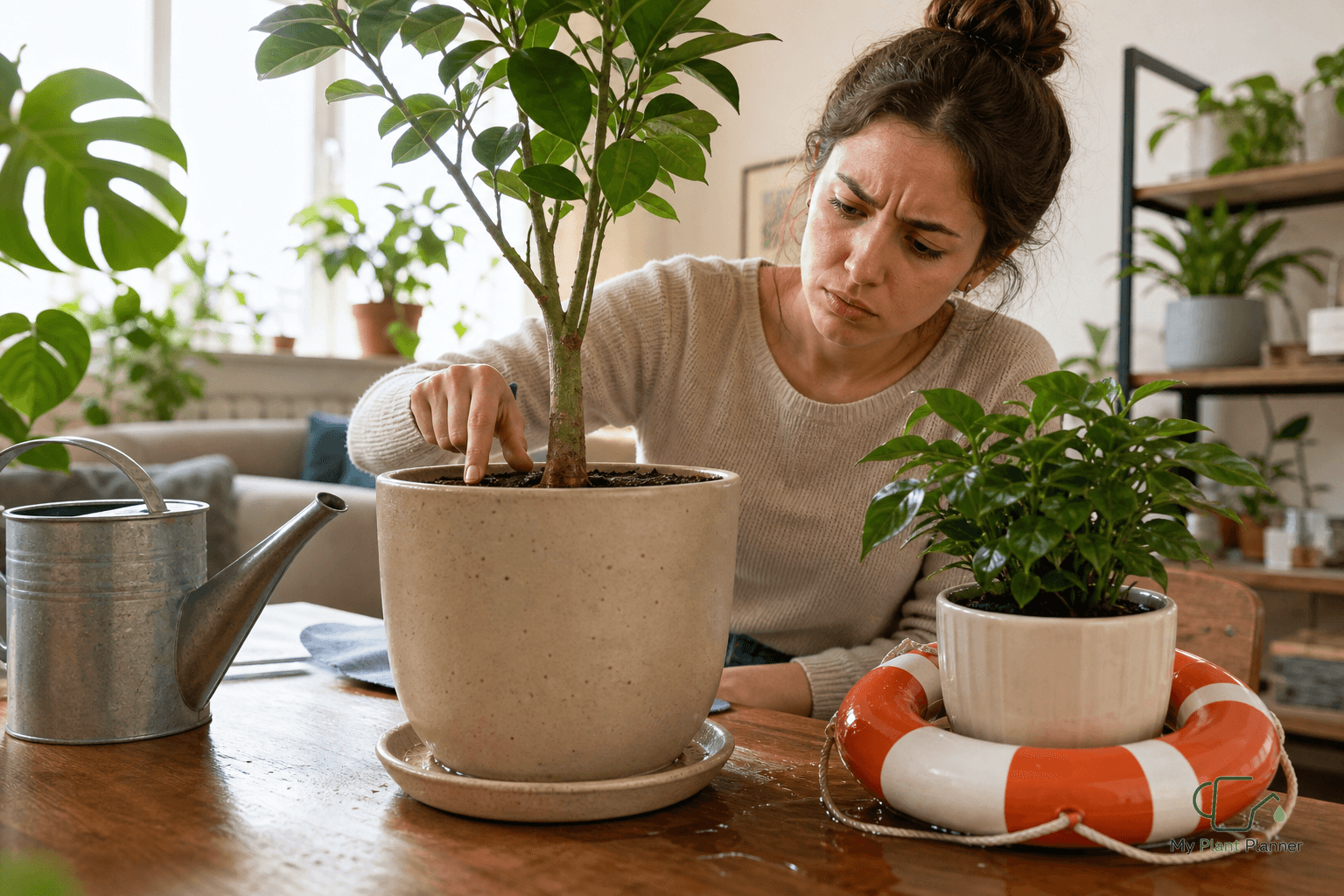
Another mistake is checking only the surface. The top inch can look dry while the middle of a large pot is still damp. With larger pots, check deeper before watering. Use your finger, a wooden chopstick, or a moisture meter as a rough guide.
A third mistake is moving up too many pot sizes at once. If the plant only needed a little more root room, jumping from a 4 inch pot to a 10 inch pot can create a wet soil buffer the plant cannot use. Usually, a modest size increase is safer.
And yes, the weekly watering habit causes trouble here. A small pot might need checking before a week is up. A large pot might still be moist after a week. The calendar is a reminder to check, not permission to pour.
Questions to check before watering
Ask these before you water an indoor plant:
- How big is the pot compared with the plant and root ball?
- Does the pot have a drainage hole?
- Is the pot terracotta, plastic, glazed ceramic, or sitting inside a cachepot?
- Is the plant in bright indirect light, medium light, or low light?
- Is the room warm and dry, or cool and humid?
- Is the top soil dry only on the surface, or dry deeper down?
- Did the plant dry faster or slower after the last watering?
These questions beat guessing. They also help you notice patterns instead of blaming yourself every time a plant looks dramatic.
A simple pot size watering checklist
Use this as a starting routine:
- Check small pots sooner, especially in bright light or dry rooms
- Check large pots deeper, not just at the surface
- Water only when the plant type and soil dryness both point that way
- Water thoroughly until excess drains from the bottom
- Empty saucers and decorative outer pots after watering
- Avoid moving a plant into a much larger pot unless the roots need it
- Track what happens for two or three cycles, then adjust your check window
The goal is not a perfect schedule. The goal is a repeatable way to make better watering decisions.
A cautious way to use pot size
Pot size should change your watering check window, not replace plant judgment. A thirsty peace lily in a small pot and a snake plant in a large pot are not playing the same game.
Start with the pot. Add the plant type, light level, season, and indoor climate. Then check the soil before you water. If the timing was too soon or too late, adjust the next check by a few days.
That is how you build confidence without pretending every home has the same watering schedule.
Want a starting check window based on your actual setup? Try My Plant Planner and use it as a guide, then confirm with the soil before watering.
Practical note
This article is general indoor plant care information. Watering windows are starting points, not guarantees. Your plant, pot, soil, light, season, and home climate can all change the right timing.
My Plant Planner gives general indoor plant-care guidance. Always check soil and plant condition before watering.