
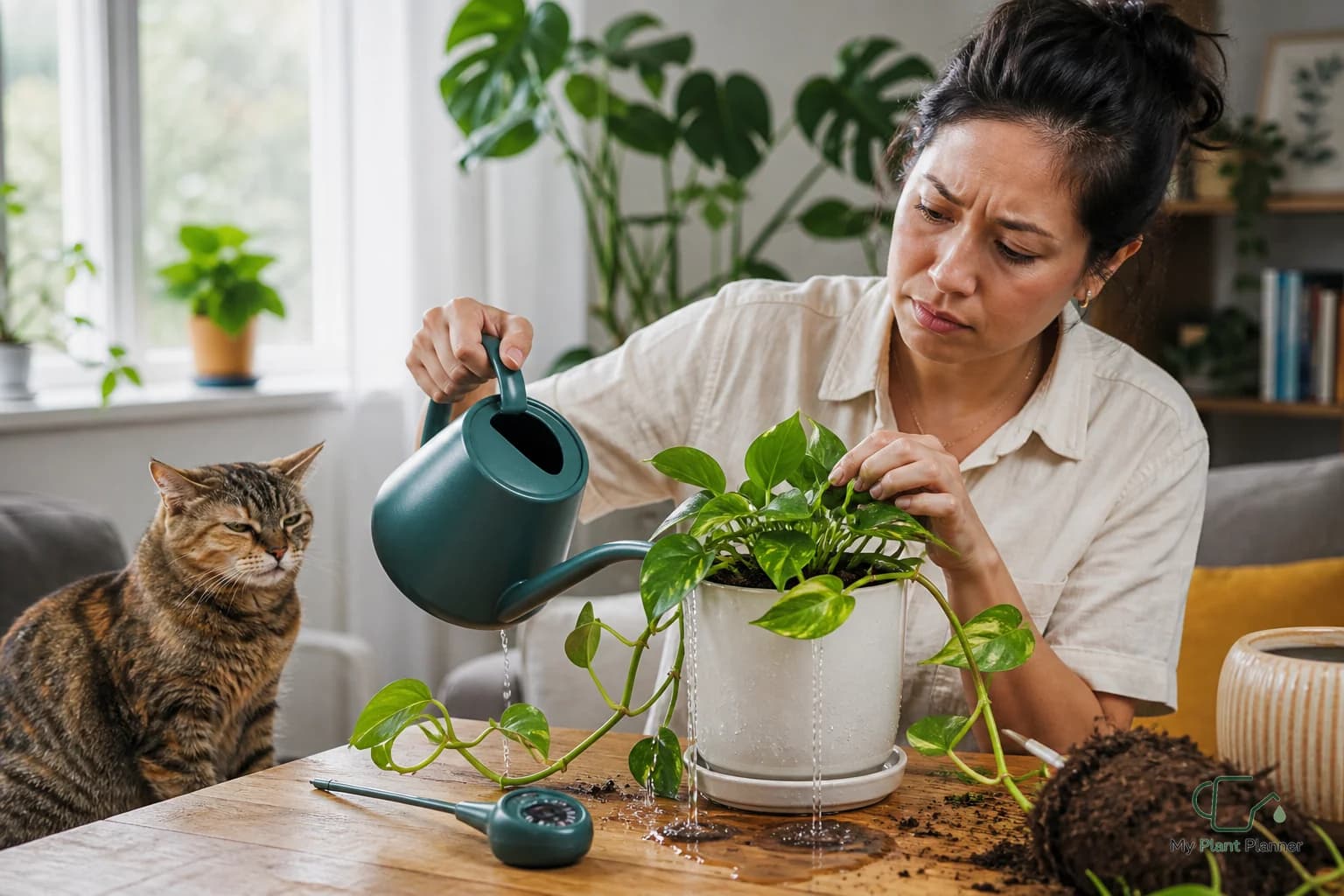
Pothos has a reputation for being almost impossible to mess up. That reputation is partly earned, but it also makes people careless.
The usual mistake is treating pothos like it has one magic watering schedule. Every Sunday. Every 10 days. Whenever the leaves look a little tired. That can work for a while, then suddenly the same plant starts yellowing, drooping, or staying wet for too long.
Pothos watering is easier when you stop asking for an exact date and start using a check window.
The direct answer
For most indoor pothos plants, start by checking the soil every 7 to 10 days during active growth in spring and summer.
In fall and winter, or in lower light, many pothos plants need checks closer to every 10 to 14 days.
That is not a command to water. It is the time to check.
Water when the top couple inches of soil feel dry and the pot no longer feels heavy with moisture. If the soil is still damp below the surface, wait a few more days and check again.
A small pothos in bright indirect light may dry faster. A large pothos in a deep plastic pot across the room from a window may stay damp much longer. Same plant type, different watering reality.
If you want a broader framework for setting check windows across your plants, read How to set a watering check window for indoor plants.
What changes the pothos watering window
Pothos is adaptable, but it still responds to the conditions around it. These factors matter more than the calendar.
Light level
Bright indirect light usually means faster drying. The plant uses more water, the soil warms slightly, and growth tends to be more active.
Low light slows everything down. The plant uses less water, and the pot can stay wet longer. This is where weekly watering gets people into trouble. A pothos can tolerate lower light, but it does not need the same amount of water there.
Pot size
Small pots dry faster because there is less soil holding moisture.
Large pots dry slower, especially if the root system is not filling the pot yet. A pothos in an oversized pot can look fine above the soil while the lower half of the pot stays wet for days.
Pot material
Terracotta breathes and usually dries faster.
Plastic, glazed ceramic, and decorative cachepots hold moisture longer. If your pothos sits inside a cover pot, check that extra water is not collecting at the bottom after watering.
Soil mix
A chunky, well draining mix gives roots more air and dries more predictably.
Dense, compacted soil can stay wet near the roots even when the surface looks dry. That is one reason the “top inch dry” rule can mislead you with deeper pots.
Season and indoor climate
In warm months, with longer days and more growth, pothos usually needs more frequent checks.
In winter, watering often slows down. Shorter days, cooler rooms, and less growth mean the soil may stay damp longer. Heating can dry the air, but that does not always mean the potting mix dries evenly. Check the soil, not just the season.
Common pothos watering mistakes
Watering every week because pothos is “easy”
Easy does not mean thirsty on schedule. Pothos forgives a lot, but soggy soil over and over can still cause root stress.
Waiting for dramatic drooping
A thirsty pothos may droop, but drooping is not a perfect signal. Heat, low light stress, recent repotting, or wet roots can also make a plant look tired. If you water every droop without checking the soil, you are guessing.
For more on this confusion, see Should you water a drooping houseplant?.
Giving tiny sips all the time
Frequent little splashes can keep the top soil damp while leaving deeper roots inconsistent. When your pothos actually needs water, water thoroughly until excess drains out, then empty the saucer or cover pot.
Ignoring drainage
A pot without a drainage hole makes watering much harder. You can keep pothos alive in one, but there is less room for error. If you are a beginner, use a nursery pot with drainage inside a decorative pot.
Questions to check before watering pothos
Before you water, ask these:
- Is the top couple inches of soil dry, or just the surface?
- Does the pot feel noticeably lighter than it did after watering?
- Is the plant in bright indirect light, medium light, or low light?
- Is the pot small and root filled, or large and holding moisture?
- Is there any water sitting in the saucer or cover pot?
- Has the season changed since you picked your routine?
These questions keep you from treating every pothos like it lives in the same apartment, in the same pot, under the same window.
A simple pothos watering checklist
Use this as a starting routine for the next few cycles:
- Set a first check window of 7 to 10 days in spring and summer.
- Set a slower check window of 10 to 14 days in fall and winter or low light.
- Push a finger or wooden stick into the soil, not just across the surface.
- Water only when the upper soil has dried and the pot feels lighter.
- Water thoroughly when it is time, then let excess drain.
- Empty the saucer or decorative pot after watering.
- Track what happened for two or three cycles.
- Shorten the check window if the plant is drying much sooner.
- Lengthen the check window if the soil is still damp when you check.
The goal is not to build a perfect permanent schedule. The goal is to learn how your pothos behaves in your room.
What a healthy adjustment looks like
After a couple of watering cycles, you should have a better sense of your plant’s rhythm.
Maybe your pothos near an east window needs a check around day 7. Maybe the one on a bookshelf in lower light needs day 12. Maybe the hanging basket dries faster than the same plant in a deep ceramic pot.
That is normal. Pothos is flexible, but your watering plan still needs to match the setup.
If the plant looks stressed, do not assume water is the fix. Check soil moisture, drainage, light, and recent changes first. Yellow leaves, limp stems, or crispy edges can point in different directions depending on what the soil is doing.
Use the check window as a starting point, then adjust after a few rounds. Your pothos does not need a heroic rescue every weekend. It needs you to stop watering by habit and start checking with a little evidence.
Want a custom starting check window for your pothos based on your room, pot, light, and season? Try My Plant Planner.
Practical note
This article is general indoor plant care information. Watering windows are starting points, not guarantees. Your plant, pot, soil, light, season, and home climate can all change the right timing.
My Plant Planner gives general indoor plant-care guidance. Always check soil and plant condition before watering.