
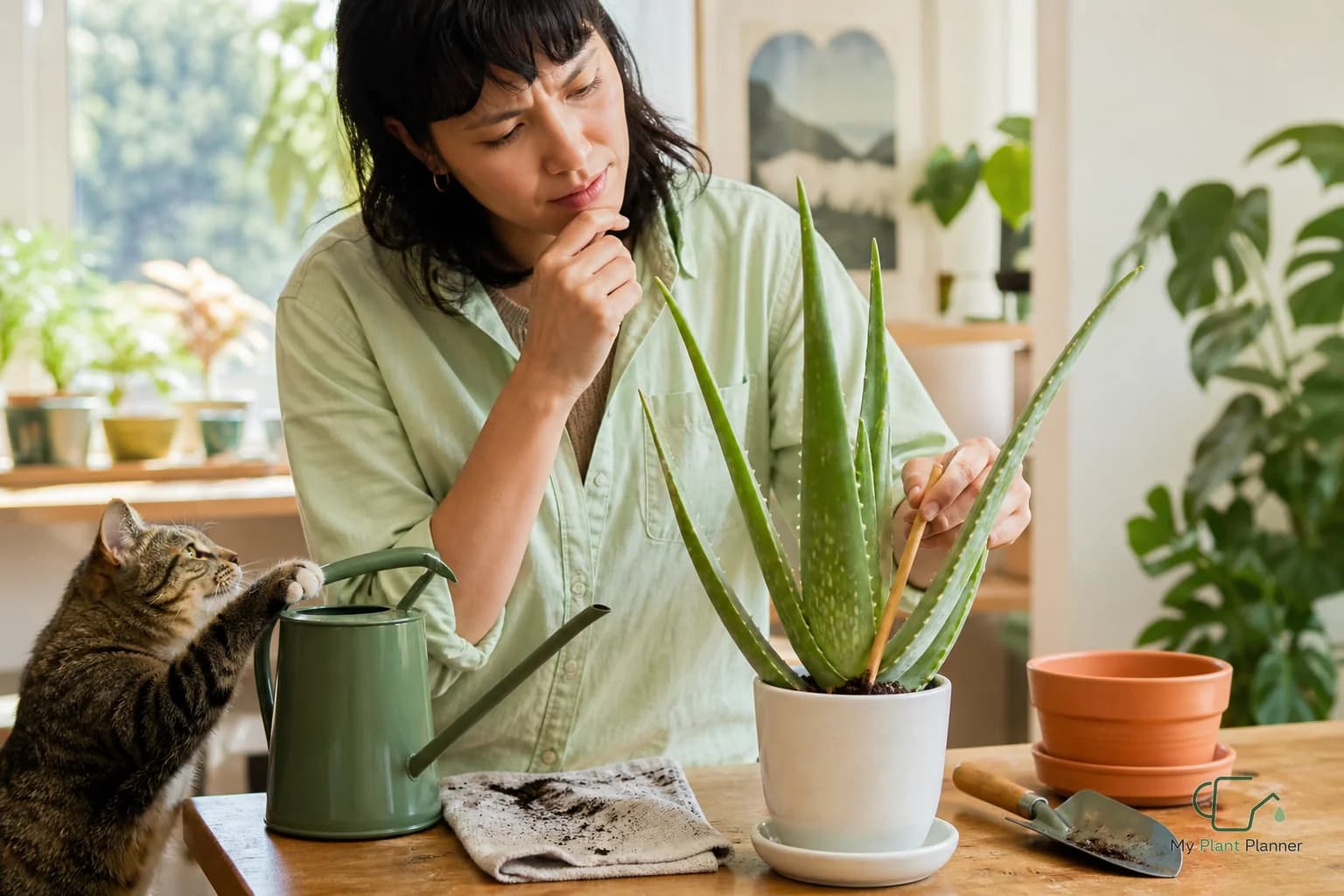
Aloe vera is forgiving, but it is not magic. Most indoor aloe problems start when people treat it like a thirsty tabletop plant instead of a succulent that stores water in its leaves.
The goal is not to find one perfect calendar day. The goal is to set a sensible check window, test the soil, water thoroughly when the mix is dry enough, then wait again.
A plain English starting point
For an indoor aloe vera plant, start by checking every 2 to 4 weeks during active growth in spring and summer if it sits in bright indirect light or a few hours of gentle direct sun.
In fall and winter, or in a lower light room, the check window often stretches closer to 4 to 6 weeks or more.
That does not mean you automatically water on that day. It means that is when you check.
Water aloe vera when the potting mix is dry well below the surface and the pot feels noticeably lighter than it did after watering. If the top inch is dry but the lower mix is still damp, wait. Aloe roots are much less forgiving of stale wet soil than of a slightly longer dry spell.
If you want a deeper walkthrough on why the surface can mislead you, read Top inch dry does not always mean your houseplant needs water.
What changes the aloe watering window
Aloe vera watering depends less on the plant label and more on the conditions around the roots.
Light level: Aloe in bright light uses water faster than aloe sitting several feet from a window. Low light slows growth, so the plant takes up less water.
Pot size: A tiny aloe in a large pot is easy to overwater because extra soil holds moisture the roots cannot use quickly. A snug pot usually dries in a more predictable way.
Drainage: A pot with no drainage hole is a bad setup for aloe. Even careful watering can leave a wet layer at the bottom.
Soil mix: Dense, peat heavy soil can stay wet too long indoors. Aloe usually does better in a gritty cactus or succulent mix that drains quickly.
Season: In cooler months, indoor aloe usually grows more slowly. Less growth means less water demand.
Indoor climate: Warm, dry rooms dry pots faster. Cool rooms, humid rooms, and low airflow slow everything down.
This is why two aloe plants can need very different check windows even if they came from the same store.
The common mistakes with aloe vera watering
The biggest mistake is watering because the calendar says so. Aloe vera is one of those plants where a weekly routine can quietly cause trouble.
Another mistake is giving tiny sips. If the soil is dry enough to water, water until moisture moves through the mix and drains out the bottom. Then empty the saucer. A small splash at the top can leave roots unevenly hydrated while still encouraging a crusty, confusing surface.
People also read soft leaves too quickly. Soft or thin leaves can mean the plant has been dry for too long, but they can also show up when roots have been sitting in wet soil and are not working well. Do not use the leaves alone as your watering decision.
If you are trying to separate too wet from too dry, Is your houseplant overwatered or underwatered is a useful next read.
One more trap: repotting into a much larger container because the plant looks crowded. Aloe can handle being a little snug. Jumping to a big pot often creates a wet soil buffer that the roots cannot keep up with.
Questions to check before watering
Before you water your aloe, ask a few boring questions. Boring is good here.
Is the pot light or still heavy? Pick it up if you can. Pot weight is often more honest than the surface color.
Is the soil dry deeper down? Use a finger, wood skewer, or moisture meter carefully. You are checking below the top layer, not just admiring dry dust on the surface.
Does the pot have drainage? If not, be extra cautious and consider moving the plant to a draining pot when appropriate.
Has the light changed recently? Moving aloe away from a window can stretch the watering interval. Moving it into brighter light can shorten it.
Is it winter? Cooler temperatures and shorter days usually mean slower drying.
Did you just repot? Fresh soil in a larger pot may hold water longer than the old setup.
These questions keep you from doing the classic panic move: watering a plant because it looks a little off, without checking whether the roots are already sitting damp.
A simple aloe vera watering checklist
Use this as a starting routine for the next few cycles:
- Set a check window of about 2 to 4 weeks in bright spring or summer conditions.
- Stretch the check window toward 4 to 6 weeks or longer in winter, low light, or cool rooms.
- Check moisture below the top inch before watering.
- Lift the pot and learn what heavy after watering feels like compared with dry and light.
- Water thoroughly only when the mix is dry enough deeper down.
- Let water drain fully, then empty the saucer.
- Do not leave aloe sitting in a cachepot full of runoff.
- Avoid upsizing into a large pot unless the root system actually needs it.
- After two or three cycles, adjust the check window based on how fast your pot dries.
The adjustment part is where people get better. Your first window is a guess. Your second and third windows are based on evidence.
A cautious closing
Aloe vera does not need constant attention. That is part of the appeal. But it does need you to stop treating dryness at the surface as the whole story.
Start with a check window, confirm what is happening deeper in the pot, and water only when the plant and soil setup point in the same direction. If your aloe is in lower light, a big pot, dense soil, or winter conditions, waiting is often the safer move.
Want a starting window based on your actual plant setup? Try My Plant Planner at https://myplantplanner.com/?utm_source=mdx.
Practical note
This article is general indoor plant care information. Watering windows are starting points, not guarantees. Your plant, pot, soil, light, season, and home climate can all change the right timing.
My Plant Planner gives general indoor plant-care guidance. Always check soil and plant condition before watering.