
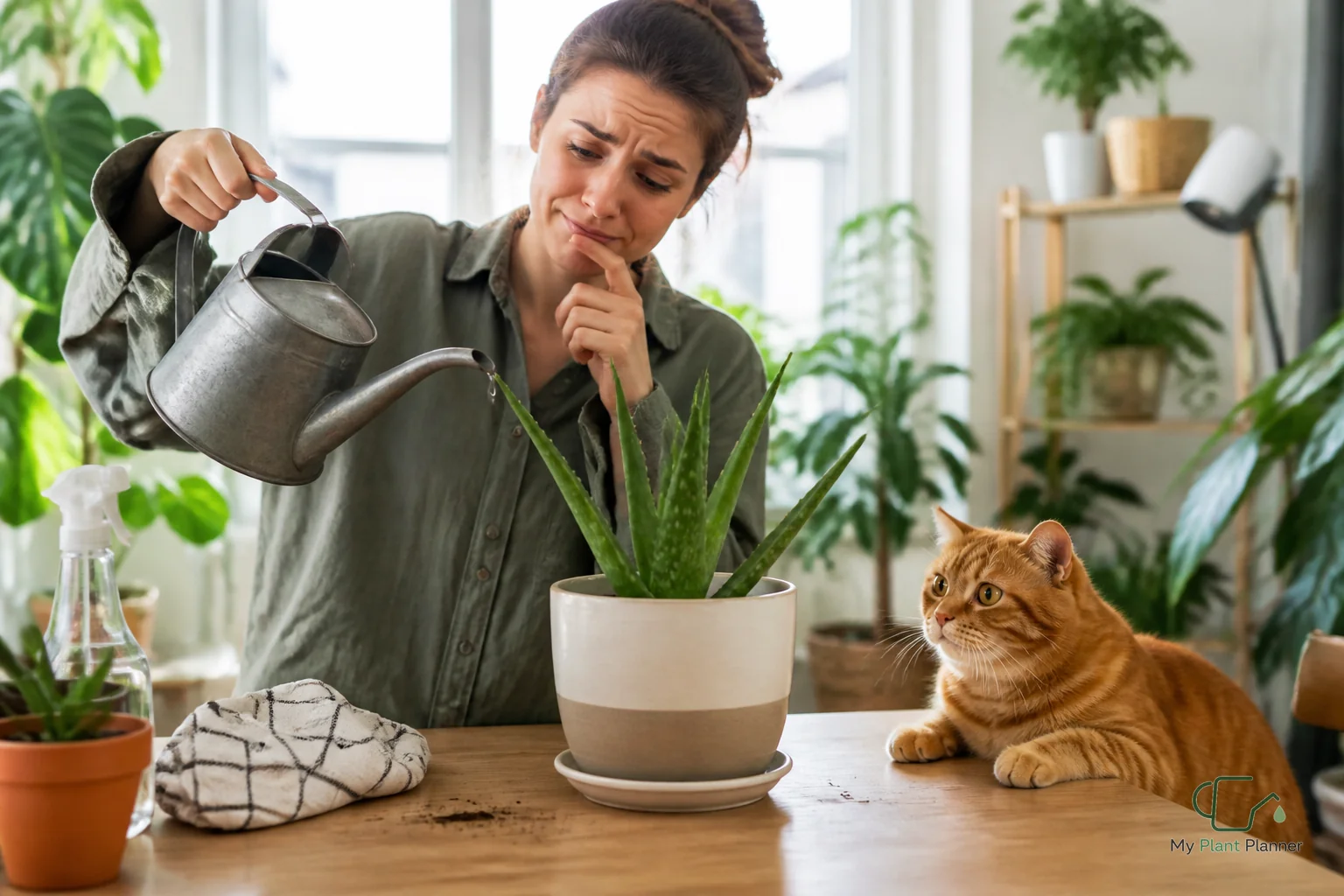
Aloe vera looks tough because it is tough. Thick leaves, slow growth, and a tidy little rosette make it feel like a low drama plant. The catch is that people often overwater it while trying to be helpful.
Aloe is built to store water. That means the goal is not to keep the soil lightly moist. The goal is to let the mix dry out, then water thoroughly when the plant and pot are ready.
The short answer
For most indoor aloe vera plants, start by checking the soil every 14 to 21 days during warmer, brighter months.
In winter, low light, cool rooms, or oversized pots, check closer to every 21 to 35 days.
Indoors, aloe vera usually needs patience more than frequent watering because lower light, still air, and decorative pots can slow the dry-down.
That is a check window, not a promise that your aloe needs water on that day. If the soil still feels damp below the surface, wait. Aloe would rather sit dry for a bit than sit wet for too long.
When it is time to water, water the soil thoroughly until excess water drains out, then empty the saucer. A tiny splash every few days is not better. It often leaves the top damp while the root zone never gets a proper soak and dry cycle.
Why aloe vera watering is different
Aloe vera is a succulent. Its leaves hold water, so it can handle dry stretches better than many common houseplants.
That does not mean it never needs water. It means the rhythm is slower.
A pothos or peace lily may complain faster when dry. Aloe usually waits quietly, which is why people get nervous and water it before the pot has dried. That is the tradeoff: aloe is forgiving if you forget once, but less forgiving if you keep the roots wet.
If you are used to watering leafy plants, read Why watering houseplants once a week is often too much. Aloe is one of the clearest examples.
What changes the check window
Your aloe watering rhythm depends more on the room and pot than the calendar.
Light level
Bright indirect light or a few hours of gentle direct sun usually dries the pot faster. An aloe in a sunny window may need checks around the shorter end of the range.
An aloe sitting across the room from a window dries much more slowly. In low light, it also uses less water. That plant may go several weeks before the soil is ready.
If you are not sure how light affects watering, see How light level changes your indoor plant watering schedule.
Pot size
A small terracotta pot dries faster than a large plastic pot. A big pot with a small aloe in it can hold moisture around the roots for too long.
Aloe usually does best in a pot that fits the root system, not one that gives it a huge empty soil buffer.
Drainage
Drainage holes are not optional for aloe. If water cannot leave the pot, the soil stays wet at the bottom even when the surface looks dry.
Use a pot with drainage holes and a gritty, fast draining mix. A standard dense potting mix can work for some houseplants, but it often stays too wet for aloe unless amended.
Season and indoor climate
Warm rooms, active growth, bright windows, fans, and dry indoor air can shorten the check window.
Cool rooms, winter light, humid air, and still corners lengthen it.
This is why one person's aloe can need water every two weeks while another person's aloe barely needs a drink once a month. Both can be normal.
Common aloe watering mistakes
Watering on the same day every week
Weekly watering is a human convenience, not an aloe care rule. It can work by accident in a hot, bright window with a small pot. In many homes, it is too often.
Giving tiny sips
Aloe does not need constant little drinks. When the soil is dry and the plant is ready, water the pot thoroughly so the root zone gets moisture. Then let it dry again.
Trusting the top inch only
The surface can look dry while the lower pot is still damp. For aloe, check deeper if you can. Use your finger, a wooden skewer, or the weight of the pot.
Letting water sit in the saucer
Drainage only helps if the drained water is removed. If the pot sits in runoff, the bottom of the soil can stay wet.
Moving to a much larger pot
Aloe roots do not need a mansion. Too much extra soil means more water held around a plant that may not be using it quickly.
Questions to ask before watering
Before you water your aloe, pause for a quick check.
- Is the soil dry below the surface, not just on top?
- Does the pot feel noticeably lighter than it did after watering?
- Has the plant been in bright light, or has it been sitting in a dim room?
- Is the room warm and dry, or cool and humid?
- Is the pot small and breathable, or large and plastic?
- Did the last watering drain freely from the bottom?
If you are unsure, wait a few more days and check again. Aloe is usually safer with a short delay than with another drink into damp soil.
A simple aloe vera watering checklist
Use this as a starting routine for the next few cycles:
- Check every 14 to 21 days in warm, bright conditions.
- Check every 21 to 35 days in winter, low light, cool rooms, or large pots.
- Push a finger or wooden skewer deeper than the surface before watering.
- Water only when the mix is dry through most of the pot.
- Water thoroughly until excess drains out.
- Empty the saucer after watering.
- Track what happened for two or three cycles and adjust the check window.
The adjustment is the part people skip. Your first schedule is only a draft. After a few watering cycles, the plant, soil, and room will tell you whether to check sooner or later.
A cautious closing
Aloe vera watering is simple once you stop treating the calendar like the boss.
Start with a 14 to 21 day check window in brighter months and a 21 to 35 day check window in slower indoor conditions. Then let the soil decide. Dry soil, a lighter pot, and good drainage are better signals than a fixed weekly habit.
If you want a starting check window based on your actual plant, pot, light, season, and indoor climate, try My Plant Planner. It will not promise a perfect watering date, but it can give you a practical place to start.
Practical note
This article is general indoor plant care information. Watering windows are starting points, not guarantees. Your plant, pot, soil, light, season, and home climate can all change the right timing.
My Plant Planner gives general indoor plant-care guidance. Always check soil and plant condition before watering.