
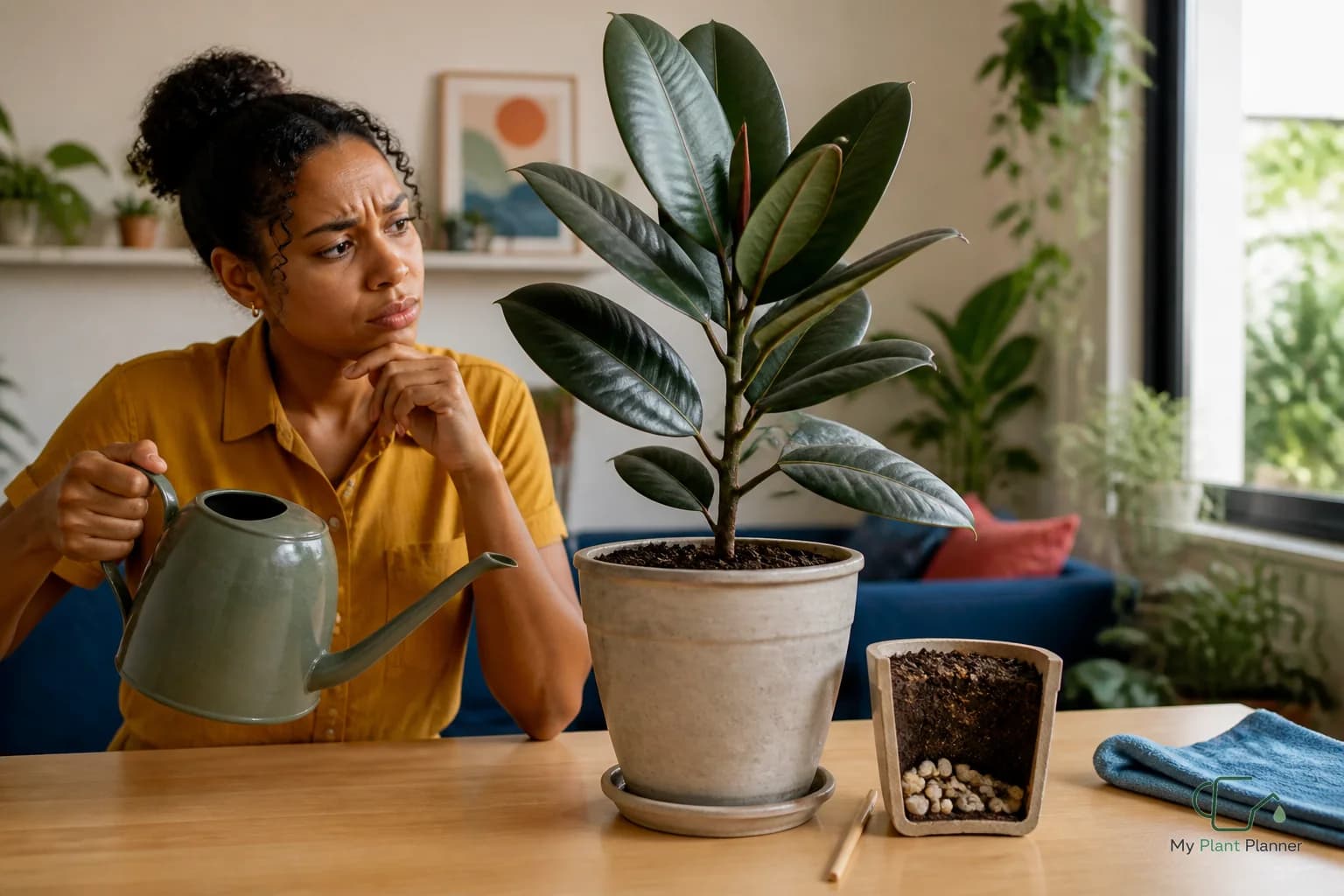
Rubber plants look sturdy, so people often treat them like they can handle whatever watering schedule is convenient. That is how a lot of Ficus elastica plants end up in soggy soil one month and bone dry the next.
A rubber plant can be forgiving, but it still has a preference: let part of the pot dry, then water thoroughly when the root zone is ready. The trick is not finding the perfect day. It is setting a check window that matches your room.
Short answer: check every 7 to 14 days in active growth
For most indoor rubber plants, start by checking the soil every 7 to 10 days in spring and summer if the plant is in bright indirect light. In lower light, a larger pot, cooler rooms, or winter conditions, checking every 10 to 21 days may make more sense.
That is a check window, not a promise to water.
Indoors, that check window matters more than copying an outdoor, greenhouse, or fixed weekly routine.
Water when the upper part of the soil has dried and the pot is no longer staying heavy from moisture. For a small pot, that may mean the top couple of inches are dry. For a larger floor plant, you usually need to check deeper than the surface because the top can dry while the lower root zone is still damp.
When the plant is ready, water thoroughly until excess water drains out, then empty the saucer. Rubber plants dislike sitting in trapped water. They also dislike being teased with tiny sips that only wet the top layer.
If you want a broader framework for setting a check rhythm, read How to set a watering check window for indoor plants.
What changes the watering window
A rubber plant in a bright room can use water faster than the same plant in a dim corner. Light drives growth, and growth drives water use. If your plant is several feet from a window or the room is dark most of the day, stretch the check window and be slower to water.
Pot size also changes everything. A small nursery pot dries quickly because there is less soil holding moisture. A large decorative pot can stay wet deep down long after the surface looks dry. This is one reason a big rubber plant may not need water as often as its owner expects.
Season matters too. In spring and summer, a rubber plant may push new leaves and use water faster. In fall and winter, lower light and cooler indoor temperatures often slow the plant down. The plant did not become dramatic. The room changed.
Indoor climate adds another layer. Warm rooms, dry air, fans, and active heating can dry pots faster. Cool rooms, humid spaces, dense soil, and cachepots with no drainage can keep roots wet longer.
The mistakes that make rubber plant watering harder
The first mistake is watering on the same weekday all year. Monday is not a soil moisture reading. If the plant is still wet, waiting is not neglect. It is restraint.
The second mistake is trusting only the top inch. In a rubber plant pot, especially a deeper one, the surface can dry while the lower soil is still damp. Push a finger, wooden chopstick, or moisture probe deeper before you water.
The third mistake is using leaf drop as a single answer. Rubber plants can drop leaves after watering stress, dry spells, low light, cold drafts, moving locations, or a rough adjustment period. Do not see one yellowing lower leaf and automatically pour more water into the pot.
The fourth mistake is leaving the plant in a decorative outer pot with water sitting at the bottom. The top may look normal while the lower roots are trapped in wet soil. If your rubber plant is in a nursery pot inside a cachepot, lift it out after watering and check that no water is pooling underneath.
If your soil keeps staying wet longer than expected, Why is my houseplant soil still wet after a week? is a good next read.
Questions to ask before watering
Before you water a rubber plant, ask a few boring questions. Boring is good here. It prevents panic watering.
How bright is the spot today, not in your imagination, but in real daily light? A rubber plant near a bright window will usually dry faster than one across the room.
How heavy does the pot feel compared with right after watering? If it still feels heavy, there is probably moisture lower in the pot.
How far down is the soil dry? For small pots, check a couple of inches. For larger pots, check deeper if you can do it without damaging roots.
Does the pot have drainage? If not, watering gets riskier because extra water has nowhere clean to go.
Has the season changed? A schedule that worked in July can be too aggressive in November.
Did you water recently because the leaves looked off, even though the soil was still damp? If yes, pause and let the pot move back toward balance before adding more.
A simple rubber plant watering checklist
Use this as a starting point for the next few cycles:
- Set a check window of 7 to 10 days for bright indirect light during active growth.
- Use 10 to 21 days as a slower check window for lower light, winter, cool rooms, or large pots.
- Check below the surface before watering, especially in deep pots.
- Water only when the upper soil has dried and the pot no longer feels heavy with moisture.
- Water thoroughly until excess drains from the bottom.
- Empty the saucer or outer pot after watering.
- Do not water again just because the calendar says so.
- After two or three cycles, adjust the window based on how quickly your specific pot dries.
The goal is not to memorize a perfect number. The goal is to stop guessing every time you walk by the plant.
A calm way to adjust over time
If your rubber plant is drying out faster than expected, shorten the check window by a few days. If the soil is still damp every time you check, stretch the window. Small adjustments beat big swings.
Also remember that rubber plants can react slowly. A leaf that yellowed from older stress will not turn green again just because today’s watering was better. Watch the pattern over a couple of cycles: soil drying, pot weight, new growth, and whether the plant is stabilizing.
No indoor watering guide can guarantee the exact day your rubber plant will need water. Your light, pot, soil, season, and room climate decide that. But a sensible check window gets you out of the weekly watering trap and gives the plant a much better shot.
If you want a custom starting window for your plant and room, try My Plant Planner.
Practical note
This article is general indoor plant care information. Watering windows are starting points, not guarantees. Your plant, pot, soil, light, season, and home climate can all change the right timing.
My Plant Planner gives general indoor plant-care guidance. Always check soil and plant condition before watering.