
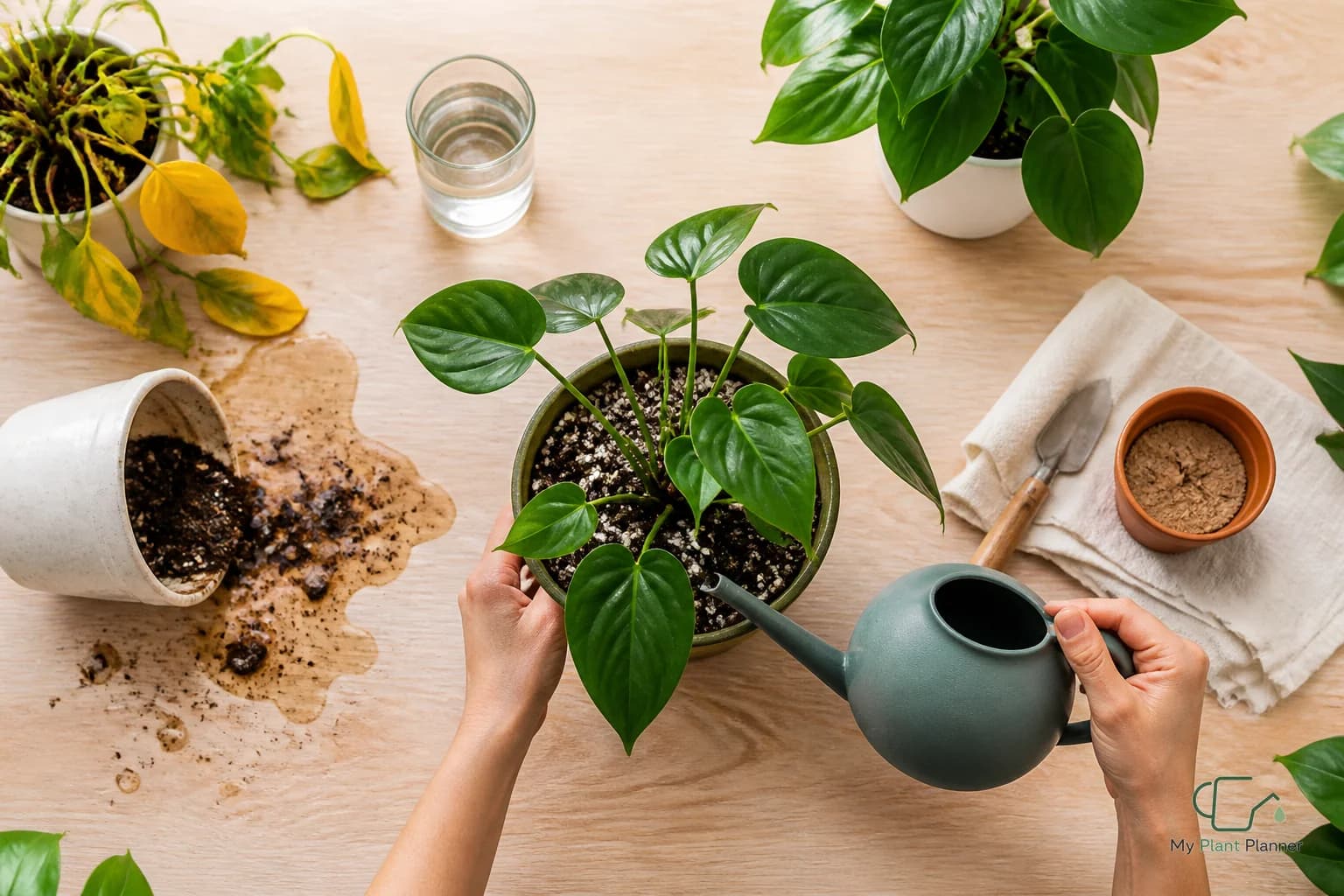
Philodendrons are forgiving, which is exactly why people get sloppy with them. They can look fine for a while, then suddenly get yellow leaves, limp stems, or soggy soil because the pot never really dried out.
A philodendron does not need a magic watering day. It needs a sensible check window based on your room.
Direct answer
For most indoor philodendrons, start by checking the soil every 7 to 10 days.
Indoors, the right rhythm depends on the room as much as the plant: light, pot size, airflow, and season all change how fast the soil dries.
For many homes, check a philodendron every 7 to 10 days and water only when the upper soil has dried enough for the plant and pot.
That does not mean water every 7 to 10 days. It means check the pot, feel the soil, and water only if the upper soil has dried enough for that plant and setup.
A practical starting point:
- Bright indirect light: check every 5 to 8 days
- Medium light: check every 7 to 10 days
- Lower light: check every 10 to 14 days
- Cool rooms or winter conditions: check closer to every 10 to 14 days
- Warm rooms with dry air: check closer to every 5 to 7 days
Most common vining philodendrons, like heartleaf philodendron, prefer soil that is lightly moist but not wet. They are not desert plants, but they also do not want to sit in a heavy, soaked pot.
If you want the broader context behind light changes, read How light level changes your indoor plant watering schedule.
What affects a philodendron watering window
Philodendron watering changes more than beginners expect. The plant type matters, but the room often matters more.
Light is the biggest driver. A philodendron near a bright window uses water faster than one across the room. In low light, the plant grows more slowly and the soil stays wet longer.
Pot size changes the whole rhythm. A small nursery pot can dry quickly. A large decorative pot can hold moisture for days longer, especially if the plant has not filled the pot with roots yet. Bigger pot does not mean bigger watering pour every time. It often means a longer wait between checks.
Drainage is non negotiable. A pot with no drainage hole makes watering harder because excess water has nowhere to go. You can still grow plants in cachepots, but the inner nursery pot should drain fully before it goes back inside.
Soil mix matters too. Chunkier mixes with bark, perlite, or coco chips usually dry faster and let air reach the roots. Dense potting soil can stay wet at the bottom even when the surface looks dry.
Season shifts the schedule. In spring and summer, many philodendrons grow faster and drink more. In winter, growth can slow down, light levels drop, and the same watering habit can become too much.
What people get wrong
The most common mistake is treating a philodendron like a calendar chore. Every Saturday sounds organized, but plants do not care what day it is. They respond to light, temperature, humidity, pot size, and soil.
Another mistake is watering because one leaf looks sad. A limp leaf can happen when the plant is dry, but it can also happen when roots have been sitting too wet. The soil check matters more than the vibe check.
People also confuse surface dryness with full pot dryness. The top half inch can look dry while the lower pot is still damp. Push a finger deeper, use a wooden chopstick, or lift the pot and learn its wet versus dry weight.
The sneakiest mistake is pouring a tiny splash every few days. That can keep the top layer damp while the root zone gets uneven moisture. When the plant is ready, water thoroughly until excess drains out, then let it drain before putting it back.
For more on reading the plant and pot together, see How to tell if an indoor plant needs water.
Questions to check before watering
Before you water a philodendron, ask a few boring questions. Boring questions save plants.
Is the top inch or two of soil dry? For many common philodendrons, watering is usually safer once the upper layer has dried rather than while it still feels wet.
Does the pot feel lighter than it did after the last watering? Weight is one of the easiest signals once you learn it.
Is the plant in bright indirect light or lower light? A plant in lower light usually needs a wider gap between watering checks.
Is the room warmer, cooler, drier, or more humid than usual? Heating, air conditioning, and seasonal humidity changes can shift the check window.
Does the pot have drainage? If not, be extra conservative. Wet soil trapped in a closed container is where many watering problems start.
Has the plant recently been repotted? Fresh soil in a larger pot often holds more moisture than the old root filled pot did.
Simple philodendron watering checklist
Use this as a starting routine, then adjust after two or three watering cycles.
- Check the soil every 7 to 10 days for a typical indoor philodendron
- Check sooner in bright indirect light, warm rooms, or small pots
- Check later in low light, winter, cool rooms, or large pots
- Feel at least the top inch of soil, not just the surface dust
- Lift the pot to compare wet weight and dry weight
- Water only when the upper soil has dried enough
- Water thoroughly when needed, then let extra water drain away
- Empty saucers and cachepots after watering
- Watch for patterns over a few cycles before changing everything
A simple note on your phone helps. Write down the date you checked, whether you watered, and what the soil felt like. After a few rounds, you will see your plant’s actual rhythm instead of guessing.
A cautious closing
A philodendron watering schedule is not a promise. It is a check window.
Start with every 7 to 10 days for a typical indoor setup, then adjust based on light, pot size, season, and how the soil actually dries in your home. If the soil is still damp, wait. If it is drying faster than expected and the plant is in bright warm conditions, shorten the check window.
The goal is not to water more. The goal is to stop watering blind.
If you want a practical starting window for your exact setup, use My Plant Planner to build a watering check plan based on plant type, light, pot size, season, and indoor climate.
Practical note
This article is general indoor plant care information. Watering windows are starting points, not guarantees. Your plant, pot, soil, light, season, and home climate can all change the right timing.
My Plant Planner gives general indoor plant-care guidance. Always check soil and plant condition before watering.