
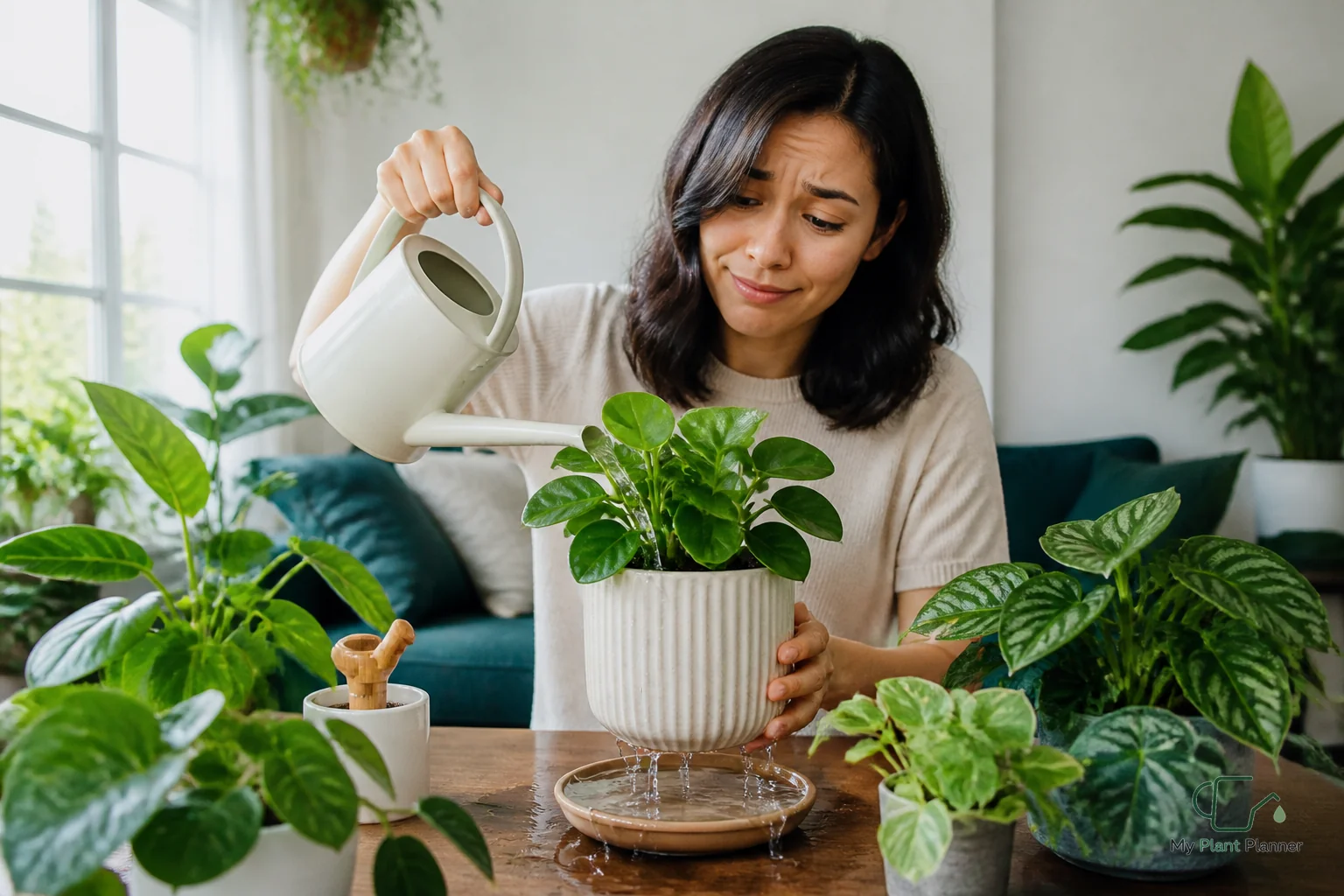
Peperomia is one of those plants people accidentally love to death. It looks small and harmless, so the watering can comes out every few days. Then the stems get soft, the soil stays damp, and everyone blames the plant for being dramatic.
Peperomia is not usually dramatic. It just does not want constantly wet roots indoors.
The short answer
For most indoor peperomia plants, start by checking the soil about every 10 to 14 days in bright indirect light.
In lower light, check closer to every 14 to 21 days. In warmer rooms, brighter windows, small terracotta pots, or very fast draining soil, you may need to check a little sooner.
That is a check window, not a promise that the plant needs water on that day. Water when the top half of the potting mix has dried out and the pot feels noticeably lighter. If the mix still feels damp below the surface, wait.
Peperomia usually handles a short dry stretch better than sitting in soggy soil. The tradeoff is simple: if you water too soon every time, the roots lose air. If you wait too long every time, leaves may wrinkle, droop, or crisp at the edges.
Why peperomia watering is easy to overdo
Many peperomia varieties have thicker leaves or stems that hold some moisture. They are not cactus, and they should not be treated like desert plants, but they are also not heavy drinkers like a Boston fern.
The plant's root system is often smaller than people expect. A small root system in a big pot can leave a lot of wet soil sitting around with no roots using it quickly. That is where trouble starts.
The pot matters as much as the plant:
- A small pot dries faster than a large pot.
- Terracotta dries faster than plastic or glazed ceramic.
- A pot with drainage is much safer than a decorative pot with no exit hole.
- Dense potting mix holds water longer than a chunky, airy mix.
If your peperomia is in a plastic nursery pot tucked inside a decorative cover pot, always check that water is not pooling in the outer pot after watering.
What changes the watering check window
Light is the biggest driver. A peperomia near bright indirect light will usually use water faster than one sitting across the room from a window. More light means more growth and more water movement through the plant.
Season matters too. In fall and winter, many indoor peperomia plants slow down. The room may be cooler, the days are shorter, and the potting mix dries more slowly. If you keep the same summer routine in winter, you may end up watering soil that has not dried enough.
Indoor climate can push the other direction. A warm room with dry forced air can dry small pots quickly. A cool room with low airflow can keep soil damp for much longer than expected.
This is why the same plant can need different check windows in two apartments, or even two rooms. If that keeps happening to you, read Why the same watering schedule fails in different rooms.
Common peperomia watering mistakes
The most common mistake is watering on a fixed weekly schedule because the plant is small. Small plant does not always mean frequent water. If the roots are small and the soil is still damp, more water is not care. It is just more water.
Another mistake is trusting only the top inch of soil. The surface can dry while the lower half of the pot stays wet, especially in deeper pots or dense mixes. Peperomia can get into trouble when you keep rewetting the top before the lower root zone has had a chance to breathe. For a deeper look at that problem, see Top inch dry does not always mean your houseplant needs water.
People also misread soft leaves. Soft or droopy leaves can happen when the plant is thirsty, but they can also show up when roots have been too wet and are not working well. Do not respond to every soft leaf with water. Check the soil first.
Last, avoid tiny sips. A splash every few days can keep the upper soil damp while leaving dry pockets below. When the plant actually needs water, water thoroughly until excess drains out, then let the pot drain fully.
Questions to check before watering
Before you water your peperomia, ask:
- Is the top half of the potting mix dry, or just the surface?
- Does the pot feel lighter than it did after the last full watering?
- Is the plant in bright indirect light, low light, or direct sun?
- Is the room warmer, cooler, drier, or more humid than usual?
- Is there water sitting in the saucer or cover pot?
- Has the plant slowed down for fall or winter?
If the soil is still damp and the pot feels heavy, wait a few more days and check again. Waiting is not neglect when the root zone is still moist.
Simple peperomia watering checklist
Use this as a practical starting routine:
- Check every 10 to 14 days in bright indirect light.
- Check every 14 to 21 days in lower light or cooler rooms.
- Push a finger, wooden skewer, or moisture meter deeper than the surface.
- Water when the top half of the mix has dried and the pot feels lighter.
- Water thoroughly, then let extra water drain away.
- Empty saucers and decorative cover pots after watering.
- Stretch the check window in winter if the soil is staying damp longer.
- Shorten the check window slightly if the plant is drying fast in warm, bright conditions.
- Adjust after two or three watering cycles instead of changing the routine every time one leaf looks odd.
A steady routine beats a perfect calendar
Peperomia care gets easier when you stop hunting for one exact watering day. The better goal is a repeatable check habit: soil feel, pot weight, drainage, and a quick look at the room conditions.
If your peperomia looks wrinkled and the pot is light with dry soil, watering is reasonable. If the leaves are soft but the soil is damp and the pot is heavy, give it time and improve drainage or airflow before adding more water.
After a couple of cycles, your plant will show you the pattern for your room. Start with the check window, watch how fast the pot dries, and adjust calmly.
Want a simple starting window for your plant, pot, light, season, and indoor climate? Try My Plant Planner and use it as a practical reminder to check before you water.
Practical note
This article is general indoor plant care information. Watering windows are starting points, not guarantees. Your plant, pot, soil, light, season, and home climate can all change the right timing.
My Plant Planner gives general indoor plant-care guidance. Always check soil and plant condition before watering.