
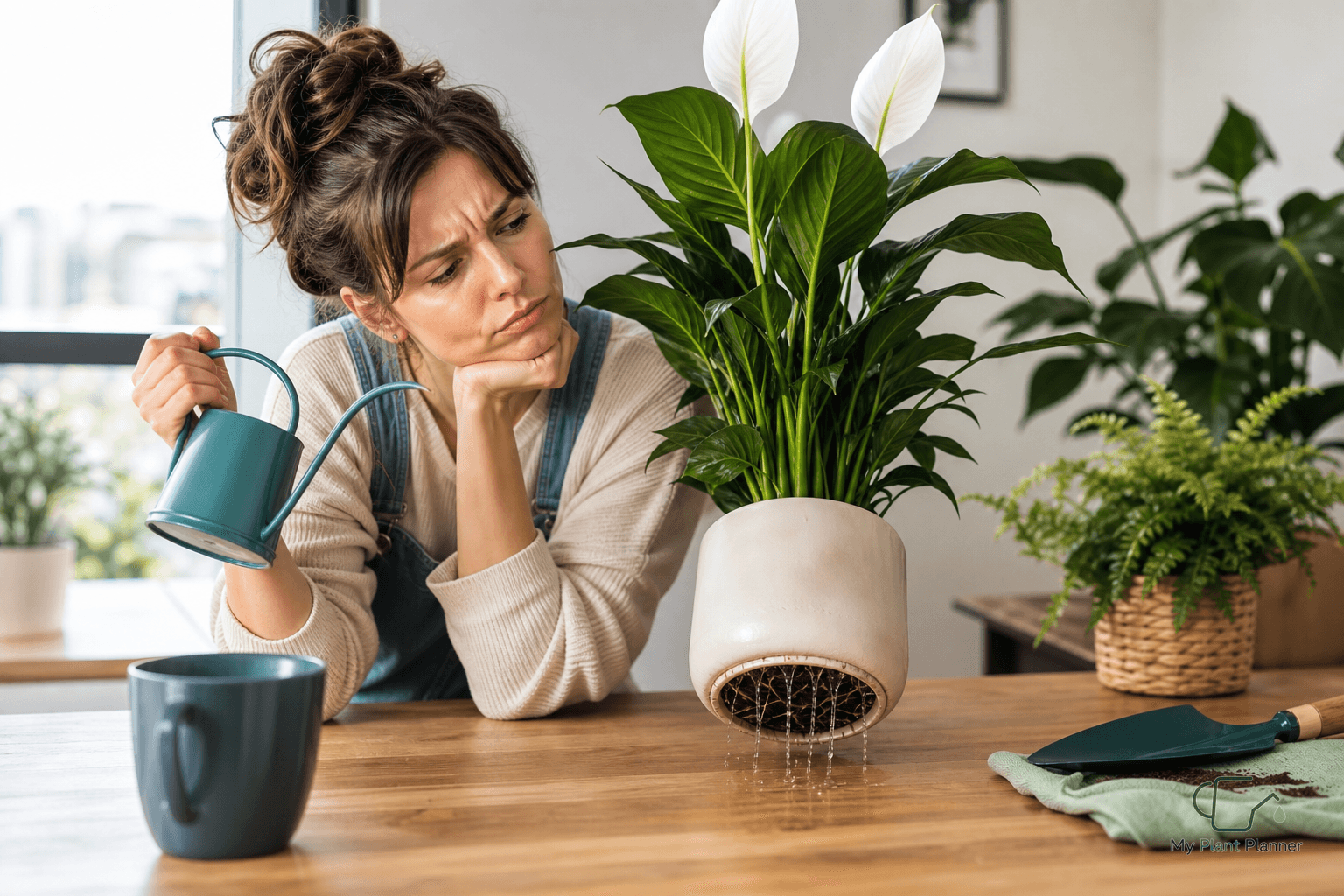
Peace lilies make watering feel urgent because they droop loudly. One day they look fine. The next day they look like they are auditioning for a tragedy.
That drama is useful, but it is also easy to misread. A peace lily can droop because it is thirsty, but it can also droop when the soil is too wet, the pot drains poorly, or the room changed. So the answer is not “water every Sunday.” It is “check on a sensible rhythm, then let the plant and soil confirm.”
The plain English answer
For most indoor peace lilies, start by checking the soil every 4 to 7 days during warm, bright months. In lower light, cooler rooms, or winter, the check window may stretch closer to 7 to 10 days.
That does not mean you water every time you check. It means you test the soil and water when the upper part has dried enough for your setup.
A decent beginner rule:
- Check the top 1 to 2 inches of soil with your finger.
- If it feels lightly dry and the pot feels noticeably lighter, water thoroughly.
- If it still feels damp or heavy, wait and check again in a couple of days.
When you do water, water until excess drains from the bottom, then empty the saucer. Peace lilies like consistent moisture more than bone dry soil, but they still need air around the roots. Soggy soil is not kindness. It is a slow mess.
What changes the watering window
Peace lily watering depends less on the plant’s calendar and more on how quickly the pot dries.
Light is the big one. A peace lily in bright indirect light uses water faster than one sitting across the room from a small window. Brighter light usually means a shorter check window. Lower light usually means the soil stays wet longer.
Pot size matters too. A small pot can dry quickly because there is less soil holding moisture. A large pot can stay wet for a long time, especially if the root system is not filling it yet. That is why moving a peace lily into a much bigger pot often creates watering confusion.
Soil and drainage change everything. A chunky, well draining mix gives you more forgiveness. Dense soil in a decorative pot with no drainage hole gives you less. If water cannot leave the pot, your watering schedule is already working against you.
Season matters, even indoors. In summer, warmer rooms and stronger light can dry soil faster. In winter, lower light and cooler temperatures often slow the plant down. The same peace lily may need a shorter check window in July and a longer one in January.
Indoor climate matters as well. Air conditioning, heaters, humidity, and airflow all affect how quickly soil dries. A plant near a vent may behave differently from a plant five feet away.
If you also grow trailing plants, the same logic applies, but the rhythm can look different. For comparison, see How often should you water pothos. If you have drought tolerant plants too, How often should you water a snake plant indoors shows why some plants need a much longer dry period.
What people get wrong with peace lilies
The biggest mistake is treating drooping as an automatic watering command.
Yes, a thirsty peace lily often droops. But a peace lily in wet, airless soil can also look sad. If the leaves are drooping and the soil is still wet, adding more water is probably not the move.
Another mistake is giving tiny sips. A splash on top can wet the surface while leaving dry pockets lower in the pot. When the plant actually needs water, water the whole root zone and let extra drain away.
The opposite mistake is letting the pot sit in runoff. If the saucer stays full, the bottom of the pot can remain waterlogged. Empty it after watering.
People also underestimate low light. Peace lilies tolerate lower light better than many houseplants, but tolerance is not the same as fast growth. In lower light, the plant usually drinks more slowly. A weekly watering habit that worked near a bright window can be too much in a dim corner.
And then there is the decorative pot trap. A nursery pot inside a cover pot is fine if you check for trapped water. A peace lily sitting in a cachepot puddle is not fine for long.
Questions to ask before watering
Before you water, ask a few boring questions. Boring is good. Boring saves plants.
- Does the top 1 to 2 inches of soil feel dry, damp, or wet?
- Does the pot feel lighter than it did after the last watering?
- Is the plant in bright indirect light or lower light?
- Has the room become warmer, cooler, drier, or darker lately?
- Does the pot have a drainage hole?
- Is there water sitting in the saucer or cover pot?
- Did you repot recently into a larger container?
If the soil is dry near the top, the pot feels lighter, and the plant is starting to soften or droop, watering makes sense. If the soil is still damp and heavy, wait.
A simple peace lily watering checklist
Use this for the next few cycles:
- Pick a starting check window: every 4 to 7 days in brighter warm conditions, every 7 to 10 days in lower light or cooler seasons.
- Feel the top 1 to 2 inches of soil.
- Lift the pot if you can and notice whether it feels lighter.
- Water only when the soil has partly dried, not just because a week passed.
- Water thoroughly until excess drains out.
- Empty the saucer or cover pot after watering.
- Write down when you checked and when you actually watered.
- After two or three cycles, adjust the check window shorter or longer.
The note taking part sounds fussy, but it is the fastest way to stop guessing. You are not building a spreadsheet empire. You are learning your room.
A careful way to read drooping
Peace lily drooping is a signal, not a diagnosis.
If the soil is dry and the pot is light, drooping usually points toward thirst. Water thoroughly, then watch how the plant responds over the next day.
If the soil is wet and the pot is heavy, drooping means you should slow down and check drainage, light, and soil conditions before adding more water. Do not keep pouring water into a pot that is already damp.
If the plant has repeated problems, yellowing, mushy stems, crispy edges, or other changes, watering may be part of the story but not the whole story. Avoid jumping to one cause with total confidence. Start with the basics: light, drainage, soil moisture, pot size, and recent changes.
Start with a window, then adjust
A peace lily does not need you to guess perfectly. It needs you to stop watering on autopilot.
Start with a check window, confirm with the soil, water deeply when needed, and adjust after a couple of cycles. That gives you a practical rhythm without pretending every home, pot, and season behaves the same.
If you want a simple starting window based on your plant type, light, pot size, season, and indoor climate, try My Plant Planner. Use it as a guide, then let the soil have the final vote.
Practical note
This article is general indoor plant care information. Watering windows are starting points, not guarantees. Your plant, pot, soil, light, season, and home climate can all change the right timing.
My Plant Planner gives general indoor plant-care guidance. Always check soil and plant condition before watering.