
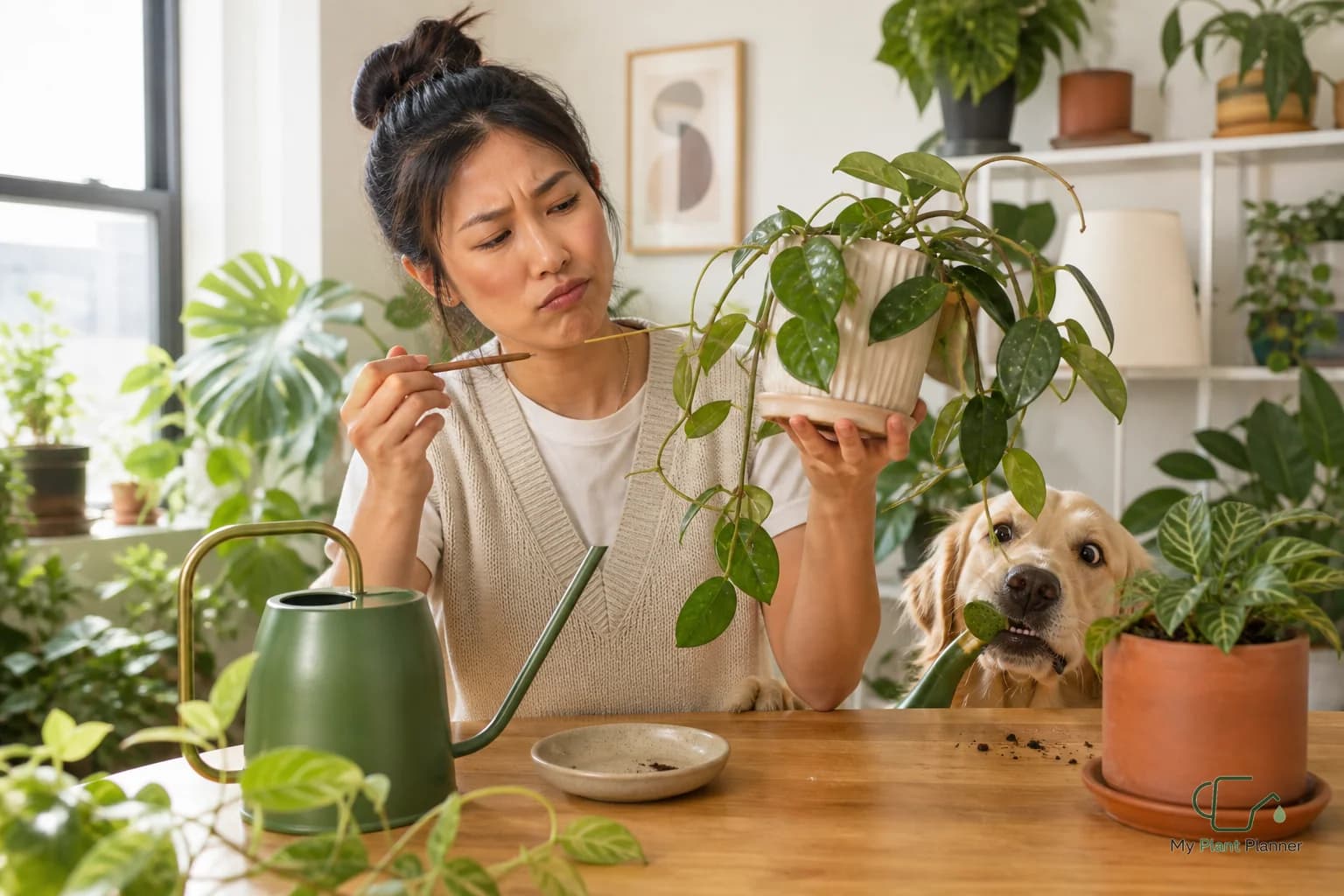
Hoyas have a reputation for being easy, but watering them like a soft leafy houseplant is where people get into trouble. Many hoyas have thick leaves, chunky roots, and a strong preference for drying down between drinks.
That does not mean neglect them for months. It means the calendar should remind you to check, not order you to water.
The direct answer
For many indoor hoyas, start by checking for water every 10 to 21 days during the active growing season.
In lower light, cooler rooms, larger pots, or winter conditions, the check window may stretch closer to every 2 to 4 weeks. In brighter light, warmer rooms, smaller pots, or a chunky fast drying mix, you may need to check closer to every 7 to 14 days.
Water when the potting mix has dried most of the way down and the pot feels noticeably lighter. Do not water just because the top looks dry. With hoyas, the lower half of the pot can still be damp while the surface looks ready.
If you want a broader framework for setting check windows, use this guide: How to set a watering check window for indoor plants.
Why hoyas do not want a fixed weekly schedule
A weekly watering habit sounds tidy. Hoyas are not tidy.
A hoya in bright indirect light near a warm window may dry much faster than the same plant sitting 8 feet into a room. A hoya in a small terracotta pot may need attention sooner than one in a deep glazed pot. A compact hoya in dense peat based soil can stay wet far longer than you expect.
The tradeoff is simple: hoyas usually tolerate being a little dry better than being kept wet. Repeatedly watering before the root zone has dried enough can leave the plant sitting in stale moisture.
That does not mean you should wait until every leaf wrinkles badly. It means you should check the soil and pot weight before reacting.
The factors that change your hoya watering window
Light level
Bright indirect light usually means faster drying. If your hoya sits near a bright window without harsh midday sun baking the leaves, expect it to use water more steadily.
Medium or low light slows everything down. The plant grows more slowly, the pot dries more slowly, and the same amount of water lasts longer.
Pot size
Small pots dry faster because there is less soil holding moisture. Oversized pots dry slower because the plant roots may not be using water from the full soil mass.
If your hoya is in a pot much larger than its root system, be extra careful. The top can dry while the deeper mix stays damp.
Pot material
Terracotta breathes and usually dries faster. Plastic, ceramic, and glazed pots hold moisture longer. Cachepots can also trap water around the nursery pot if you forget to empty them.
Potting mix
Hoyas often do better in an airy mix with bark, perlite, pumice, or other chunky material. Dense soil holds water longer and makes it easier to overdo it.
If your hoya takes ages to dry, the issue may not be your memory. It may be the pot and mix working against you.
Season and room climate
In fall and winter, indoor hoyas often slow down. Shorter days, cooler windows, and less active growth can stretch the watering window.
In summer, warmer rooms and brighter light can shorten it. Heat from vents, sunny sills, and dry indoor air can also change the pace.
Common hoya watering mistakes
Watering on the same day every week
This is the classic mistake. A weekly routine may work for one plant in one room for part of the year, then quietly become too much when light drops.
Use a weekly reminder if it helps, but make it a check reminder.
Trusting only the top inch
The top inch can dry before the root zone is ready. Hoyas are especially prone to this in deeper pots or heavier mixes.
If this habit keeps fooling you, read Top inch dry does not always mean your houseplant needs water.
Giving tiny sips every few days
Small frequent splashes can keep the upper soil damp while never properly flushing through the pot. When your hoya is ready, water thoroughly until excess drains out, then let it dry down again.
Ignoring drainage
A hoya pot needs drainage holes. If water cannot leave the pot, your schedule matters less because the root zone can stay wet too long.
If you use a decorative outer pot, lift the nursery pot out after watering and empty any standing water.
Questions to check before watering
Ask these before you pour:
- Does the pot feel much lighter than it did after the last full watering?
- Is the mix dry several inches down, not just on the surface?
- Is the plant in bright, medium, or low light right now?
- Has the weather or season changed since the last watering?
- Is the pot oversized for the root ball?
- Did water drain freely last time?
- Are the leaves firm, slightly flexible, or starting to wrinkle?
Leaf feel can help, but do not use it alone. Some hoya leaves are naturally firm and thick. Others are thinner. Learn your plant’s normal texture over a few watering cycles.
A simple hoya watering checklist
Use this as your starting routine:
- Set an initial check window of 10 to 21 days.
- Check sooner if the plant is in bright light, a small pot, terracotta, or a chunky mix.
- Check later if the plant is in low light, a large pot, cool room, or dense soil.
- Feel the soil below the surface, not just the top.
- Lift the pot and compare its weight to how it felt after watering.
- Water thoroughly only when the mix has dried most of the way down.
- Let extra water drain completely.
- Empty the cachepot or saucer.
- Track what happened for two or three cycles.
- Adjust the next check window based on drying speed.
This is boring in the best possible way. Boring watering routines keep hoyas out of the drama zone.
What to do after your first few checks
After two or three watering cycles, your hoya will tell you more than a generic schedule can.
If the soil is still damp every time your reminder goes off, stretch the next check window by a few days. If the pot is bone dry long before your reminder and the leaves are losing their usual firmness, shorten the window.
The goal is not to find one perfect date. The goal is to learn the drying rhythm in your actual room.
A hoya in October may not behave like a hoya in June. A hoya moved from a bright bedroom to a dim shelf may need a slower rhythm. A repotted hoya may also dry differently than it did before.
Final note before you water
Hoyas are not plants that need constant fussing. They usually do better when you stop treating every dry surface as an emergency.
Start with a check window, confirm what is happening below the surface, water deeply when the plant is ready, and adjust after a couple of cycles. That is enough for most indoor hoyas.
If you want help building a practical check window for your own plant, try My Plant Planner. It uses plant type, light, pot size, season, and indoor climate to give you a starting point you can adjust with real soil checks.
Practical note
This article is general indoor plant care information. Watering windows are starting points, not guarantees. Your plant, pot, soil, light, season, and home climate can all change the right timing.
My Plant Planner gives general indoor plant-care guidance. Always check soil and plant condition before watering.