
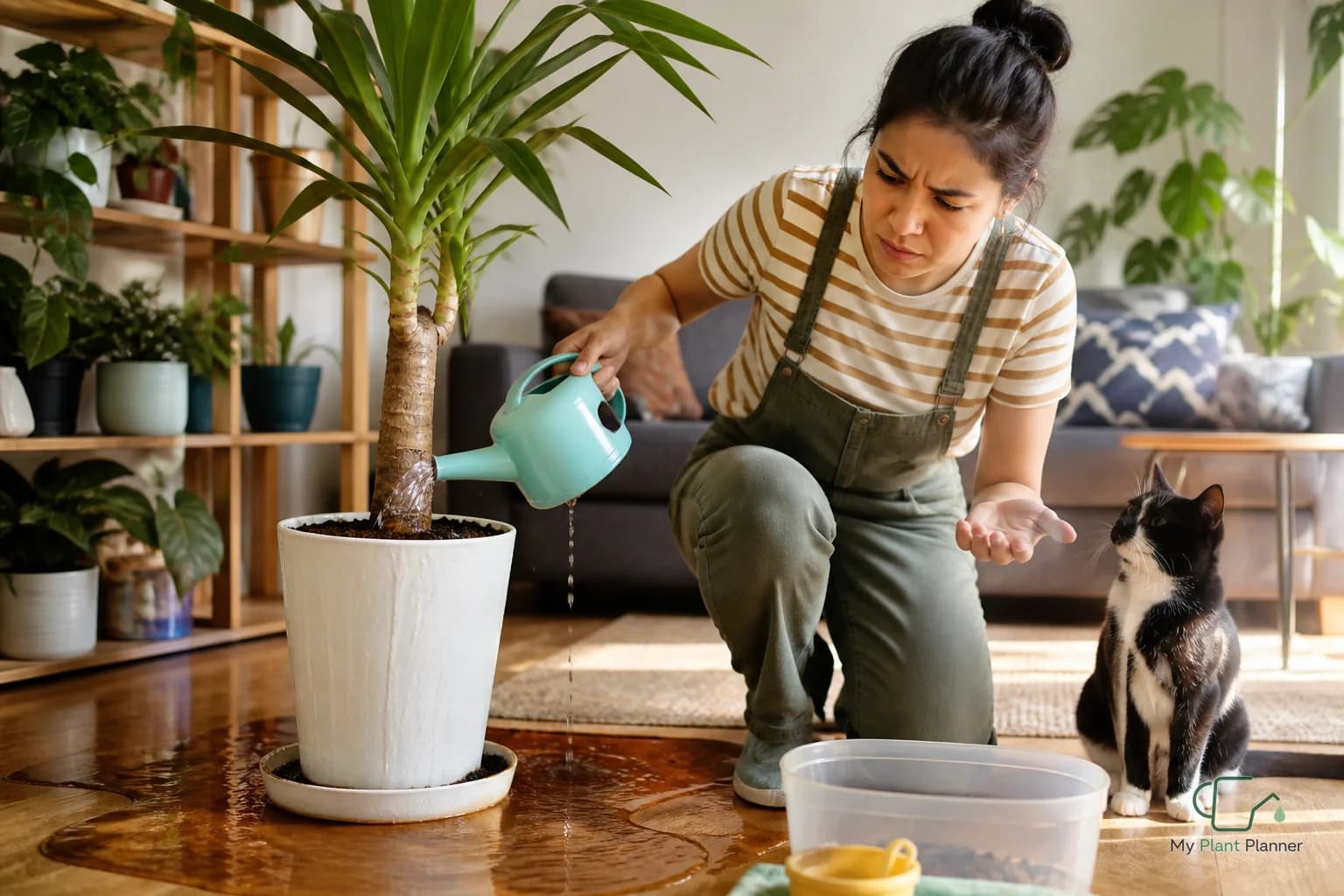
Dracaenas are popular because they look tidy, tolerate normal rooms, and do not collapse the second you forget them. That toughness is also where people get sloppy. A dracaena can put up with imperfect care for a while, then suddenly look rough after months of small watering mistakes.
The goal is not to guess the perfect day. The goal is to set a sensible check window, inspect the soil, and adjust before the plant gets stuck in the wet dry panic cycle.
Direct answer
Most indoor dracaenas should be checked for water about every 10 to 21 days.
That does not mean water every 10 to 21 days no matter what. It means that is a reasonable starting check window for many common dracaenas, including corn plant, dragon tree, and compact dracaena types grown indoors.
Water when the top few inches of soil are dry and the pot feels noticeably lighter than it did after watering. If the soil is still damp below the surface, wait and check again in a few days.
In brighter light, a smaller pot, warm rooms, or dry indoor air, your dracaena may be ready closer to the shorter end of that range. In lower light, a large pot, cooler rooms, or dense soil, it may need more time.
If you want the full method behind this instead of another calendar guess, read How to set a watering check window for indoor plants.
What changes the watering window for a dracaena
Dracaenas are not heavy drinkers compared with plants that wilt dramatically. They store some resilience in their canes and leaves, so they usually prefer a measured dry down between waterings.
A few indoor conditions change the timing fast.
Light level
A dracaena in bright indirect light uses water faster than one across the room from a small window. More light means more growth and more water movement through the plant.
Low light is where weekly watering gets risky. The plant may look fine, but the soil can stay wet around the roots much longer than expected.
Pot size
A small nursery pot dries faster than a large decorative pot. A big pot with a small root system can hold extra moisture long after the top looks dry.
This is why surface checks alone are weak. The top inch can be dry while the lower soil is still damp.
Soil and drainage
Dracaenas need drainage. If water cannot leave the pot, the schedule is already broken.
Dense potting mix also slows drying. If the soil stays wet for a long stretch after watering, the answer is not usually to water less often forever. The pot, mix, drainage, or light may need attention.
For that specific issue, see Why is my houseplant soil still wet after a week?.
Season and indoor climate
Dracaenas usually slow down in fall and winter, especially in homes with shorter days and cooler rooms. That often pushes the check window longer.
Heating season can complicate things. Warm air and low humidity may dry the surface quickly, while the root zone still holds moisture. Check deeper before you water.
Common dracaena watering mistakes
The first mistake is treating a dracaena like a weekly chore. A weekly check is fine. A weekly automatic watering is not.
The second mistake is watering because of brown tips. Brown tips can happen for several reasons, including inconsistent moisture, dry air, mineral buildup, water quality sensitivity, old damage, or stress from previous care. They do not automatically mean the plant needs more water today.
The third mistake is giving tiny sips. A small splash can wet the top while leaving dry pockets lower down, especially in older potting mix. When the plant is actually ready, water thoroughly until excess drains out, then empty the saucer or cachepot.
The fourth mistake is leaving the plant sitting in runoff. Dracaenas do not want wet feet. Drainage only helps if the extra water has somewhere to go.
Questions to ask before watering
Before you water your dracaena, ask these:
- Is the top few inches of soil dry, or only the surface?
- Does the pot feel lighter than it did after the last watering?
- Is the plant in bright indirect light, low light, or somewhere in between?
- Is the pot large compared with the root ball?
- Has the room cooled down or gotten less bright this season?
- Did the soil stay wet longer than expected after the last watering?
- Are you reacting to old leaf damage instead of current soil moisture?
Those questions slow down the reflex to water every sad looking plant. Dracaenas reward that pause.
Simple dracaena watering checklist
Use this as your starting routine:
- Check your dracaena every 10 to 21 days.
- Push a finger or wooden chopstick a few inches into the soil.
- Water only if the upper soil has dried and the pot feels lighter.
- Water thoroughly when it is ready, not with tiny sips.
- Let excess water drain fully.
- Empty the saucer or outer pot after watering.
- In lower light or winter, stretch the next check window.
- In brighter light, warm rooms, or smaller pots, check sooner.
- After two or three cycles, adjust based on what the soil actually did.
That last part matters. Your first window is just a starting point. The plant tells you whether it needs to move shorter or longer.
A cautious closing for dracaena owners
A dracaena does not need fussy watering, but it does need you to stop treating the calendar as the boss. Check the soil, lift the pot, and respect the room it is living in.
If the soil is still damp, waiting is usually safer than adding more water. If the soil is dry deeper down and the pot feels light, water well and let it drain.
For a personalized starting check window based on plant type, light, pot size, season, and indoor climate, try My Plant Planner.
Practical note
This article is general indoor plant care information. Watering windows are starting points, not guarantees. Your plant, pot, soil, light, season, and home climate can all change the right timing.
My Plant Planner gives general indoor plant-care guidance. Always check soil and plant condition before watering.