
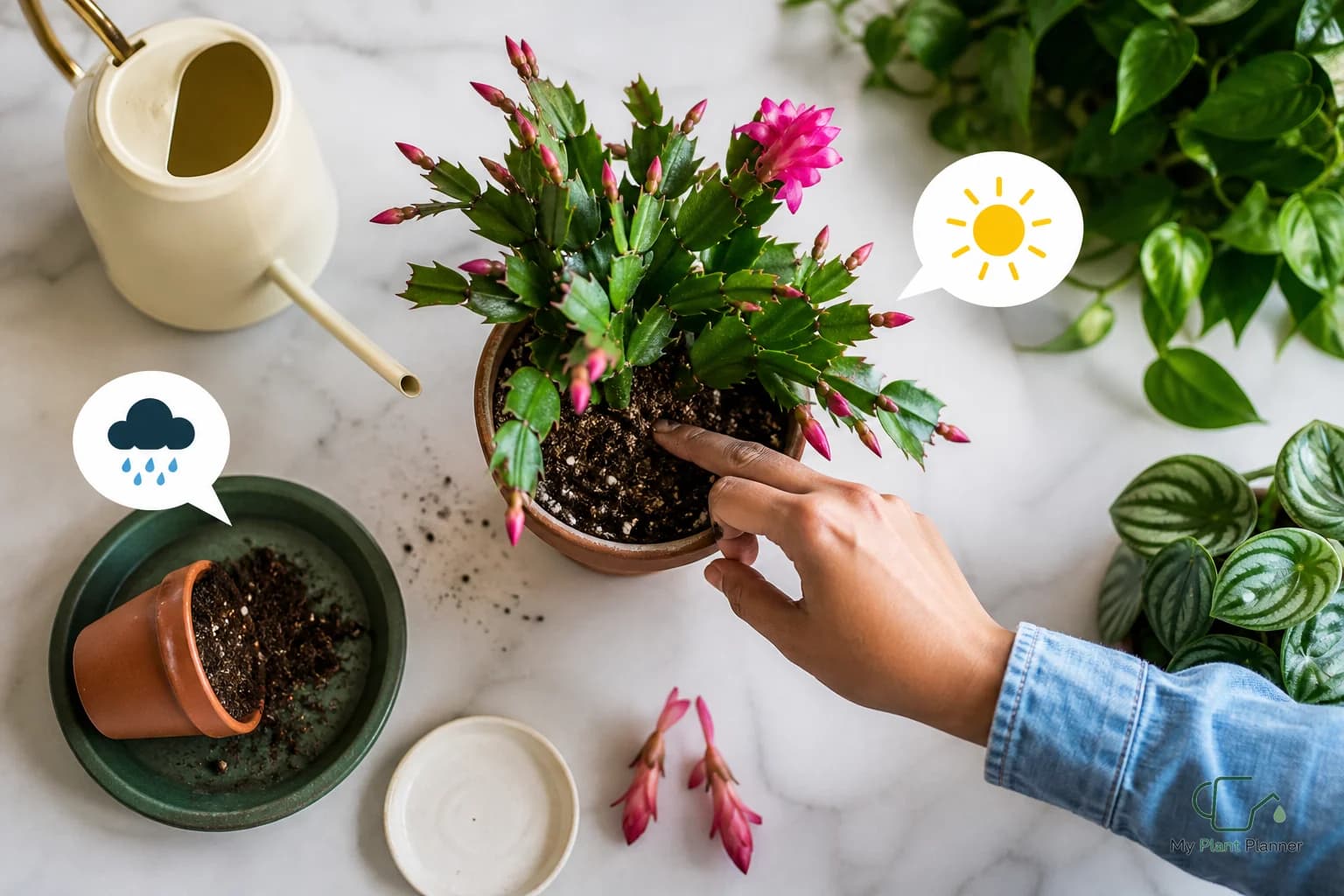
Christmas cactus watering trips people up because the name sounds tougher than the plant actually is. Yes, it is a cactus. No, that does not mean it wants to sit bone dry for weeks in every home.
Most Christmas cactus plants sold indoors are Schlumbergera types, and many are technically Thanksgiving cactus. For watering, that detail matters less than the bigger point: this is a tropical, forest cactus, not a desert cactus. It likes air around the roots, steady but not soggy moisture, and a chance to dry slightly between waterings.
Direct answer
For a Christmas cactus indoors, start by checking the soil every 10 to 14 days in bright indirect light.
In lower light, cooler rooms, or winter conditions, check closer to every 14 to 21 days. In a small pot, warm room, or very bright spot, you may need to check closer to every 7 to 10 days.
That is a check window, not a promise that the plant needs water on that day. Water when the top 1 to 2 inches of mix feel dry, the pot feels lighter than it did after watering, and the pot has drainage so excess water can leave.
If the mix still feels damp lower down, wait. Christmas cactus can handle a short dry stretch better than a root zone that stays wet and airless.
If you want a simple way to build this kind of routine for more plants, use How to set a watering check window for indoor plants.
What changes the watering window
The right check window depends on the room more than the label on the pot.
Light level: A Christmas cactus in bright indirect light uses water faster than one across the room from a window. More light usually means faster drying. Low light slows everything down.
Pot size: A small nursery pot dries faster. A large decorative pot can stay damp in the lower half long after the surface looks dry.
Pot material: Terracotta tends to dry faster than plastic or glazed ceramic. A nursery pot inside a cachepot may trap water if you do not empty it after watering.
Soil mix: A chunky, airy mix dries more evenly. Dense peat-heavy soil may look dry on top while staying wet around the roots.
Season: During active growth or bud and bloom periods, the plant may use water more steadily. After flowering, growth often slows, so checks can usually stretch out.
Indoor climate: Heat vents, dry winter air, humid rooms, and air conditioning all change the drying speed. Two Christmas cactus plants in two rooms can need different check windows.
Do not water it like a desert cactus
A common mistake is treating Christmas cactus like aloe, jade, or a barrel cactus. That can push the plant too dry for too long, especially while it is budding or flowering.
The opposite mistake is just as common: watering it every week because holiday plants feel high maintenance. Weekly watering can work in a tiny pot under bright light, but it can be too much in a cool room or a deep pot.
A better habit is to check on a schedule, then decide based on the soil and pot weight.
Common mistakes with Christmas cactus watering
Watering because the calendar says so. A reminder is useful. A command is not. Let the plant and soil have a vote.
Trusting only the top of the soil. The surface can dry while the lower root zone stays damp. This is especially true in bigger pots. If this keeps happening, read Top inch dry does not always mean your houseplant needs water.
Leaving water in the outer pot. If the nursery pot sits inside a decorative pot, check for pooled water after watering. Sitting in water can keep the root zone too wet.
Using a pot with no drainage. This makes watering much harder. You can pour carefully and still end up with water trapped at the bottom.
Letting it go crispy dry during bud set. Christmas cactus does not need swampy soil, but repeated hard drying can stress buds and flowers. Keep the rhythm steady during bloom season.
Repotting into a pot that is too large. More soil holds more water. A huge pot can make a healthy plant seem suddenly fussy because the roots are sitting in damp mix for too long.
Questions to check before you water
Before you pour, ask these:
- Does the top 1 to 2 inches of soil feel dry, or just the surface dust?
- Does the pot feel noticeably lighter than it did after the last watering?
- Is the plant in bright indirect light, or a dimmer room?
- Is the room warm and dry, or cool and slow to dry?
- Does the pot have drainage holes?
- Is there any water sitting in the saucer or cachepot?
- Did the soil stay wet for several days after the last watering?
If the top is dry but the pot still feels heavy, wait a few more days and check again. If the soil is dry and the pot is light, water thoroughly until water runs out the drainage holes, then empty the saucer.
Simple Christmas cactus watering checklist
Use this as a starting routine:
- Set your first check window for 10 to 14 days.
- Shorten to 7 to 10 days for small pots, warm rooms, or very bright indirect light.
- Stretch to 14 to 21 days for cooler rooms, lower light, winter slowdown, or larger pots.
- Check soil moisture with a finger or wooden stick before watering.
- Lift the pot when freshly watered and again when dry so you learn the weight difference.
- Water thoroughly when the top 1 to 2 inches are dry and the pot feels lighter.
- Let extra water drain completely.
- Empty saucers and decorative outer pots.
- Adjust after two or three watering cycles instead of changing the routine every few days.
A calm way to adjust
If your Christmas cactus stays wet for too long, do not water less dramatically forever. First, check the pot size, drainage, soil texture, and light level. The routine may be wrong, but the setup may be doing most of the damage.
If it dries very fast, do not assume you are failing. A small pot in a warm, bright room can dry quickly. Your check window may simply need to move earlier.
Aim for a rhythm where the plant is not staying soggy and not sitting bone dry for long stretches. That middle ground is where Christmas cactus tends to be easiest indoors.
For a custom starting check window based on your plant type, light, pot size, season, and indoor climate, try My Plant Planner.
Practical note
This article is general indoor plant care information. Watering windows are starting points, not guarantees. Your plant, pot, soil, light, season, and home climate can all change the right timing.
My Plant Planner gives general indoor plant-care guidance. Always check soil and plant condition before watering.