
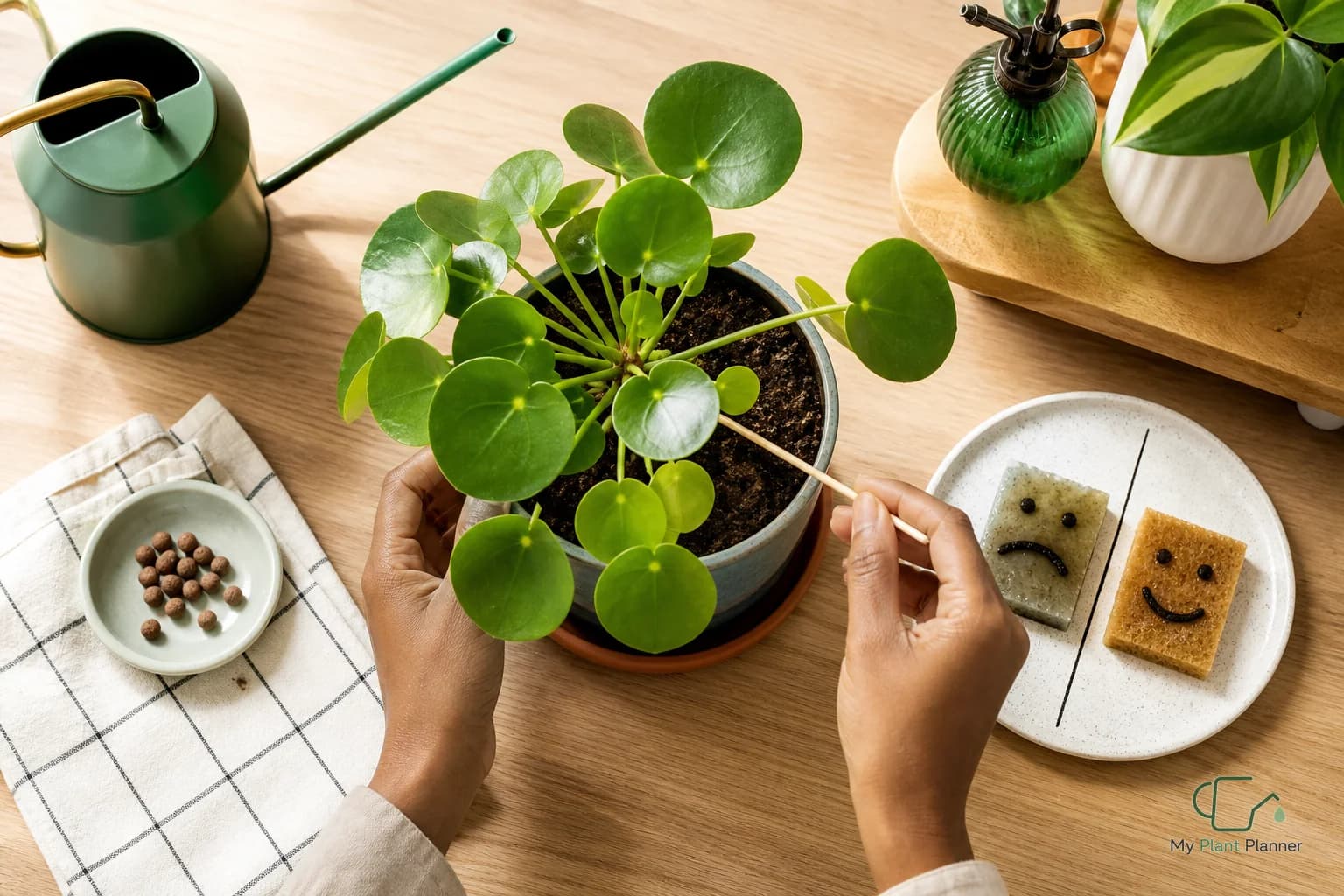
Chinese money plants, also called pilea or Pilea peperomioides, are easy to like and surprisingly easy to overwater. The round leaves make the plant look cheerful even when the soil routine is a mess, so people often keep pouring until the plant gets floppy, pale, or dramatic.
The better move is boring: set a watering check window, check the soil properly, and adjust based on your room.
A sensible starting window
For a Chinese money plant indoors, start by checking the soil every 7 to 10 days in bright indirect light during spring and summer. In lower light, cooler rooms, larger pots, or winter, the check window may stretch closer to 10 to 21 days.
That is not a promise to water on those days. It is a reminder to check.
Water when the upper portion of the mix has dried and the pot feels noticeably lighter, while the root zone is not still wet. If the soil is damp a few inches down, wait. Pilea usually prefers a cycle of drying partway between waterings, not sitting wet for days.
When you do water, water thoroughly until excess drains out, then empty the saucer. Tiny sips can leave dry pockets. Constant top ups can keep the roots wet. Both can make the plant harder to read.
If you want a general method before dialing in this specific plant, read How to set a watering check window for indoor plants.
The factors that change the window
Light is the biggest driver. A Chinese money plant near a bright window usually uses water faster than one across the room. More usable light means more growth, more evaporation, and a shorter drying cycle.
Pot size matters too. A small pot can dry quickly because there is less soil holding moisture. A large pot around a small root system can stay wet longer than expected. That mismatch is one reason a plant can look thirsty while the lower soil is still damp.
Pot material changes the pace. Terracotta breathes and dries faster. Plastic, ceramic, and cachepots hold moisture longer. A nursery pot tucked inside a decorative pot can also trap water at the bottom if you do not remove it after watering.
Season changes the routine even if the plant never moves. In fall and winter, indoor light is weaker, days are shorter, and many pileas slow down. That usually means you should check less often or be more willing to wait when the soil is still damp.
Indoor climate adds another layer. Warm rooms, dry air, fans, and heating vents can speed drying. Cool rooms and humid spaces slow it down. Two identical Chinese money plants in different rooms may need different check windows.
Mistakes that throw pilea watering off
The biggest mistake is treating pilea like a calendar plant. “Every Sunday” feels organized, but it ignores light, pot size, season, and whether the soil actually dried. That is how a tidy routine becomes a soggy one.
Another mistake is reacting to droop too quickly. Pilea leaves can soften or angle downward when the plant is dry, but droop can also show up when roots have been sitting too wet. If the pot still feels heavy and the soil is damp below the surface, more water is not the calm choice.
People also overtrust the very top of the soil. The surface can dry while the middle of the pot stays moist. This is especially common in deeper pots, dense potting mix, or lower light.
Then there is the cute pot problem. A decorative pot with no drainage may look good on a shelf, but it gives extra water nowhere to go. If you use a cover pot, keep the plant in a nursery pot with drainage and dump any collected water after watering.
Questions to check before you water
Ask these before you reach for the watering can:
- Is the plant in bright indirect light, medium light, or a dim corner?
- Does the pot feel light compared with right after watering?
- Is the soil dry only on the surface, or dry farther down too?
- Is the plant in a pot with drainage?
- Has the room cooled down or gotten less bright recently?
- Did the plant dry at about the same speed during the last two cycles?
Pot weight is especially helpful because it teaches your hand what the plant feels like wet, halfway dry, and ready to check again. For more on that, use How to use pot weight to decide when to water indoor plants.
Simple pilea watering checklist
Use this as a starting routine:
- Put your Chinese money plant in bright indirect light if possible.
- Start with a 7 to 10 day check window in active growing months.
- Stretch the check window in winter, cool rooms, low light, or oversized pots.
- Check below the surface, not just the top dusting of soil.
- Lift the pot and compare its weight to the last watering day.
- Water thoroughly only when the mix has dried partway and the pot feels lighter.
- Let extra water drain out fully.
- Empty the saucer or decorative pot after watering.
- Watch the next two cycles before making a big routine change.
A good pilea routine should feel repeatable, not rigid. You are looking for a pattern, not a perfect date.
Adjust after two cycles
If your Chinese money plant is drying faster than expected, shorten the check window by a couple of days. If it is still damp when your reminder pops up, do not water just to stay on schedule. Push the next check out and note what changed.
The goal is not to memorize one watering interval forever. The goal is to learn how your plant behaves in your room, in its pot, under your light.
If you want a simple starting check window based on plant type, light, pot size, season, and indoor climate, try My Plant Planner: https://myplantplanner.com/?utm_source=mdx
Practical note
This article is general indoor plant care information. Watering windows are starting points, not guarantees. Your plant, pot, soil, light, season, and home climate can all change the right timing.
My Plant Planner gives general indoor plant-care guidance. Always check soil and plant condition before watering.