
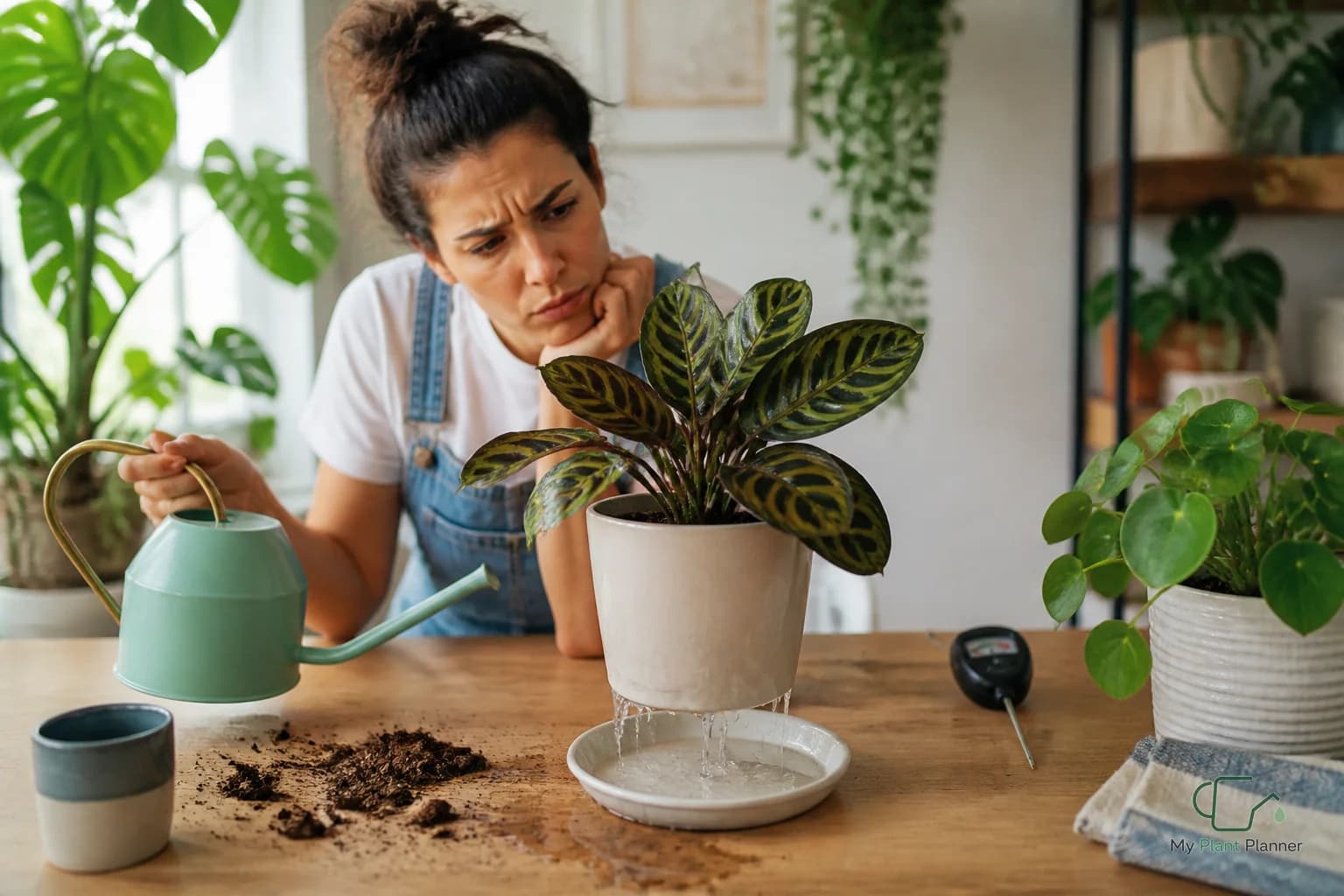
Calatheas have a reputation for being dramatic, and watering is a big reason why. They do not want to dry out like a snake plant, but they also do not want to sit in wet soil for days.
That middle zone is where most people get annoyed. The leaves curl, the edges crisp, the soil feels confusing, and the plant somehow looks thirsty and overwatered at the same time.
A fixed calendar will not solve that. A check window will get you much closer.
Direct answer
For most indoor calatheas, start by checking the soil every 5 to 7 days in brighter warm conditions, and every 7 to 10 days in lower light, cooler rooms, or winter.
That does not mean water every time the reminder pops up. It means check the soil during that window.
Water when the top inch of soil feels lightly dry but the lower soil still has a little moisture. Calatheas usually prefer not to become bone dry from top to bottom.
If the top is still damp, wait a couple more days and check again. If the pot feels very light and the top layer has pulled away from the pot edge, you probably waited too long.
Treat the first two or three cycles as calibration. Your home, pot, soil mix, and light level decide the actual rhythm.
Why calathea watering feels harder than it should
Calatheas are moisture loving tropical houseplants, but that phrase gets people into trouble. Moisture loving does not mean constantly wet.
Roots still need oxygen. When soil stays saturated, the root zone can become stale and heavy. That is when watering more because the plant looks sad can make things worse.
The better target is evenly moist, not soggy.
A good indoor rhythm usually looks like this:
- The top layer dries slightly between waterings
- The middle of the pot stays faintly moist, not wet
- Water drains through the bottom when you do water
- The pot is never left sitting in a saucer of runoff
If you are still learning how your plant behaves, use the soil as the main signal. Leaf movement alone can be noisy with calatheas.
For a broader soil check method, see How to tell if an indoor plant needs water.
The factors that change your check window
Light level
A calathea in bright indirect light usually uses water faster than one sitting across the room from a window. More light means more growth and more moisture moving through the plant.
In low light, the same pot can stay damp much longer. If you keep watering on the brighter room schedule, you may slowly build up soggy soil.
If you are unsure what your room counts as, read How light level changes your indoor plant watering schedule.
Pot size
A small pot dries faster. A large pot holds more moisture, especially in the lower half where your finger may not reach.
This is one reason a newly repotted calathea may need a longer check window than before. Bigger pot, more soil, slower drying.
Pot material
Terracotta dries faster because it breathes. Plastic, ceramic, and glazed pots hold moisture longer.
Neither is automatically better. Just do not use the same watering rhythm for both without checking the soil.
Season
In spring and summer, your calathea may need checks closer to the 5 to 7 day range if it gets good indirect light.
In winter, slower growth and cooler rooms often push the check window closer to 7 to 10 days, sometimes longer.
Indoor climate
Dry air, heating vents, air conditioning, and warm rooms can change the top layer fast. The catch is that the surface may dry while the lower pot is still moist.
That is why a quick surface glance is not enough. Check at least an inch down before watering.
Common mistakes with calathea watering
The first mistake is watering because the leaves look a little curled. Calatheas move their leaves during the day and night, and they can react to light, humidity, and temperature. Curling can be a clue, but it is not a full watering decision by itself.
The second mistake is giving tiny sips. A splash of water may wet the top while leaving lower roots dry. When the plant is ready, water thoroughly until water drains out, then empty the saucer.
The third mistake is letting the pot sit in runoff. Calatheas like moisture around the roots, not a bathtub under the pot.
The fourth mistake is using a weekly schedule forever. Weekly watering might work in one room and fail badly in another. A calathea near bright indirect light in summer and a calathea in a cool north facing room are not living the same life.
The fifth mistake is ignoring drainage. If the pot has no drainage hole, the risk of wet lower soil rises fast. A decorative cachepot is fine, but keep the plant in a nursery pot inside it so you can drain properly.
Questions to check before you water
Ask these before reaching for the watering can:
- Does the top inch of soil feel lightly dry, or is it still damp?
- Does the pot feel noticeably lighter than it did after the last watering?
- Is the plant in bright indirect light, medium light, or low light?
- Is the room warm and active, or cool and slow?
- Is the pot small and quick drying, or large and moisture holding?
- Did water drain freely last time?
- Has the plant been drying faster or slower over the last two cycles?
Those answers are more useful than the day of the week.
Simple calathea watering checklist
Use this as your starting routine:
- Check the soil every 5 to 7 days in bright indirect light during warmer months
- Check every 7 to 10 days in lower light, cooler rooms, or winter
- Water when the top inch is lightly dry and the pot is not still heavy with moisture
- Water thoroughly until some drains from the bottom
- Empty the saucer or outer pot after watering
- Do not water again just because the leaves move or curl slightly
- Adjust the check window after two or three watering cycles
- Shorten the window if the plant dries too fast
- Lengthen the window if the soil stays damp for several days
That is a much safer plan than picking one day every week and hoping the plant agrees.
A cautious closing
A calathea watering schedule is not a promise. It is a starting check window.
If your plant is in warm bright indirect light, you may be checking more often. If it is in a cooler, dimmer room, the soil may need more time. The goal is not to keep the soil wet. The goal is to avoid the hard swings between bone dry and swampy.
Watch the soil, check the pot weight, and adjust after a couple of cycles. That is how calathea care gets less dramatic.
Want a watering check window based on your actual plant, pot, light, season, and room conditions? Try My Plant Planner.
Practical note
This article is general indoor plant care information. Watering windows are starting points, not guarantees. Your plant, pot, soil, light, season, and home climate can all change the right timing.
My Plant Planner gives general indoor plant-care guidance. Always check soil and plant condition before watering.