
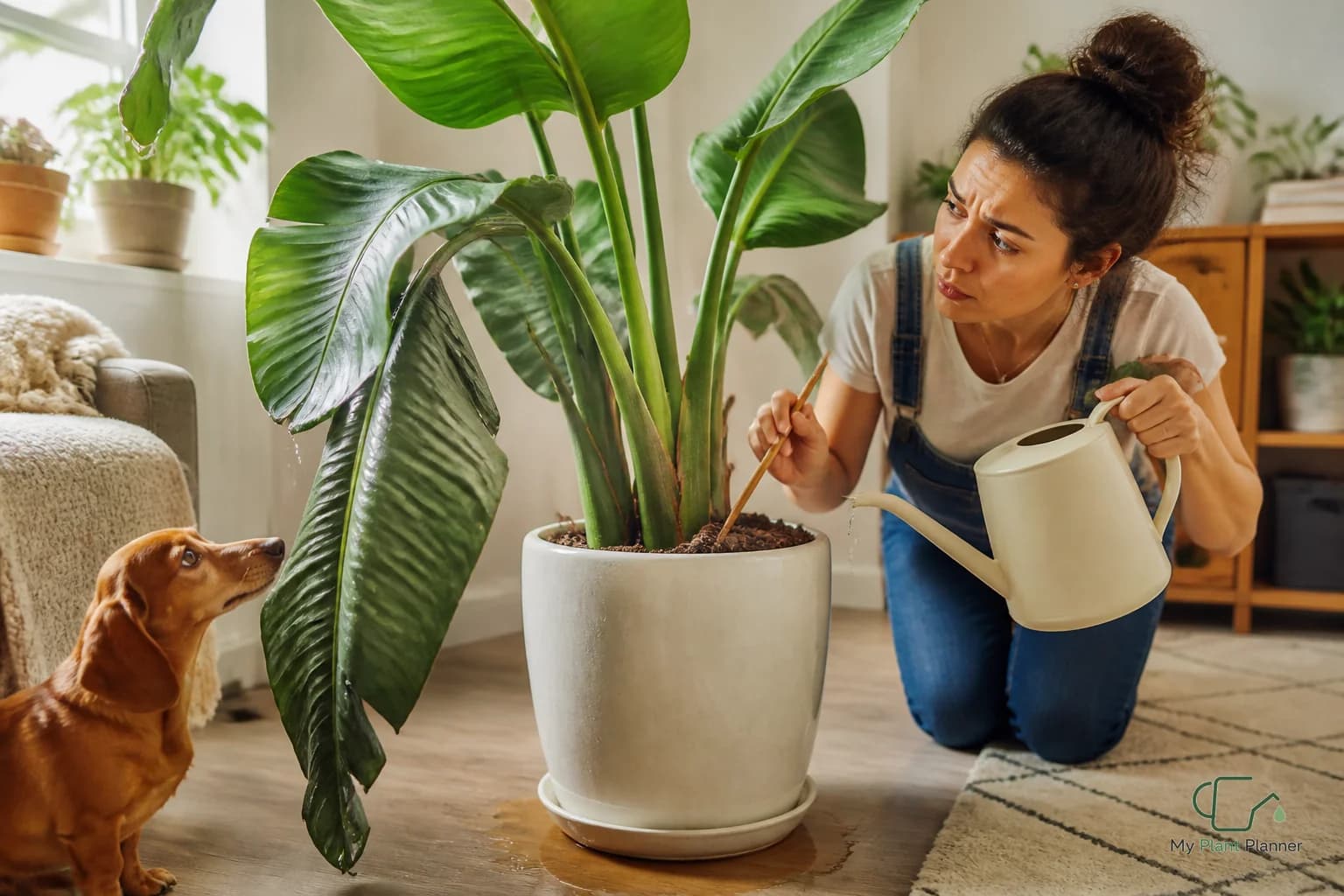
Bird of paradise looks like it should need constant tropical treatment. Indoors, that is how a lot of owners end up with a heavy, wet pot and a plant that keeps looking annoyed anyway.
The goal is not to keep the soil damp every day. It is to water thoroughly, let the pot partially dry, then check again before you repeat it.
The direct answer
For most indoor bird of paradise plants, start by checking water every 7 to 10 days in bright light during active growth.
In moderate light, cooler rooms, winter, or a large pot, a 10 to 14 day check window is often safer. In winter, some plants may need closer to 14 to 21 days between watering checks.
That is a starting point, not a promise. Water when the top 2 to 3 inches of soil feel dry and the pot feels noticeably lighter than it did after watering. If the soil is still cool, damp, or heavy lower in the pot, wait.
When it is time, water slowly until excess drains from the bottom. Then empty the saucer or cachepot. Bird of paradise can handle a good drink. It does not want to sit in old water.
If you want the broader method, read How to set a watering check window for indoor plants.
Context that changes the check window
Bird of paradise watering depends heavily on the room it lives in. Two identical plants can need different timing if one sits by a sunny window and the other is across the room.
Light level
Bright light dries the pot faster and usually supports more active growth. A bird of paradise near a bright window, especially with some gentle direct sun, may use water faster than one in a dim corner.
Lower light slows everything down. The plant may still look fine for a while, but the soil can stay wet much longer. That is where weekly watering gets risky.
Pot size
A big bird of paradise often comes in a big pot, and big pots hold a lot of moisture below the top layer. The surface can feel dry while the lower root zone is still wet.
This is why the “top inch dry” rule is too shallow for this plant. Check 2 to 3 inches down if you can. For deeper pots, pot weight becomes even more useful.
Season and indoor climate
Spring and summer usually mean faster growth and faster drying. Fall and winter usually mean slower growth, less light, and longer drying time.
Heating and air conditioning complicate things. Warm dry air can crisp leaf edges while the soil is still wet. That does not automatically mean the plant needs more water.
Drainage
A nursery pot inside a decorative pot can hide standing water. Always check the outer pot after watering. If water collects there, the roots can stay wet long after the top looks normal.
A chunky, well draining potting mix gives you more room for error. Dense soil in an oversized pot gives you very little.
Common bird of paradise watering mistakes
The biggest mistake is treating leaf drama as a direct watering instruction.
A split leaf does not mean the plant is thirsty. Splitting is common on bird of paradise leaves indoors, especially as leaves age or move in airflow.
Curling, drooping, yellowing, and brown edges can also come from more than one cause. Water can be part of the story, but the soil check decides your next move.
Another mistake is giving a little splash every few days. That often wets the top and leaves the lower root ball inconsistent. When the plant is actually ready, water thoroughly enough that moisture reaches the root zone.
The opposite mistake is panic flooding. If the plant got too dry, one careful watering is usually better than repeated soaking over several days.
And do not ignore the pot. A bird of paradise in a snug nursery pot may dry faster than one moved into a huge decorative planter. Bigger is not automatically better. Sometimes it just means wetter for longer.
For tricky cases, Dry soil or wet roots: how to decide if your indoor plant needs water is a useful next read.
Questions to check before watering
Ask these before you pour:
- Is the top 2 to 3 inches of soil actually dry, or only the surface?
- Does the pot feel lighter than it did after the last watering?
- Is the plant in bright light, moderate light, or a spot that is darker than you admit?
- Is the nursery pot sitting inside a decorative pot with water at the bottom?
- Has the season changed since your last routine worked?
- Did the plant improve after the last watering, or did it look worse?
- Is the pot much larger than the root ball?
The point is not to interrogate your plant forever. It is to avoid the lazy answer: “It has been a week, so I guess it is time.”
Simple bird of paradise watering checklist
Use this as your repeatable routine:
- Start with a 7 to 10 day check window in bright indoor light.
- Use a 10 to 14 day check window in moderate light, cool rooms, or large pots.
- In winter, expect the check window to stretch longer.
- Check soil 2 to 3 inches down, not just the surface.
- Lift the pot or tilt it slightly to feel whether it is still heavy.
- Water thoroughly only when the upper soil has dried and the pot feels lighter.
- Let extra water drain fully.
- Empty the saucer or decorative pot after watering.
- Watch the next two cycles and adjust by a few days at a time.
Small adjustments beat big swings. If your plant is staying wet too long, widen the check window. If it is drying hard and fast, shorten the window or check whether the pot is too small for the plant.
A cautious closing
A bird of paradise does not need you to guess an exact watering date. It needs you to check the pot before you act.
Start with a sensible window, test the soil below the surface, pay attention to light and pot size, then adjust after a couple of cycles. That is boring advice, but boring is usually what keeps big indoor plants alive.
If you want a starting check window based on your actual plant, light, pot size, season, and indoor climate, try My Plant Planner.
Practical note
This article is general indoor plant care information. Watering windows are starting points, not guarantees. Your plant, pot, soil, light, season, and home climate can all change the right timing.
My Plant Planner gives general indoor plant-care guidance. Always check soil and plant condition before watering.