Most watering advice treats your plant like it lives in a neutral test room. It does not. Your plant lives in your home, near your window, under your ceiling fan, beside your heater, or on that cute shelf where the light is mostly wishful thinking.
Light is one of the biggest reasons the same plant can need water at very different speeds in two different homes.
The direct answer
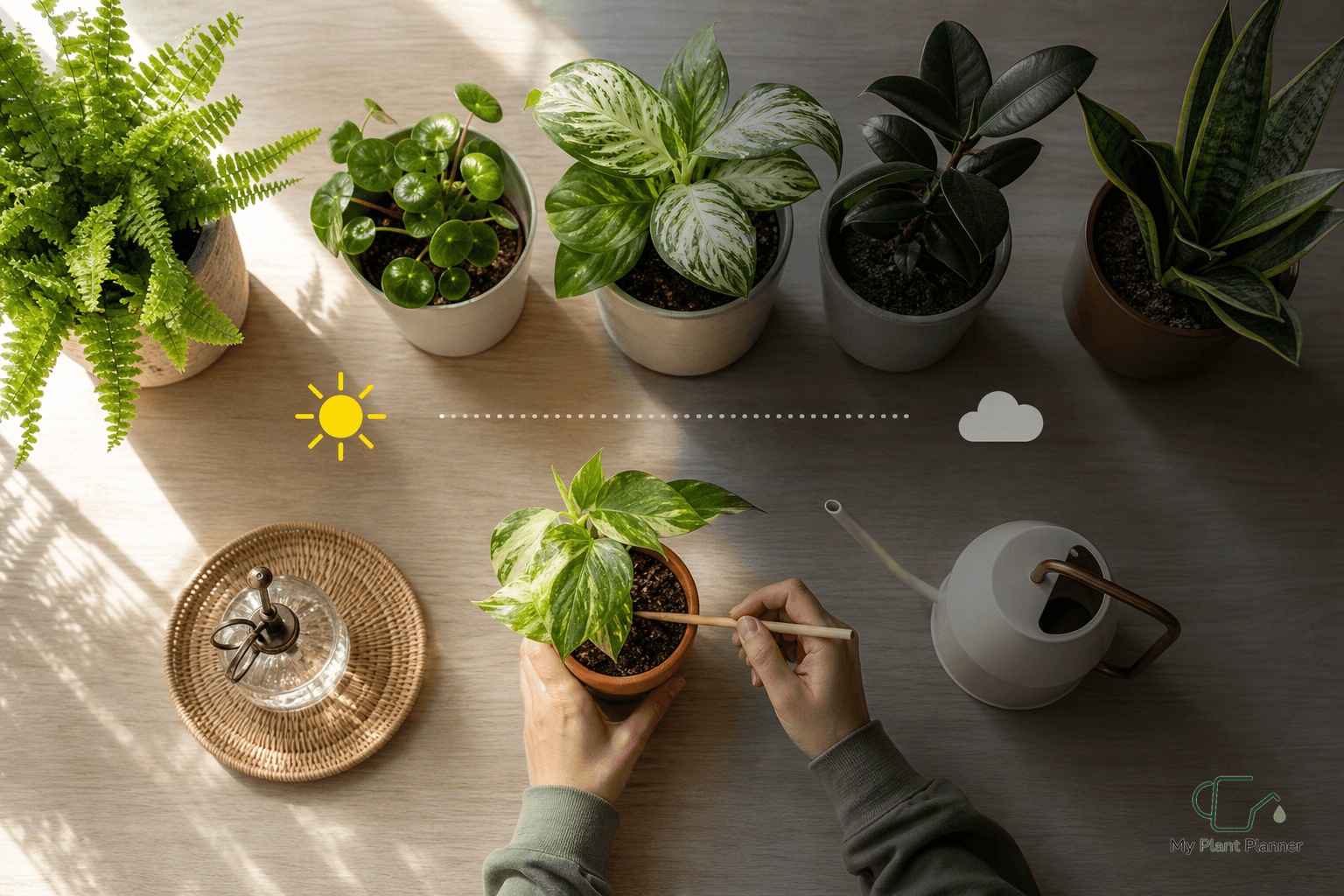
The brighter the light, the sooner you usually need to check the soil. The lower the light, the longer you usually wait before checking again.
That does not mean bright light plants need constant watering. It means they photosynthesize more, use more water, and their potting mix often dries faster. A plant in low light grows more slowly and usually drinks less, so watering on the same schedule can leave the roots sitting wet for too long.
Think of light as a schedule adjuster, not a schedule by itself.
A practical starting point:
- Bright indirect light: check sooner
- Medium light: use the plant’s normal check window
- Low light: check later and be more cautious
In bright light, many plants need earlier soil checks; in medium light, the normal range usually holds; in low light, waiting longer often prevents wet roots.
Still check the soil before watering. Light gives you the timing clue. The soil gives you the go or no go.
If you are still getting used to soil checks, read How to tell if an indoor plant needs water.
What bright indirect light means for watering
Bright indirect light usually means your plant is near a sunny window but not getting harsh direct sun for hours. East windows, filtered south or west windows, and spots close to a bright window often fit this category.
In this kind of light, many common indoor plants grow more actively. They may put out new leaves, lean toward the window, and dry out faster than expected.
For watering, that usually means your check window gets shorter. If a plant in medium light might be checked every 7 to 10 days, the same plant in bright indirect light may need a soil check closer to the early side of that range.
Do not turn that into a hard rule. A large pot, dense potting mix, or cool room can still hold moisture longer.
What medium light does
Medium light is the middle ground. The plant can see the sky or gets steady ambient light, but it is not right up against the brightest window.
This is where many basic watering guides are most useful. A plant’s usual check window often makes sense here, as long as the pot has drainage and the room is not unusually hot, cold, humid, or dry.
Medium light is also where people get lazy. The plant looks fine, so it gets added to a Sunday watering loop. That can work for a while, then fail when the season changes or the plant slows down.
If you have been watering everything once a week, compare that habit with Why watering houseplants once a week is often too much.
What low light changes
Low light does not mean no light. It means the plant is farther from the window, in a dim corner, or in a room where you need lamps on during the day.
In low light, plants usually grow more slowly. Slower growth means less water use. The potting mix may stay damp longer, especially in plastic or glazed ceramic pots.
This is where overwatering sneaks in. The plant may not look dramatic at first. The soil just stays wet a little too long, cycle after cycle.
A lower light plant often needs a longer check window and a stricter soil test before watering. If the top looks dry but the lower mix is still damp, wait.
Key factors that change the light and water math
Light matters, but it does not act alone.
Pot size changes everything. A small pot dries faster because there is less mix holding moisture. A large pot can stay damp deep down even when the surface looks dry.
Pot material matters too. Terracotta breathes and dries faster. Plastic, glazed ceramic, and cachepots hold moisture longer.
Season matters. In summer, longer days and warmer rooms can shorten the check window. In winter, weaker light and slower growth often stretch it out.
Indoor climate matters. Air conditioning, heat, fans, humidity, and drafty windows all affect drying speed.
Plant type still matters. A fern, pothos, peace lily, cactus, and snake plant should not all be treated the same just because they sit near the same window.
Common mistakes with light and watering
The biggest mistake is assuming low light plants need more help from the watering can. They usually need less water, not more.
Another mistake is moving a plant to brighter light and keeping the old watering rhythm. If the plant starts growing faster and the pot dries sooner, the old schedule may lag behind.
People also trust the soil surface too much. The top inch can dry while the bottom of the pot is still damp. This is especially common in deep pots.
And then there is the decorative pot trap. A nursery pot inside a cover pot can collect extra water at the bottom. The plant may look tidy on the shelf while the roots sit in a puddle.
Questions to check before you water
Before you water, ask:
- Has this plant moved closer to or farther from a window recently?
- Is the room brighter or darker than it was last season?
- Is the pot small and quick drying, or large and slow drying?
- Does the pot have a drainage hole?
- Is the soil dry only on top, or dry deeper down too?
- Has the plant been growing actively, or has growth slowed?
- Is the room warmer, cooler, drier, or more humid than usual?
These questions keep you from treating a living plant like a calendar event.
A simple light based watering checklist
Use this as a starting routine:
- Identify the plant’s light level: bright indirect, medium, or low
- Start with the plant’s normal watering check window
- Check earlier if the plant is in bright indirect light
- Check later if the plant is in low light
- Feel the soil before watering
- Make sure excess water can drain away
- Empty any saucer or cover pot after watering
- Watch the plant for two or three cycles
- Adjust the check window if the soil is drying much faster or slower than expected
The goal is not to memorize a perfect number. The goal is to build a repeatable habit that fits your home.
A cautious closing
Light can explain a lot of watering problems, but it is not the only factor. If a plant looks off, avoid jumping to one cause. Check the soil, drainage, pot size, recent moves, and seasonal changes before deciding what to change.
A watering schedule should be a check window, not a promise. Your plant still gets the final vote.
If you want a simple starting window based on plant type, light, pot size, season, and indoor climate, try My Plant Planner.
Practical note
This article is general indoor plant care information. Watering windows are starting points, not guarantees. Your plant, pot, soil, light, season, and home climate can all change the right timing.
My Plant Planner gives general indoor plant-care guidance. Always check soil and plant condition before watering.