A sad-looking houseplant can make you feel like you need to do something right now. Most people reach for the watering can because it feels helpful. Sometimes it is. Sometimes it is exactly how a minor problem becomes a bigger one.
Indoor watering is less about a perfect calendar and more about reading a few clues together. One clue can lie. A drooping leaf, a dry-looking soil surface, or one yellow leaf does not tell the whole story.
The short answer
Decide whether your indoor plant needs water by checking the soil a little below the surface, noticing the pot weight, looking at the plant's recent watering history, and factoring in light, pot size, drainage, and season.
If the top inch is dry but the lower soil still feels cool and damp, wait and check again soon. If the soil is dry deeper down and the pot feels noticeably lighter than usual, watering may be reasonable. If the soil is still wet several days after watering, do not add more water just because the plant looks tired.
That last part is where a lot of houseplant owners get burned. A plant can look limp from dry soil, but it can also look limp when wet soil has stressed the roots. Same visual drama, opposite watering move.
For a broader symptom guide, see Overwatering signs in common houseplants and Underwatering signs in common houseplants.
What to check before you water
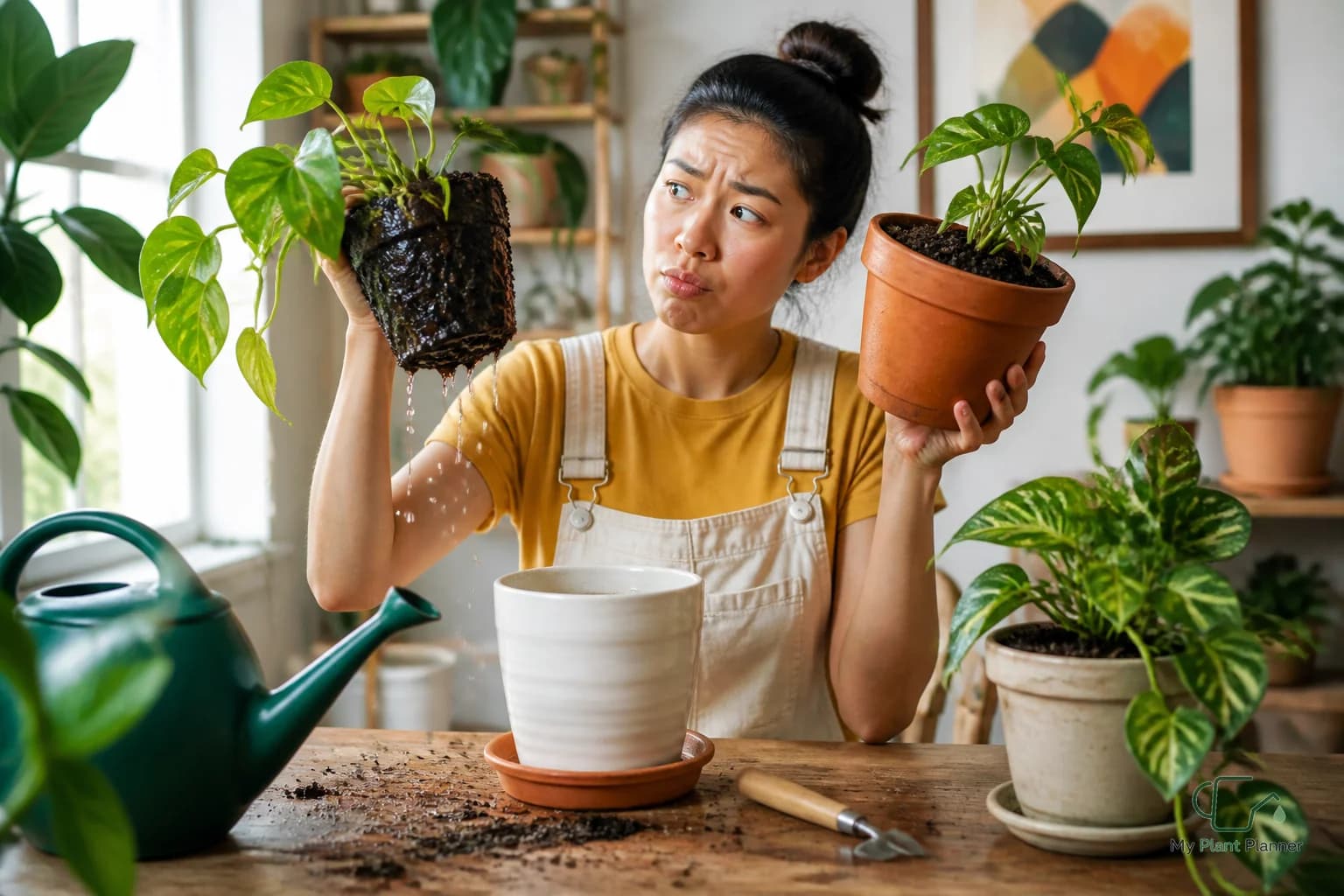
Start with soil depth, not the surface. The top of the pot dries first because it is exposed to air. That does not mean the root zone is dry. Push a finger, chopstick, or wooden skewer into the soil. You are looking for moisture below the first dry layer.
Next, lift the pot if you can. A recently watered pot feels heavier. A pot that has dried down feels lighter. This is not a lab measurement, but after a couple of cycles it becomes one of the fastest checks you have.
Then look at light. A plant in bright indirect light usually uses water faster than the same plant sitting across a dim room. Low light slows growth and slows drying. If the plant was moved away from a window, the old watering rhythm may now be too aggressive.
Pot size also matters. A small pot can dry quickly. A large pot around a small root system can stay wet for much longer than expected. The plant is only using moisture where roots actually are, not magically emptying every inch of soil.
Drainage is the boring detail that decides a lot. If the pot has no drainage hole, extra water has nowhere easy to go. You can still grow plants in decorative containers, but the margin for error is smaller. Water less at a time and check more carefully.
Common mistakes that push plants the wrong way
The biggest mistake is watering on a fixed weekly schedule because it feels organized. Weekly watering can work for some plants in some homes during active growth. It can be too much for a snake plant in low light, too little for a thirsty plant in a small pot near a warm window, and completely wrong after the season changes.
Another mistake is treating droop as a command. Droop means the plant is under stress or low on usable moisture. It does not prove the soil is dry. Check first, then decide.
People also underestimate how long indoor soil can stay wet. A big pot, dense soil, low light, cool room, or no drainage can stretch drying time. If you keep watering because the surface looks dry, the lower soil may never get a chance to breathe.
The opposite mistake happens too. Some owners wait until the plant collapses every time before watering. That can be rough on plants that prefer a more even rhythm, especially peace lilies, pothos, and many tropical foliage plants. You do not need panic watering. You need a repeatable check window.
Questions to ask when the answer is not obvious
Ask these before you pour:
- When did I last water this plant?
- Did water drain out, or did it sit in the pot or saucer?
- Is the soil dry only on top, or dry deeper down?
- Does the pot feel lighter than it did after watering?
- Has the plant recently moved to lower light?
- Is the room cooler, more humid, or less sunny than usual?
- Is this a plant that likes drying down, or one that dislikes getting too dry?
You are not trying to become a botanist. You are trying to avoid guessing from one dramatic leaf.
A simple watering decision checklist
Use this when you are unsure:
- Check the soil below the surface.
- Lift the pot and compare the weight to how it feels after watering.
- Look for drainage holes and empty any standing water from the saucer.
- Consider light level and recent weather or seasonal changes.
- If lower soil is damp, wait and check again in a few days.
- If soil is dry deeper down and the pot feels light, water thoroughly if the plant type tolerates that.
- After watering, watch how long the soil takes to dry over the next cycle.
- Adjust the next check window instead of locking into a fixed weekly habit.
A check window is more useful than a promise. For example, you might start checking a pothos every 5 to 8 days in bright indirect light, but every 10 to 14 days in lower light. A snake plant may need a much wider gap. The point is not to hit the same day forever. The point is to check at the right time instead of reacting late or watering too early.
When to wait instead of water
Waiting is not neglect when the lower soil is still damp. It is often the safer move.
Wait if the pot still feels heavy, the soil is cool and moist below the surface, the plant was watered recently, or the room has been darker and cooler than normal. Also wait if water has been sitting in the saucer or decorative cachepot. Empty that water and let the pot breathe.
You can check again in a couple of days. If the soil continues staying wet for a long time, the issue may be pot size, soil density, light level, or drainage rather than your memory.
A calmer way to water
Your plant does not need you to guess perfectly. It needs you to stop treating every symptom like the same emergency.
Use the soil, pot weight, light, and drainage together. Set a starting check window, then adjust after a couple of watering cycles. If the plant dries faster than expected, shorten the window. If the soil stays wet too long, stretch it out and look at the pot setup.
If you want help setting a practical starting check window for your plant, use My Plant Planner. It will not promise an exact watering date, but it can give you a smarter time to check based on the plant, light, pot size, season, and indoor climate.
Practical note
This article is general indoor plant care information. Watering windows are starting points, not guarantees. Your plant, pot, soil, light, season, and home climate can all change the right timing.
My Plant Planner gives general indoor plant-care guidance. Always check soil and plant condition before watering.