Watering Window
If a houseplant looks tired this week, do not treat that as an automatic watering order. Drooping, yellowing, curling, and sad leaves can happen when a plant is too dry, but they can also happen when the pot has stayed wet too long.
A better watering window starts with three checks:
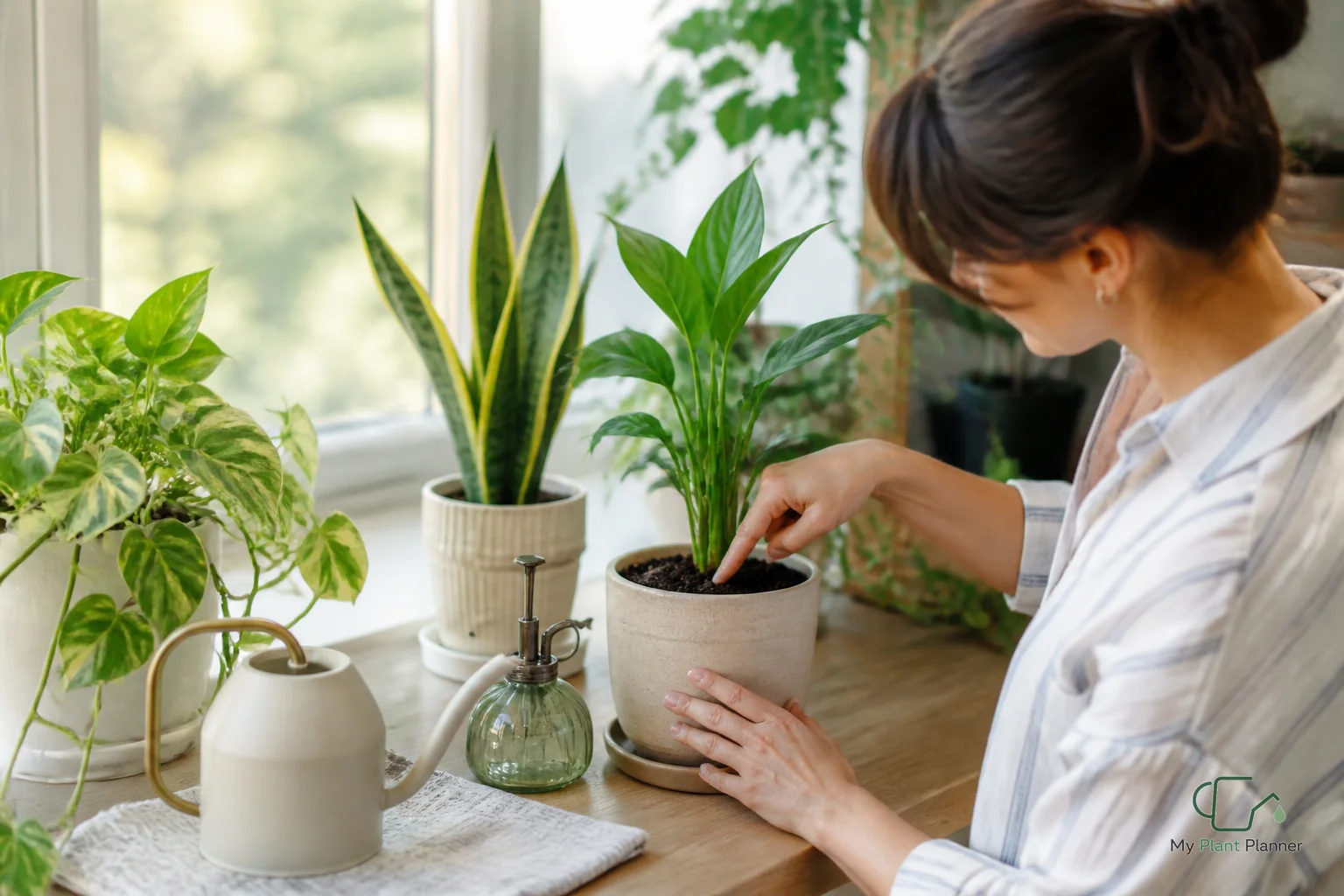
- Check below the surface, not just the top layer.
- Lift the pot if you can. A recently watered pot usually feels noticeably heavier.
- Think about recent light. Less light usually means the plant uses water more slowly.
Snake plants usually want a longer wait and a drier pot before watering. Pothos can tolerate a bit more moisture, but even pothos should not be watered just because the top inch looks dry. The top layer can dry fast while the root zone is still damp.
Good reads from this week:
- Top inch dry does not always mean your houseplant needs water
- Before you water a struggling houseplant, check these three things
Plant Care Tip
After a watering mistake, the win is not a dramatic rescue. It is a boring reset.
If you think you overwatered:
- Empty the saucer or cachepot.
- Make sure the pot can drain freely.
- Give the mix time to breathe before the next check.
- Do not water again because the leaves still look upset.
- Do not swing into punishment mode and keep the plant bone dry for weeks.
The tradeoff is simple: you want to avoid both soggy roots and a panic drought. Let the pot tell you what happened, then adjust the next check window.
Featured this week: What to do after you accidentally overwater a houseplant indoors
Common Mistake
The common mistake this week is reading leaves like instructions.
A yellow leaf does not always mean water. A droopy plant does not always mean dry soil. A soft looking plant does not always need a rescue soak. Leaves are clues, not commands.
This is why overwatering and underwatering cause so much confusion indoors. Both can make a plant look limp because both can interfere with water moving through the plant. One problem needs water. The other needs air and time.
Before watering from symptoms alone, check:
- Soil moisture deeper in the pot
- Pot weight
- Drainage holes and saucer water
- Recent watering history
- Recent light changes
- Plant type and pot size
More on that trap:
- Why leaf symptoms alone are bad watering advice
- Why overwatering and underwatering look alike indoors
From My Plant Planner
This week was mostly about one theme: stop guessing from plant drama.
Recent articles:
- What to do after you accidentally overwater a houseplant indoors
- Before you water a struggling houseplant, check these three things
- How to get back on track after missing a houseplant watering check
- Top inch dry does not always mean your houseplant needs water
- Why leaf symptoms alone are bad watering advice
- Why overwatering and underwatering look alike indoors
Find your next indoor plant watering check window in under 30 seconds: My Plant Planner
Question of the Week
My plant has yellow or droopy leaves. Should I water it right now?
Maybe, but do not decide from the leaves alone.
First, check the soil below the surface. If the lower mix is still damp, watering again can make the problem worse. If the pot feels light and the soil is dry deeper down than that plant prefers, water thoroughly and let the extra drain away.
For a snake plant, be especially skeptical of quick watering. It usually wants the pot to dry out well before the next drink. For pothos, check more often, but still make the decision from the root zone, not from one dramatic leaf.
If you missed a check, do not double up. Reset calmly: How to get back on track after missing a houseplant watering check
My Plant Planner gives general indoor plant-care guidance. Always check soil and plant condition before watering.