
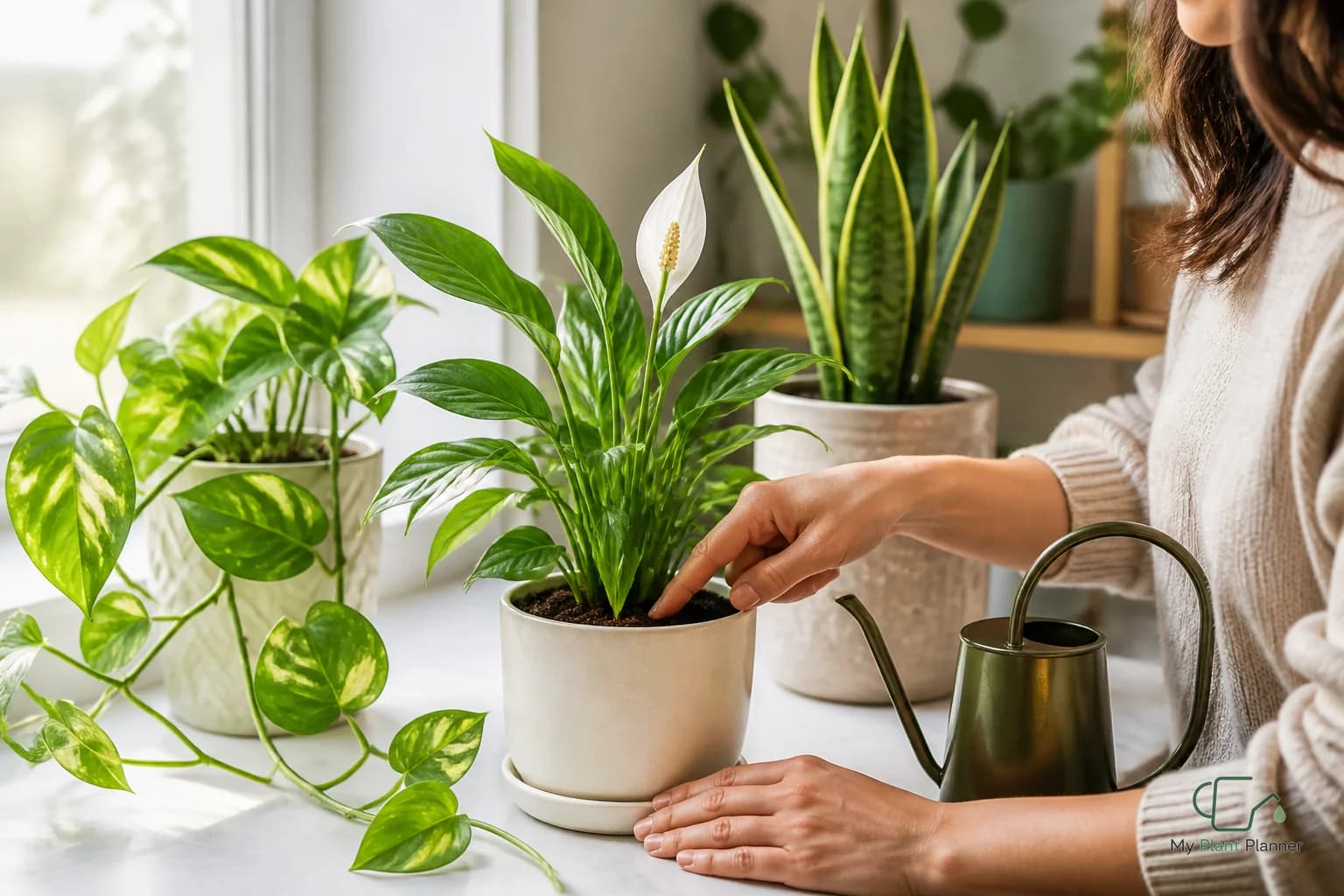
Watering Window
If your houseplant care has felt weird lately, use this week to switch from a watering day to a watering check window.
That means you are not deciding, “I water every Sunday.” You are deciding, “Between Sunday and Tuesday, I check whether this plant is ready.” Big difference.
Do not water sad leaves on sight. A quick soil and pot check gives you better information than the first dramatic leaf you notice.
For many common indoor plants, the better move is:
- Check the soil below the surface, not just the dry-looking top.
- Pick up the pot if you can. A light pot usually tells you more than one droopy leaf.
- Notice the light. A plant near a bright window can dry much faster than the same plant across the room.
- Water only when the plant, pot, and soil all point in the same direction.
The trap is treating every sad leaf like a water request. Sometimes it is. Sometimes the roots are already sitting in wet soil and need air more than another drink.
Plant Care Tip
Soft leaves should start the inspection, not end it.
A pothos can go limp when dry. A peace lily can collapse like it is auditioning for a medical drama. But soft or floppy leaves can also happen when soil is still wet and roots are not working well.
Try this quick check before watering:
- Push a finger or wooden chopstick into the mix.
- Check a little below the surface.
- Look at the drainage hole area if possible.
- Ask when you last watered.
If the top is dry but the lower mix is damp, wait. If the pot is light and the soil is dry at the right depth for that plant, water thoroughly and let the extra drain out.
Common Mistake
The common mistake this week: trying to fix a messy routine by watering more consistently.
Consistency sounds good. But if the routine is wrong, consistency just makes the problem more reliable.
A snake plant in a low light corner does not want the same watering rhythm as a pothos in bright indirect light. A small nursery pot dries differently than a large decorative pot. A plant in fast draining mix behaves differently than one in dense, peat-heavy soil.
What people get wrong is looking for one perfect schedule. The better target is a repeatable check.
A useful reset:
- If soil is staying wet for many days, widen the window and check drainage.
- If the plant dries fast and wilts often, narrow the window or check if the pot is too small.
- If symptoms conflict, trust the soil and pot weight before the leaves.
From My Plant Planner
New articles from the past week focused on one theme: stop guessing from a single symptom.
Featured read: How to fix a houseplant watering routine that is not working. It walks through how to move from a rigid watering day to a check window that fits the actual plant and room.
Also useful this week:
- Dry soil or wet roots: how to decide if your indoor plant needs water
- Why soft houseplant leaves do not always mean more water
- How to set a watering check window for indoor plants
- Why houseplant leaves turn yellow after watering
- Why your houseplant looks thirsty when the soil is still wet
Find your next indoor plant watering check window in under 30 seconds: My Plant Planner
Question of the Week
My plant looks thirsty, but the soil is still damp. Should I water anyway?
Usually, no. Damp soil means there is still moisture in the pot. If the leaves look tired while the mix is wet, more water can make things worse by keeping air away from the roots.
Check three things first:
- Does the pot have a drainage hole?
- Is the soil damp only on top, or damp deeper down too?
- Has the plant been sitting in lower light than usual?
If the soil is damp deeper down, wait and improve the conditions around the plant. Give it brighter indirect light if appropriate, empty any cachepot or saucer water, and let the pot breathe. If the soil is dry deeper down and the pot feels light, then water thoroughly.
My Plant Planner gives general indoor plant-care guidance. Always check soil and plant condition before watering.