
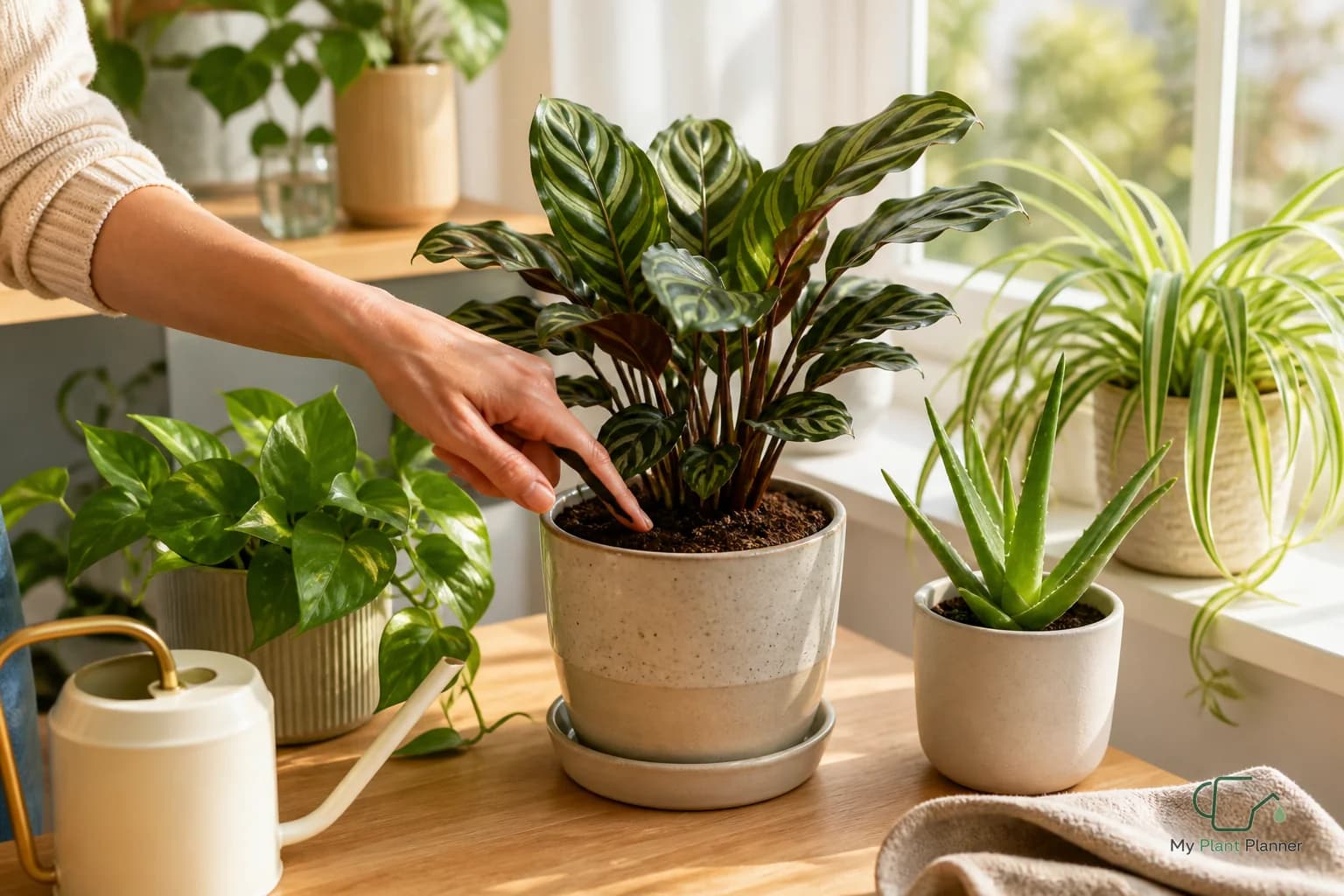
Watering Window
If a houseplant still has wet soil after a week, skip the watering can.
That does not mean the plant is doomed. It usually means the plant is drying slower than your routine assumes. Low light, a cool room, a large pot, dense soil, or a plant that naturally drinks slowly can all stretch the gap between waterings.
A safer check window this week:
- Leafy plants like pothos and spider plants: check every 7 to 10 days, but water only when the top 1 to 2 inches are dry.
- Moisture sensitive plants like calathea: check every 5 to 10 days, depending on light and room temperature. Do not let the whole pot turn bone dry.
- Succulents like aloe vera: check every 14 to 21 days in brighter warm rooms, and closer to 21 to 35 days in cooler or dimmer rooms.
- Any plant with soil still wet after 7 days: wait, improve light or airflow if needed, and check again in a few days.
The point is not to memorize one perfect number. The point is to stop treating every plant like it lives in the same pot, same window, and same season.
Featured read: Why is my houseplant soil still wet after a week?
Plant Care Tip
Use pot weight as a second opinion.
Soil feel can be confusing, especially if the top dries faster than the root zone. Pick up the pot after watering and notice how heavy it feels. Then pick it up again a few days later. A plant that is actually drying out will usually feel noticeably lighter.
This is especially helpful for plants that send mixed signals, like drooping leaves. Droop plus a light pot and dry soil usually points toward thirst. Droop plus a heavy pot and damp soil points toward a plant that should not be watered again yet.
Good follow up reads from this week:
Common Mistake
Watering because the leaves look sad.
A drooping plant can be dry, sure. But it can also be sitting in soggy soil with roots that are struggling to breathe. From across the room, those two problems can look annoyingly similar.
Before you water, check three things:
- Soil: Is it dry at the depth that plant prefers?
- Pot weight: Does the pot feel lighter than it did after the last watering?
- Timing: Was the plant watered recently, or is it actually inside its normal check window?
If the soil is still damp and the pot is heavy, watering again is not plant care. It is adding more pressure to the root zone.
From My Plant Planner
New articles from the past week focused hard on one theme: watering windows beat fixed watering schedules.
If you missed them, these are worth saving:
- How often should you water a calathea indoors: for plants that hate drying out completely but also resent sitting wet.
- How often should you water a spider plant indoors: a forgiving plant, but not a plant that wants autopilot watering.
- How often should you water an aloe vera indoors: a tough plant that gets into trouble when people love it with too much water.
If you want a fast starting point, use the planner instead of guessing from a random weekly routine.
Find your next indoor plant watering check window in under 30 seconds.
Question of the Week
Should I cut off a damaged African violet leaf?
Usually, yes, if the leaf is badly torn, mushy, yellowing, or dragging on the soil. African violet leaves do not really repair cosmetic damage. A small blemish can stay if the leaf is firm and not spreading, but a damaged leaf sitting against damp soil can become a rot problem.
Use clean scissors or pinch the leaf stem near the base. Then check the watering setup. African violets prefer evenly lightly moist soil, not a soaked crown and not a bone dry crash cycle. Water near the soil line or from the bottom, keep water out of the center crown, and let the pot drain well.
If the damage came from handling, no drama. If several leaves are turning soft or collapsing, look harder at wet soil, poor drainage, or cold water shock.
My Plant Planner gives general indoor plant-care guidance. Always check soil and plant condition before watering.