Watering Window
This week’s watering window is not a date on the calendar. It is a check.
The goal is to stop watering on autopilot. Treat the reminder as a pause point: check the plant, then decide whether water actually helps today.
Before you water, look for three signals:
- The soil has dried to the right depth for that plant.
- The pot feels noticeably lighter than it did after a full watering.
- The leaves show mild thirst signals that match the plant’s normal behavior.
That last part matters. A pothos may droop when it is thirsty. A snake plant may not give you much drama at all until things are already off. A peace lily can act like it is auditioning for a tragedy, then bounce back after watering.
If your plant sits in lower light, a cool room, dense soil, or an oversized pot, widen the window. The soil will stay wet longer than your reminder app wants to admit.
Plant Care Tip
Use pot weight as a quiet little moisture meter.
After you water a plant fully and let extra water drain, lift the pot. That is the “full tank” feel. A few days later, lift it again. When the pot feels much lighter and the soil check also says it is dry enough, you have better evidence than a fixed weekly routine.
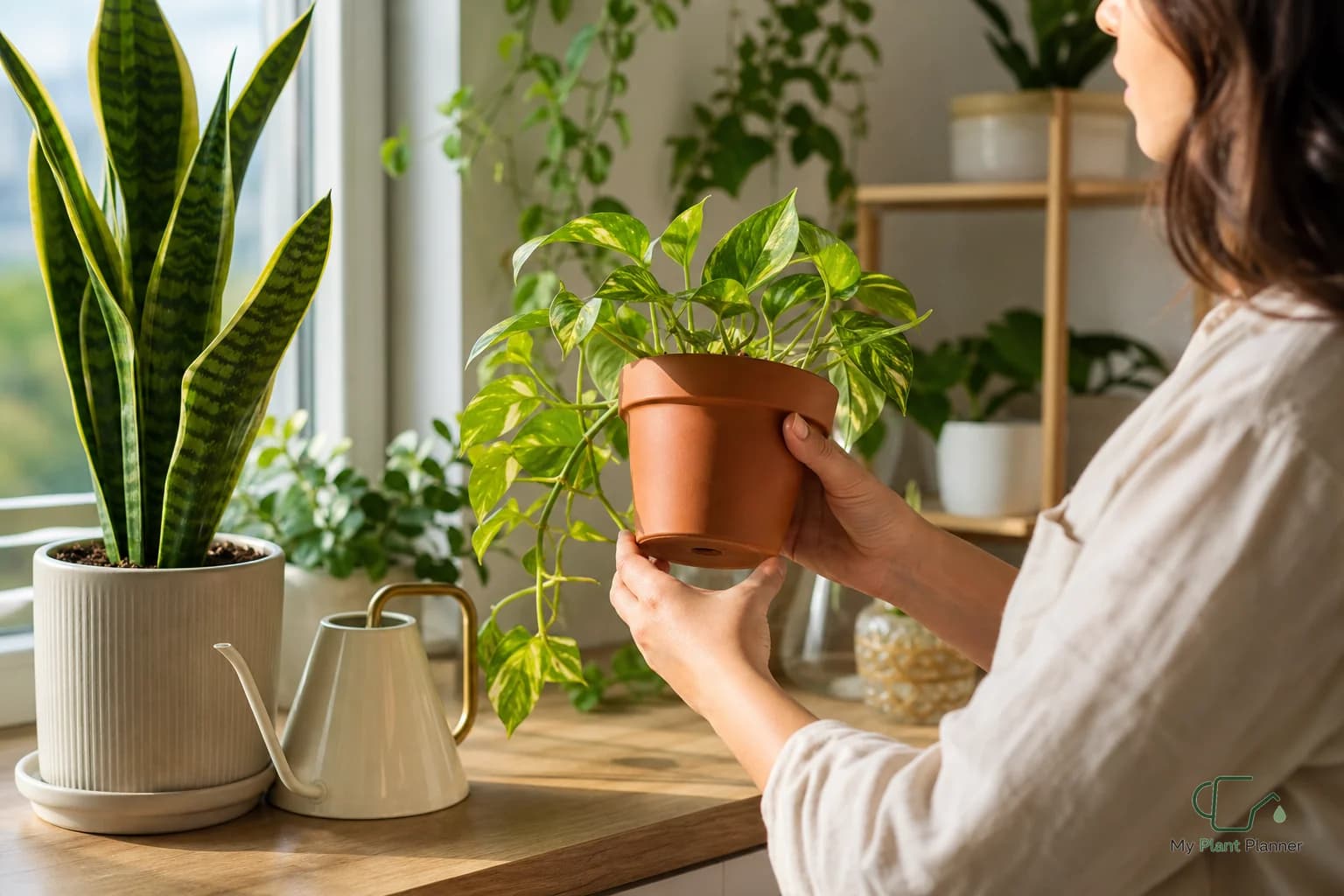
This is especially helpful for plants in nursery pots slipped inside decorative cover pots. Those outer pots can hide moisture problems. If water collects at the bottom, roots sit in a swamp while the top inch of soil looks harmless.
For most casual plant owners, the move is simple: check, lift, then water. Not the other way around.
Common Mistake
The mistake is treating “once a week” like plant care instead of a guess.
Weekly watering can work for some thirsty plants in bright light, especially during active growth. It can also quietly overwater a snake plant in a dim corner, a ZZ plant in a big pot, or a pothos sitting far from a window.
That autopilot habit is the thing to stop: do not pour just because the calendar looks tidy. Let the pot prove it is ready.
What people get wrong is assuming consistency means using the same amount of water on the same day. Better consistency means checking the same signals each time.
A better routine:
- Check soil depth first.
- Lift the pot if you can.
- Look at the plant, but do not trust leaf droop by itself.
- Water thoroughly only when the plant is actually ready.
- Empty standing water from saucers or cachepots.
Skipping a watering can feel negligent. Pouring into already wet soil is usually worse.
From My Plant Planner
New on the site this week:
- How to tell if an indoor plant needs water: a practical checklist for reading soil, pot weight, leaves, light, pot size, and indoor conditions before watering.
- Why watering houseplants once a week is often too much: a useful reality check on weekly watering habits and why rooms, pots, soil, and seasons change the timing.
If you want a fast starting point, use My Plant Planner to find your next indoor plant watering check window in under 30 seconds: myplantplanner.com
Question of the Week
How do I know if my plant is overwatered or underwatered when the leaves look sad either way?
Start with the soil, not the leaves.
If the soil is still wet several inches down and the plant is drooping, yellowing, or getting mushy stems, overwatering is more likely. If the soil is dry to the right depth, the pot feels light, and the leaves are limp or curling without mushy stems, underwatering is more likely.
When in doubt, wait a day and check again. A thirsty plant usually handles one more day better than wet roots handle another unnecessary pour.
My Plant Planner gives general indoor plant-care guidance. Always check soil and plant condition before watering.