
Snake plants are often sold as nearly impossible to mess up. That is only half true. They can handle neglect better than many houseplants, but they do not handle soggy soil well.
The big mistake is treating a snake plant like a leafy tropical plant that wants a weekly drink. It usually does not. Indoors, your goal is not to water on a perfect calendar date. Your goal is to set a reasonable check window, test the soil, and only water when the plant is ready.
The plain-English answer
For most indoor snake plants, start by checking the soil every 2 to 4 weeks during the active growing season. In winter, low light, or cooler rooms, that check window may stretch closer to 4 to 6 weeks or longer.
That does not mean every snake plant should be watered exactly every 2, 4, or 6 weeks. It means those are good times to check.
Water when the soil is dry deep into the pot, not just dusty on top. Snake plants store water in their thick leaves and rhizomes, so they are built to wait. If you are unsure, waiting a few more days is usually safer than watering damp soil again.
When you do water, water thoroughly until moisture reaches the root zone, then let extra water drain away. Do not leave the pot sitting in a saucer of water.
What changes the watering window
A snake plant in bright indirect light usually dries faster than one across the room from a window. More light means the plant can use water more actively. Less light slows everything down.
Pot size matters too. A small pot can dry faster because there is less soil holding moisture. A large pot around a modest root system can stay wet for much longer, especially if the mix is dense.
Pot material also changes the pace. Terra cotta breathes and can dry faster. Glazed ceramic, plastic, and cachepots tend to hold moisture longer. If the decorative outer pot has no drainage, be extra careful. Water can collect at the bottom where you cannot see it.
Season matters indoors, even if your home feels stable. In summer, longer days and brighter windows can shorten the dry-down time. In winter, lower light and cooler rooms often slow it down. Heating systems can dry the air, but that does not always mean the soil is dry. Soil checks still win.
What people get wrong with snake plant watering
The first mistake is watering weekly because it sounds organized. A weekly routine is tidy for your calendar, but it can be rough on a snake plant if the soil has not dried.
The second mistake is checking only the top inch. The surface can look dry while the lower half of the pot is still damp. For snake plants, that lower moisture matters.
The third mistake is giving tiny sips. Small splashes can wet the top while leaving deeper roots dry, or they can keep the surface constantly damp without fully refreshing the pot. When the plant is actually ready, water the soil evenly and let it drain.
The fourth mistake is ignoring the pot. A snake plant in a nursery pot with drainage behaves very differently from one placed directly into a closed decorative container. Same plant, different risk.
Questions to ask before you water
Before watering, pause for a quick check. A snake plant does not need much drama. It just needs you to stop watering on autopilot.
Ask yourself:
- Is the soil dry several inches down?
- Does the pot feel noticeably lighter than it did after watering?
- Is the plant in bright indirect light, medium light, or low light?
- Is the room warm and active, or cool and dim?
- Is the pot small, large, terra cotta, plastic, glazed, or sitting inside a cachepot?
- Did I water recently, or has it actually had time to dry?
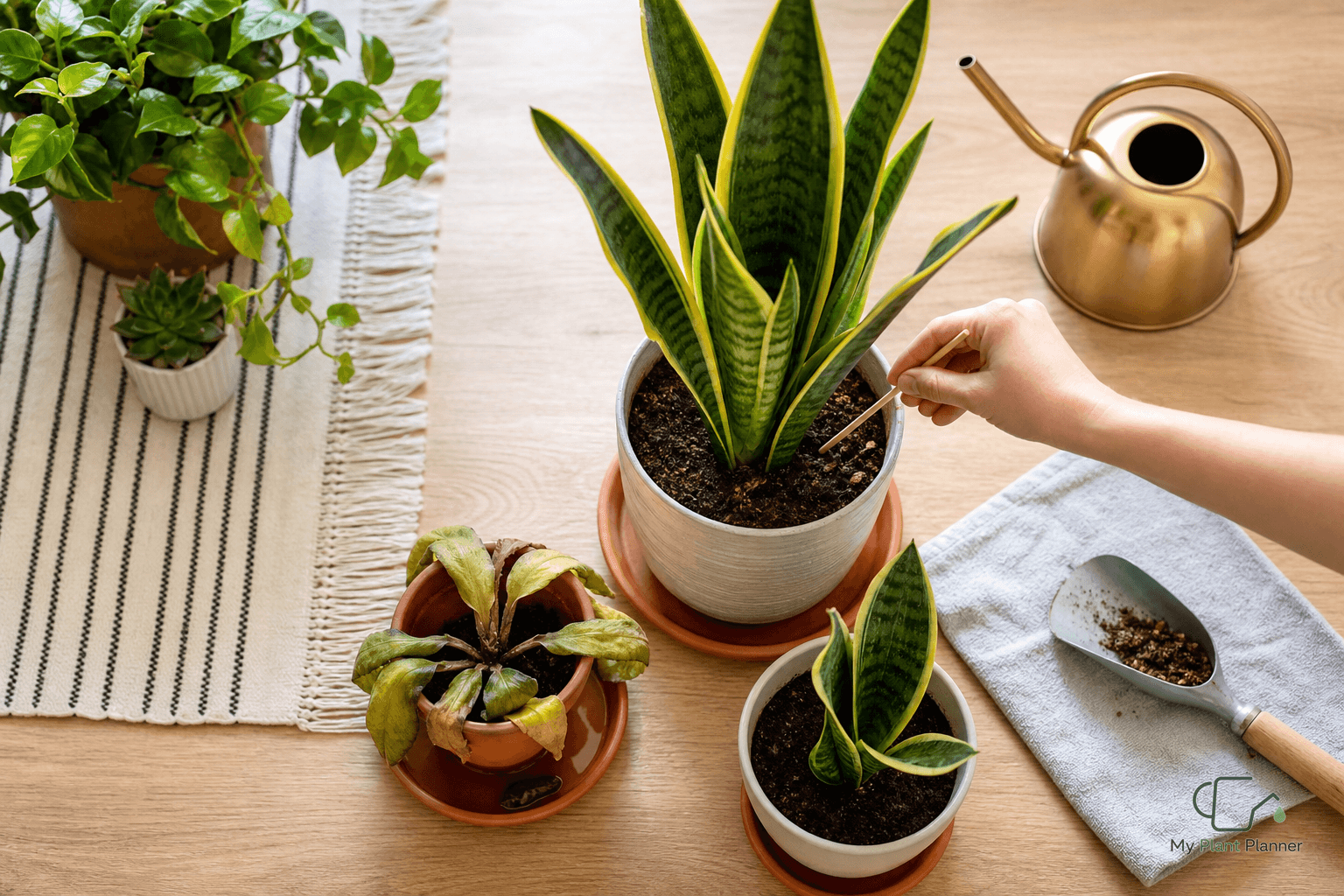
You can use a finger check, a wooden skewer, or the weight of the pot. A moisture meter can help, but do not treat one reading as law. Cheap meters can be inconsistent, especially in chunky or very dry mixes.
A simple snake plant watering checklist
Use this as a starting routine, then adjust after a couple of cycles.
- Start with a 2 to 4 week check window in spring and summer.
- Start with a 4 to 6 week check window in winter, low light, or cooler rooms.
- Check the soil below the surface before watering.
- Water only when the pot has dried well through the root zone.
- Water thoroughly when it is time, then let excess water drain.
- Empty the saucer or outer pot after watering.
- Shorten the check window if the plant is in bright light, a small pot, or terra cotta.
- Lengthen the check window if the plant is in low light, a large pot, dense soil, or a non-draining setup.
- Recheck your pattern after two watering cycles instead of changing everything after one weird week.
Signs your timing may need adjusting
If leaves start feeling very wrinkled, folded, or thin, the plant may be staying dry too long. That does not prove underwatering by itself, but it is a reason to check the soil and your recent watering pattern.
If leaves become mushy, yellowing, or soft near the base, the soil may be staying wet too long. Again, do not jump to one certain diagnosis from one symptom. Look at the whole setup: drainage, pot size, soil moisture, light, and how recently you watered.
Snake plants are slow responders. A watering change may take time to show. That is why a steady check window works better than panic watering.
A cautious closing note
A good snake plant watering plan is flexible. Start by checking every few weeks, confirm the soil is dry, water thoroughly when needed, and adjust based on your actual room.
Your plant does not care that it is Saturday. It cares whether the roots are sitting in wet soil or dry soil.
If you want a calmer starting point, try My Plant Planner to build a practical watering check window based on plant type, light, pot size, season, and indoor climate.
Practical note
This article is general indoor plant care information. Watering windows are starting points, not guarantees. Your plant, pot, soil, light, season, and home climate can all change the right timing.
My Plant Planner gives general indoor plant-care guidance. Always check soil and plant condition before watering.