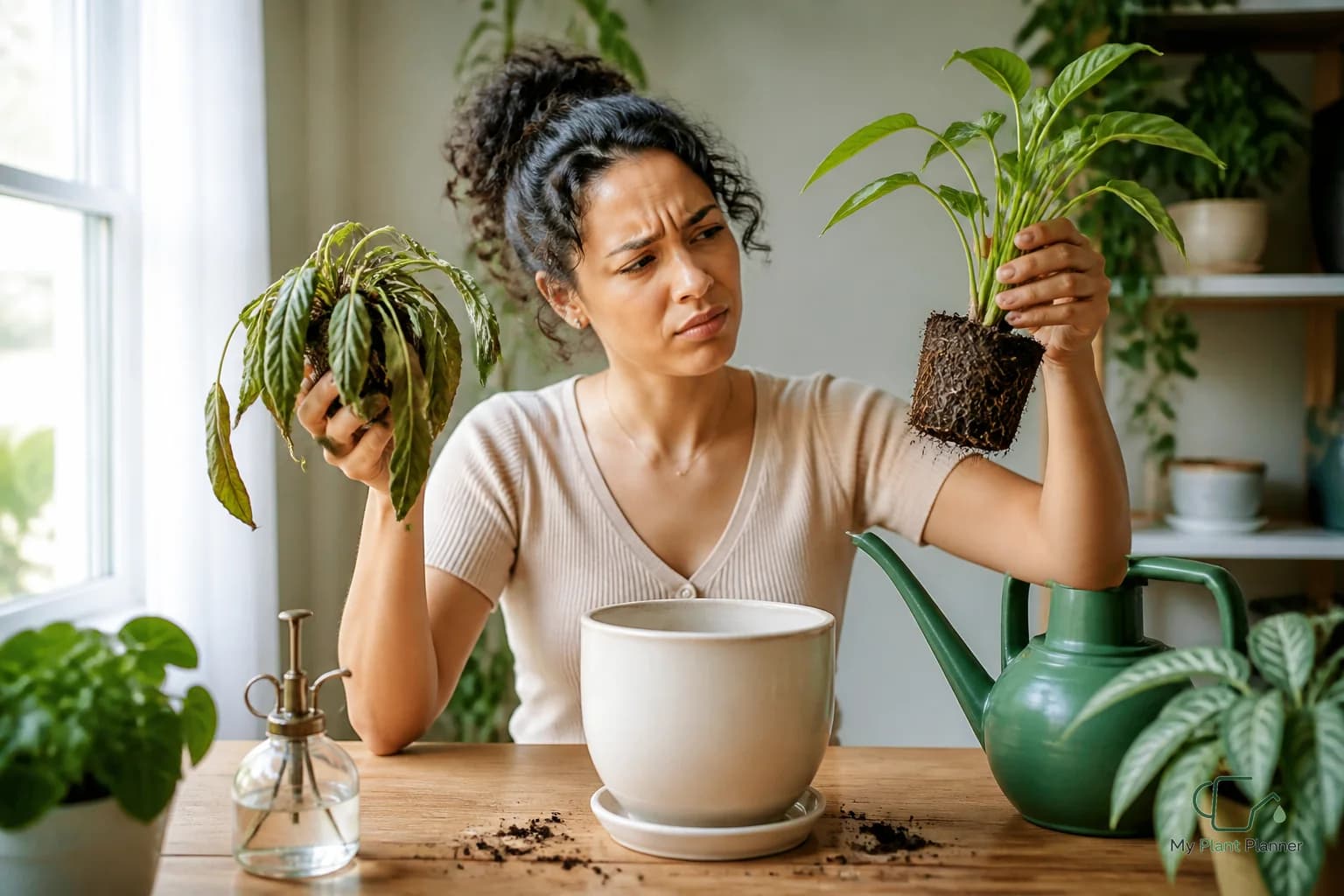
Two totally different watering problems can create the same tired looking houseplant. That is why guessing from leaf shape alone gets people into trouble.
A plant can droop because the soil is too dry. It can also droop because the soil has stayed wet long enough that the roots are not working well. Same room, same plant, same sad leaves, completely different next move.
Direct answer
Overwatering and underwatering look alike indoors because both can interrupt how water moves from the roots to the leaves.
With underwatering, the root zone does not have enough available moisture. Leaves lose firmness, stems may sag, and the pot often feels light.
With overwatering, the potting mix stays wet for too long. Roots need air as well as water. When the mix stays saturated, the plant may struggle to move water even though the pot is wet. That can also lead to drooping, soft leaves, yellowing, or a generally limp look.
So the better question is not, “Does this plant look thirsty?” It is, “What is happening in the pot?”
That shift saves a lot of plants from the classic panic watering loop.
The context that changes the answer
A watering decision needs more than a leaf check. Start with these factors.
Soil depth: The surface can dry while the lower root zone is still damp. This is common in deeper pots, dense potting mix, and cooler rooms.
Pot weight: A dry pot usually feels noticeably lighter than a recently watered one. Pot weight is not perfect, but it gives useful context that the top inch of soil cannot.
Drainage: A pot without a drainage hole, or a nursery pot sitting in a decorative cachepot with water at the bottom, can keep roots wet longer than expected.
Light level: Plants in bright indirect light usually use water faster than the same plant in a dim corner. Less light means slower growth and slower drying.
Plant type: A snake plant, ZZ plant, pothos, calathea, and peace lily do not want the same rhythm. Thick, water storing plants usually need longer dry periods. Thinner leaved tropical plants may need checks sooner, but still not constant wet soil.
Season and indoor climate: Air conditioning, heat, humidity, and short winter days all change how quickly the pot dries. A schedule that worked in July may be too much in January.
For a deeper look at symptom patterns, compare Overwatering signs in common houseplants with Underwatering signs in common houseplants.
Common mistakes that make the confusion worse
Watering every droop. Droop is a signal to inspect, not an automatic request for water. If the soil is already damp, watering again can make the plant look worse.
Trusting only the top layer of soil. The top can feel dry after a day or two while the lower pot stays wet. This is especially true in large pots.
Using the same schedule for every plant. Weekly watering sounds tidy. Plants do not care. A pothos near a bright window and a snake plant across the room should not be treated like twins.
Giving tiny sips. Small splashes can wet the surface without reaching the lower roots. Then the top looks cared for while the root ball dries unevenly.
Leaving water in the outer pot. If water collects below the nursery pot, the roots may sit in moisture long after you think watering is done.
Changing too many things at once. Moving the plant, repotting, trimming, fertilizing, and changing the watering rhythm in the same week makes it hard to learn what helped.
Questions to check before you water
Ask these before grabbing the watering can.
- When did you last water thoroughly?
- Does the pot feel light, heavy, or somewhere in between?
- Is the soil dry only on top, or dry deeper down too?
- Does the pot have a drainage hole?
- Is there standing water in a saucer or decorative pot?
- Is the plant in bright indirect light, low light, or direct sun?
- Is this a thick leaved plant that stores water, or a thinner leaved plant that wilts faster?
- Has the room changed recently because of heat, AC, humidity, or season?
- Did the plant improve after the last watering, or look worse?
The last question is underrated. If a plant perks up after watering and the pot was genuinely dry, underwatering may have been part of the issue. If it droops more after watering and the pot stays heavy for days, the problem may be too much moisture or poor drying conditions.
That still is not a guaranteed diagnosis. It is a smarter starting point.
Simple checklist for the next watering decision
Use this when the plant looks sad and you are not sure what to do.
- Check the soil below the surface with a finger, chopstick, or moisture meter.
- Lift the pot and notice whether it feels light or still heavy.
- Look for drainage holes and empty any standing water from saucers or cachepots.
- Match the plant type to the drying pattern. Succulent style plants usually wait longer.
- Consider the light level. Lower light usually means a longer check window.
- If the root zone is still damp, wait and check again later.
- If the root zone is dry enough for that plant, water thoroughly until excess drains out.
- Track what happens over the next couple of cycles before changing the routine again.
A check window is not a promise that the plant needs water on that day. It is a reminder to inspect the plant and pot conditions before deciding.
A cautious way to read the signs
If your plant looks limp, yellow, crispy, soft, or generally off, watering may be involved. It may not be the only factor. Light, potting mix, drainage, temperature, root stress, pests, disease, and normal aging can all change how a plant looks.
The safer move is to stop treating every sad leaf as a command. Check the soil deeper down. Feel the pot weight. Confirm drainage. Then adjust slowly after a couple of watering cycles.
If you want a starting check window based on plant type, light, pot size, season, and indoor climate, try My Plant Planner. It will not guarantee the exact day your plant needs water, but it can give you a practical place to start.
Practical note
This article is general indoor plant care information. Watering windows are starting points, not guarantees. Your plant, pot, soil, light, season, and home climate can all change the right timing.
My Plant Planner gives general indoor plant-care guidance. Always check soil and plant condition before watering.