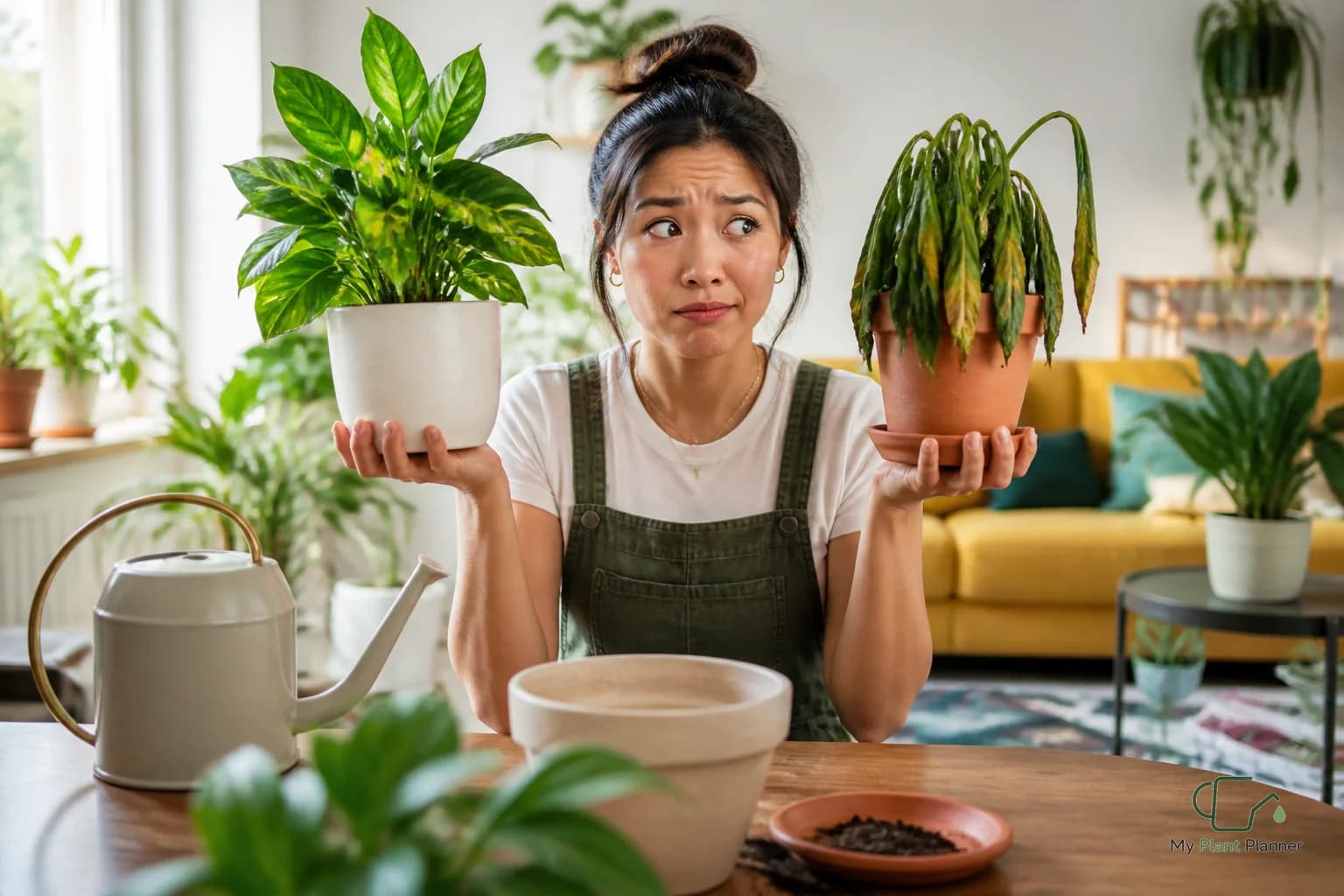
A houseplant can look dramatic for reasons that have nothing to do with needing water right now.
That is where a lot of plant owners get trapped. A leaf curls, droops, yellows, or feels soft, and the watering can comes out. Sometimes that helps. Sometimes it makes the pot wetter while the roots are already struggling for air.
Leaf symptoms are clues. They are not instructions.
That is why leaf symptoms alone can become bad advice: they tell you something changed, but not whether more water is the fix.
The direct answer
Do not decide to water an indoor plant from leaf symptoms alone. Use the leaves as a reason to check the plant, then confirm with soil moisture, pot weight, drainage, light level, pot size, and recent watering history.
A dry plant and a too wet plant can both look tired because both situations can reduce how well the plant moves water through its stems and leaves. The fix is different, so guessing gets expensive.
A better move is to build a small check routine:
- Look at the leaves.
- Feel the soil below the surface.
- Lift the pot if you can.
- Check whether the pot drains freely.
- Compare what you see to the plant type and room conditions.
If those checks point to dryness, water thoroughly and let extra water drain. If they point to wet soil, wait and improve airflow, light, or drainage before adding more.
For a broader walkthrough, see How to tell if an indoor plant needs water.
Why leaves can send mixed signals
Leaves are the part you notice first, but they are reacting to the whole system. That system includes roots, soil, pot, light, temperature, humidity, and the plant’s own storage habits.
A few examples:
- A snake plant can wrinkle when it has used stored water, but it can also soften if the roots sit wet too long.
- A pothos can droop when dry, but it may also droop in heavy wet soil with poor air around the roots.
- A peace lily often wilts when thirsty, but repeated rescue watering can keep the root zone too wet.
- A ZZ plant may look fine for a long time, then decline after a routine that was too frequent for its thick stems and low water use.
The tradeoff is simple: leaves give fast feedback, but soil and roots tell you whether water is actually the right next step.
The context factors that change the answer
Before you water because a leaf looks wrong, check these factors.
Soil moisture below the top layer
The top of the soil can dry while the lower pot stays damp. This is especially common in larger pots, dense mixes, decorative cachepots, and cooler rooms.
Use a finger, wood skewer, or moisture meter as a rough check. You are looking for a pattern, not a perfect reading. If the top inch is dry but the lower soil feels cool and damp, wait.
Pot weight
A pot that still feels heavy probably still holds water. A pot that feels noticeably lighter than it did after watering is giving you better information than one curled leaf.
This is not about turning plant care into a gym routine. It is about learning the weight difference between freshly watered, halfway dry, and ready to check again.
Drainage
If water cannot leave the pot, every watering decision gets riskier. A plant in a nursery pot inside a decorative pot can sit in runoff without you noticing.
After watering, empty collected water from saucers or outer pots. If the pot has no drainage hole, your check window should usually be more cautious.
Light level
Plants in brighter indirect light usually use water faster than plants across the room from a window. Lower light slows growth and water use, even if the plant looks healthy.
If you recently moved a plant to a dimmer spot, the old watering rhythm may now be too much. For more detail, read How light level changes your indoor plant watering schedule.
Plant type
Thick leaved and thick stemmed plants often want longer dry periods than thin leaved tropical plants. A cactus, aloe, snake plant, or ZZ plant should not be treated like a peace lily or calathea.
Same symptom, different plant, different watering response.
Common mistakes that make symptoms worse
The biggest mistake is treating every sad leaf as thirst.
A few others cause trouble fast:
- Watering again because the plant did not perk up within an hour.
- Adding small splashes every day instead of checking the root zone.
- Watering on the same weekday no matter what the room feels like.
- Ignoring a heavy pot because the top soil looks dry.
- Moving the plant, repotting it, fertilizing it, and watering it all at once.
- Assuming yellow leaves always mean overwatering or always mean underwatering.
Indoor plants do not need you to react to every leaf. They need you to change one variable at a time and watch what happens over the next couple of cycles.
Questions to ask before you water
When a plant looks off, ask these before you reach for the watering can:
- When did I last water this plant?
- Did water drain out last time?
- Is the lower soil dry, damp, or wet?
- Does the pot feel light or still heavy?
- Has the room become cooler, darker, or more humid?
- Is this a plant that stores water in thick leaves, stems, or rhizomes?
- Are only the oldest leaves changing, or is the whole plant collapsing?
- Did I recently repot, move, rotate, or bring the plant home?
You may not know every answer. That is fine. Even two or three of these checks are better than watering from panic.
A simple checklist for confusing leaf symptoms
Use this when a houseplant looks thirsty, tired, curled, or yellowing.
- Check the soil below the surface, not just the top.
- Lift the pot and compare the weight to how it feels after watering.
- Look for standing water in the saucer or decorative outer pot.
- Match the plant type to its water storage style.
- Consider light, season, heat, air conditioning, and humidity.
- If the soil is dry in the active root zone, water thoroughly and drain excess.
- If the soil is still damp or wet, wait and check again in a few days.
- Adjust your next check window after two or three watering cycles.
That last point matters. One watering decision is a snapshot. A watering plan is a pattern.
When to be cautious
If a plant is declining quickly, has a strong smell from the soil, mushy stems, or roots that look badly damaged when already exposed during repotting, be careful about adding more water. Those signs can point to a root zone that needs air and better drainage more than another drink.
Still, do not assume one symptom explains everything. Indoor plants can be stressed by watering, light, temperature swings, old soil, pot size, or a recent move. The safest path is to slow down, check the basics, and make the smallest sensible change first.
Build a check window instead of guessing from leaves
Leaves are worth watching. They are just not enough on their own.
Use them as the alert, then let the soil, pot, drainage, plant type, and room conditions decide whether water belongs in the pot today. After a couple of cycles, you will usually see the pattern more clearly.
If you want a practical starting point, use My Plant Planner to create a watering check window based on your plant type, light, pot size, season, and indoor climate.
Practical note
This article is general indoor plant care information. Watering windows are starting points, not guarantees. Your plant, pot, soil, light, season, and home climate can all change the right timing.
My Plant Planner gives general indoor plant-care guidance. Always check soil and plant condition before watering.