One heavy watering does not automatically doom a houseplant. Most common indoor plants can handle a mistake better than they can handle a messy reaction to the mistake.
The risky move is usually what happens next: the pot sits in extra water, the soil stays wet for days, the leaves look sad, and someone waters again because the plant looks thirsty. Or they panic and punish the plant with a long dry spell. Neither move is especially kind.
If you think you overwatered, slow down. Your job is not to force the plant back to normal overnight. Your job is to help the pot drain, let the root zone breathe again, and set the next watering check window based on what the soil actually does.
What to do first
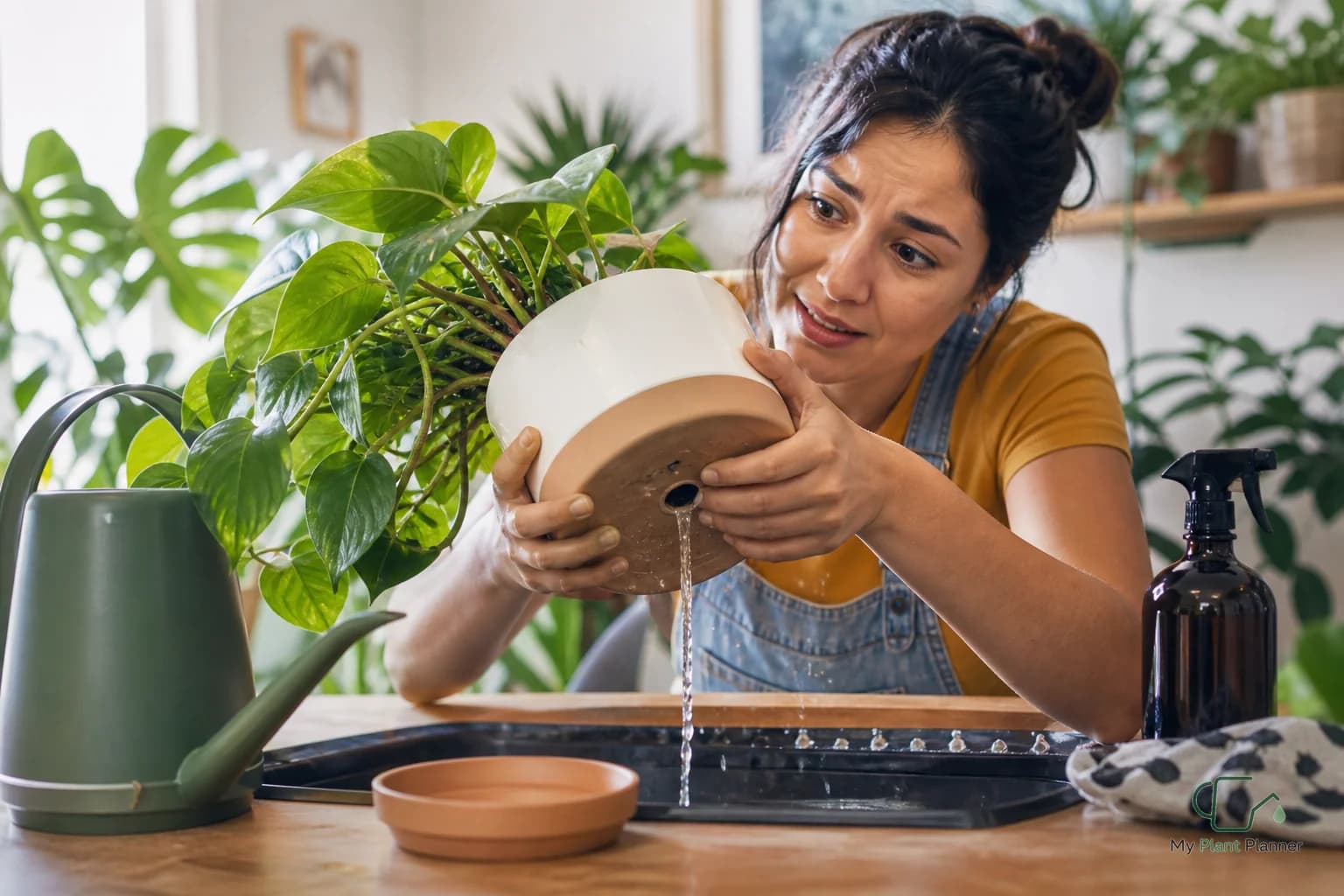
If you accidentally overwatered a houseplant indoors, pour off any standing water, make sure the pot can drain freely, skip the next automatic watering, and check the soil again after a few days. Do not water just because leaves droop, curl, yellow, or soften. Those signs can show up when roots are sitting too wet as well as when a plant is truly dry.
A safe first response looks like this:
- Empty the saucer or cachepot.
- Confirm water can leave through drainage holes.
- Move the plant back to its normal bright spot, if that spot is appropriate for the plant.
- Wait before watering again.
- Check deeper than the surface before deciding.
That last part matters. The top of the soil can dry while the middle of the pot is still damp. If you water from the top inch alone, you can keep the root zone wet for too long.
If the soil is still wet after several days, this guide pairs well with Why is my houseplant soil still wet after a week?.
Why one overwatering mistake can linger
Indoor pots dry slowly because they are not sitting in sun, wind, and outdoor airflow. A plant in a dim corner may use much less water than the same plant near a bright window. A large pot can hold a wet center long after the surface feels normal. Dense soil can stay damp even when the plant itself is not drinking much.
The biggest factors are:
- Plant type: Snake plants, ZZ plants, aloe, and many succulents prefer a longer dry period between watering checks. Peace lilies, calatheas, pothos, and philodendrons usually drink more often, but they still need air around the roots.
- Light level: More usable light usually means faster water use. Lower light slows the whole pot down.
- Pot size: Larger pots hold more water and dry more slowly, especially if the root ball is small.
- Drainage: A decorative outer pot with water sitting inside can turn a normal watering into a soggy root zone.
- Season: Many indoor plants use less water during cooler, darker months.
- Indoor climate: Heat, air conditioning, humidifiers, and dry rooms can all change the drying pattern.
That is why the fix is not a universal number of days. It is a better next check window.
What people get wrong after overwatering
The first mistake is watering again because the plant looks limp. Drooping does not always mean dry. When roots sit too wet, the plant can struggle to move water properly, so the leaves may still look thirsty.
The second mistake is switching from generous watering to neglect. A plant that sat wet for too long does not need to be forgotten for a month by default. It needs the soil checked at a calmer interval.
The third mistake is moving the plant into harsh direct sun to dry it out. More light can help a plant use water, but sudden hot sun can stress leaves, especially on plants used to bright indirect light or lower indoor light.
The fourth mistake is repotting immediately because the owner feels guilty. Repotting can help when the pot has no drainage, the soil is staying wet for too long, or the plant is in a much too large pot. But yanking a stressed plant apart just because you watered too much yesterday can add more stress. Watch the soil pattern first unless drainage is clearly the problem.
If the symptoms are confusing, compare them with Is your houseplant overwatered or underwatered before changing the whole routine.
Questions to ask before the next watering
Before you water again, ask better questions than whether it has been a week.
- Is there water sitting in the saucer, tray, or decorative outer pot?
- Does the pot feel much heavier than it does when the plant is ready for water?
- Is the soil damp below the surface, not just on top?
- Is the plant in bright indirect light, low light, or a dark corner?
- Is the pot much larger than the root ball?
- Does the pot have drainage holes?
- Is this a plant that prefers drying down, like a snake plant or ZZ plant?
- Is the season slowing growth and water use?
If several answers point toward slow drying, widen the next check window. If the soil dries quickly and the pot feels light again, you may not need a dramatic change.
A simple accidental overwatering checklist
Use this as a reset, not a punishment plan.
- Remove standing water from the saucer or outer pot.
- Check that drainage holes are open.
- Keep the plant in appropriate light for its type.
- Do not water again while the middle of the pot still feels damp.
- Check soil moisture below the surface, not just the top layer.
- Use pot weight as a second clue.
- Watch how long this pot actually takes to dry.
- Set the next watering check a few days later than your old habit if the pot stayed wet too long.
- After two or three cycles, adjust again based on the plant and room.
For example, if you were checking a pothos every 7 days and the soil stayed wet for most of that time, try checking around day 10 instead. If a snake plant in low light stayed damp for two weeks, its next check window may need to move much later. The point is not to copy those examples exactly. The point is to let the pot teach you.
When to be more cautious
Be extra careful if the plant is in a pot with no drainage, if the soil smells stale, if the pot remains heavy for a long time, or if the plant is in very low light. Those are signs that the setup may be keeping the root zone wet longer than the plant can comfortably handle.
Still, avoid declaring the plant doomed from one bad watering. Indoor watering is not a moral test. It is a feedback loop.
Drain what you can, wait longer than your impulse wants, check the soil below the surface, and adjust after a couple of cycles. That is how you get out of the soggy-to-dry swing without turning plant care into guesswork.
If you want a calmer starting point, use My Plant Planner to build a practical watering check window based on plant type, light, pot size, season, and indoor climate.
Practical note
This article is general indoor plant care information. Watering windows are starting points, not guarantees. Your plant, pot, soil, light, season, and home climate can all change the right timing.
My Plant Planner gives general indoor plant-care guidance. Always check soil and plant condition before watering.