A lot of houseplant advice sounds simple: stick your finger in the soil, and if the top inch is dry, water.
That rule is not useless. It is just too blunt for real homes.
The top layer of soil dries first. It gets the most air, the most heat, and the most exposure. The roots, though, are usually sitting lower in the pot. If that lower soil is still damp, watering again can keep the root zone wet longer than the plant wants.
That is how people accidentally overwater a plant while following advice that sounded careful.
The direct answer
A dry top inch means your houseplant is worth checking. It does not automatically mean it needs water.
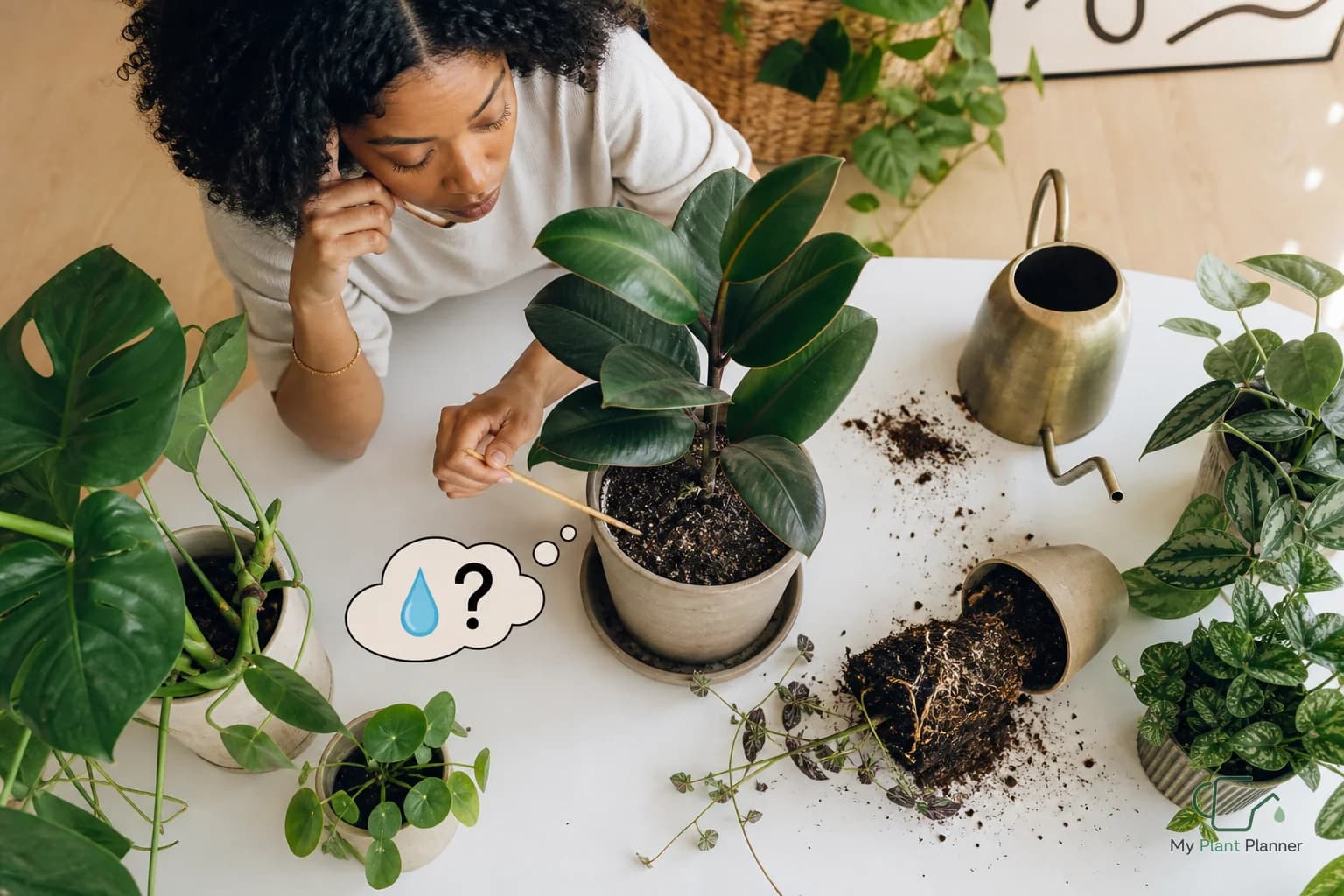
For many common indoor plants, the safer move is to check below the surface before watering. Push your finger deeper if the pot allows it, use a wooden skewer, or compare the pot weight to how it feels after a thorough watering. You are trying to answer one question: is the root zone drying, or is only the surface dry?
If the pot feels light and the soil is dry deeper down, watering is probably reasonable. If the top inch is dry but the pot still feels heavy, wait and check again soon.
This is especially important for larger pots, low light rooms, cool seasons, and plants that prefer to dry out more between waterings.
Why the surface dries faster than the roots
The top inch of soil lives in a different climate than the lower half of the pot.
Surface soil dries faster because it is exposed to:
- Room air
- Sun or bright window light
- Warm drafts
- Heating or air conditioning vents
- Dry indoor humidity
- Loose, airy potting mix at the surface
Meanwhile, the lower soil may stay damp because it has less airflow and more mass. A large pot can look dry on top while holding plenty of moisture underneath.
Pot size plays a big role here. A small nursery pot may dry evenly in a few days. A decorative floor pot may keep its lower soil damp much longer. If you want a deeper look at that tradeoff, read How pot size affects indoor plant watering frequency.
The plant type changes the meaning of dry soil
A dry surface means different things for different plants.
A snake plant, ZZ plant, rubber plant, aloe, or other drought tolerant houseplant usually does not need water the second the surface dries. These plants are more forgiving of waiting than sitting wet.
A peace lily, calathea, fern, or thin leaved tropical plant may ask for a shorter check window. Even then, the goal is not to keep the whole pot constantly wet. It is to avoid letting the root zone swing too far into dry stress.
Pothos, philodendrons, monstera, and spider plants often sit in the middle. They can handle some drying, but they may sulk if left dry too long, especially in bright light or small pots.
So the better question is not, “Is the top inch dry?” It is, “How dry should this plant get before I water again?”
Common mistakes with the top inch rule
The top inch rule causes trouble when people treat it like a trigger instead of a signal.
Mistake one: watering every time the surface looks pale. Potting mix can look dry before it is dry where the roots are.
Mistake two: using the same depth check for every pot. One inch is a lot in a tiny pot and almost nothing in a deep one.
Mistake three: ignoring light level. A plant in bright indirect light usually uses water faster than the same plant in a dim corner. The calendar does not know that. Your plant does.
Mistake four: checking right after repotting. Fresh soil in a larger pot can hold more moisture than the plant can use yet. That is one reason newly repotted plants are easy to overdo.
Mistake five: treating yellow leaves as proof the plant needs water. Yellowing can happen with watering problems in either direction, and it can have other causes too. If you are trying to sort out wet versus dry stress, Overwatering signs in common houseplants is a useful next read.
Questions to check before you water
Before you pour, pause for 20 seconds and ask:
- What kind of plant is this?
- Is it in bright light, medium light, or low light?
- Is the pot small, average, or oversized for the root ball?
- Does the pot have drainage holes?
- Is the room warm and dry, or cool and still?
- Is it actively growing, or is growth slow right now?
- Does the pot feel light compared with right after watering?
- Is the soil dry deeper down, not just on top?
You do not need a perfect answer to every question. You are looking for enough clues to avoid the two classic mistakes: watering a plant that is still damp underneath, or waiting so long that the whole root ball turns dry and hard.
A simple soil moisture checklist
Use this when the top inch feels dry:
- Check deeper than the surface if the pot is medium or large.
- Lift the pot if possible and notice whether it feels light or still heavy.
- Look for drainage holes and avoid watering pots that trap excess water.
- Match the decision to the plant type. Succulents and thick stemmed plants usually tolerate more drying.
- Consider light. Brighter light usually shortens the check window.
- Consider season. Many indoor plants use water more slowly during cooler, darker months.
- If you are unsure, wait a day or two and check again instead of panic watering.
- After watering, notice how many days it takes for the pot to feel lighter again.
That last point is where your real watering routine comes from. Not from a universal rule, but from watching how that specific plant dries in that specific room.
Set a check window, not a fixed watering day
A better version of “water when the top inch is dry” is “start checking around the time this plant usually begins to dry.”
For example, a pothos in bright indirect light and a small pot may be worth checking sooner than a snake plant in a large pot across the room. A peace lily in a warm, bright room may need a shorter check window than the same peace lily in winter.
The goal is not to predict an exact date. It is to build a practical check window, then adjust after a couple of cycles based on what the soil and pot weight tell you.
Be careful with one-rule plant care
The top inch rule became popular because it is easy to remember. The problem is that houseplants do not live in identical pots, rooms, seasons, or soil mixes.
Use the dry surface as a nudge to inspect, not an order to water. If the root zone is drying and the pot feels lighter, water thoroughly and let excess drain. If the lower soil is still damp, waiting is usually the safer choice.
For a starting check window based on your plant type, light, pot size, season, and indoor climate, try My Plant Planner. It will not replace checking the soil, but it can help you stop guessing from the surface alone.
Practical note
This article is general indoor plant care information. Watering windows are starting points, not guarantees. Your plant, pot, soil, light, season, and home climate can all change the right timing.
My Plant Planner gives general indoor plant-care guidance. Always check soil and plant condition before watering.