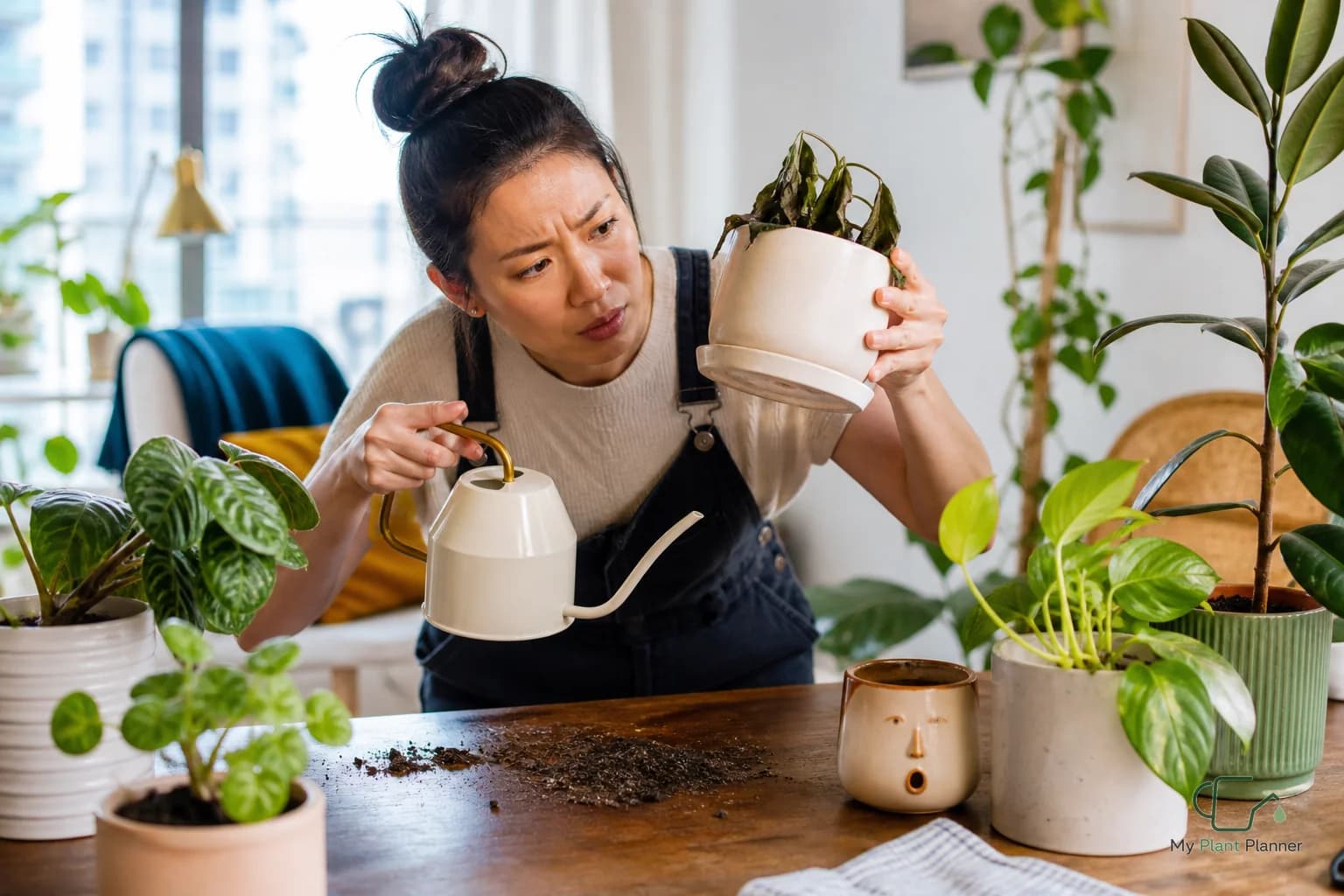
Missing one watering check does not ruin a houseplant. The bigger risk is what usually happens next: panic watering, overcorrecting, or assuming every dry looking leaf means the plant needs a drink right now.
A missed check is just a reset point. You are not trying to punish the plant for being dry or reward it with extra water. You are trying to figure out what the root zone is doing today.
The way to get back on track is to inspect first, then set the next check from what the soil, pot, and plant are actually showing.
The short answer
If you missed a houseplant watering check, do not automatically water. Check the soil below the surface, lift the pot if you can, look at the plant type, and make sure the pot can drain freely.
If the soil is dry farther down than that plant usually prefers, water thoroughly and let the excess drain. If the lower soil still feels damp, wait and check again in a few days.
That sounds almost too simple, but it prevents the classic indoor plant mess: one late check turns into one heavy watering, then the roots sit wet for too long, then the plant looks worse, then you water again.
Your goal is not an exact calendar date. It is a safer next check window.
What changes after a missed check
A missed check matters differently depending on the plant and the room.
A snake plant, ZZ plant, aloe, or other drought tolerant plant may not care much if you are late. These plants are built to handle longer dry periods, especially indoors. For them, the danger is often the apology watering afterward.
A peace lily, calathea, fern, or small pothos in bright light may react faster. Thin leaves, smaller pots, warm rooms, and brighter light can dry soil more quickly. These plants may need a closer look after a missed check, but still not blind watering.
A few context factors change the reset:
- Plant type: Succulent like plants usually tolerate dryness better than moisture loving tropicals.
- Light level: Brighter light usually means faster water use.
- Pot size: Small pots dry faster. Oversized pots can stay wet deep down even when the top looks dry.
- Drainage: A pot without a drainage hole makes recovery trickier because extra water has nowhere easy to go.
- Season: In cooler, darker months, soil can stay damp longer than expected.
- Indoor climate: Heat, air conditioning, fans, and dry air can all shorten the check window.
If pot size seems to be part of the confusion, read How pot size affects indoor plant watering frequency. It is one of the biggest reasons a schedule that sounds reasonable still fails in a real apartment.
Common mistakes after missing a watering check
The first mistake is watering every plant just because you feel late. Your pothos, monstera, ZZ plant, and calathea are not living the same life. They do not need one shared apology drink.
The second mistake is giving a tiny splash because you are nervous. If the plant actually needs water and the pot has drainage, a light surface splash may wet the top inch while leaving the root zone dry. That creates false confidence and a cranky plant.
The third mistake is soaking a pot that still feels heavy. Heavy pots often mean moisture is still hanging around lower in the soil. Adding more water can push a plant from mildly stressed into sitting wet.
The fourth mistake is judging only by leaves. Droop, curl, softness, and yellowing can show up from more than one watering problem. They can also show up from light changes, heat, cold drafts, old leaves, or root stress. Leaf clues are useful, but they should not be the only vote.
If you are trying to separate dry stress from wet stress, compare your observations with Underwatering signs in common houseplants and Overwatering signs in common houseplants.
Questions to check before you water
Ask these before you touch the watering can:
-
How far down is the soil dry?
Do not stop at the surface. Use a finger, chopstick, or moisture probe carefully. The top can dry while the lower soil is still damp. -
Does the pot feel light or heavy for this plant?
A light pot plus dry soil is a stronger water signal than dry surface soil alone. -
What kind of plant is it?
A dry snake plant and a dry peace lily do not have the same risk profile. -
Is the pot draining?
If water cannot escape, be more conservative. Standing water around roots is not a reset. It is a new problem. -
What changed indoors?
A hot week, open windows, a new grow light, or a move closer to a bright window can shorten the check window. -
Was the plant already struggling before you missed the check?
If it was already yellowing, drooping, or staying wet too long, the missed check may not be the main issue.
A simple reset checklist
Use this when you are late and unsure:
- Check soil moisture below the top layer.
- Lift the pot or tilt it gently to judge weight if possible.
- Confirm the pot has a drainage hole and no water sitting in the saucer.
- Match the decision to the plant type, not your guilt.
- If dry enough for that plant, water until excess drains out.
- Empty the saucer after drainage finishes.
- If still damp lower down, wait 2 to 4 days and check again.
- Write down what you found, not just the date.
- Set the next check window slightly sooner or later based on what happened.
That last step is where people get better. A watering plan is not a fixed command. It is a feedback loop.
How to set the next check window
After you reset, do not jump straight back to the old calendar if it was already unreliable.
If the plant was much drier than expected, shorten the next check window a little. For example, if you checked after 12 days and the plant was very dry, try checking around day 8 or 9 next time. Do not assume it needs water every 8 days forever. Just check sooner.
If the plant was still damp after a missed check, lengthen the window. That is common with larger pots, lower light, cool rooms, and slow drinking plants like ZZ plants and snake plants.
After two or three cycles, patterns start to show. You may learn that your pothos near the window needs checking much sooner than the same pothos across the room. That is normal. The room is part of the watering plan.
Move carefully, then adjust
A missed watering check is not a plant care disaster. The risky part is turning one missed check into a string of guesses.
Check the soil, respect the plant type, make sure water can drain, and adjust the next window based on what you actually found. That is how you get out of the overwatering and underwatering swing without making the plant your science project every morning.
If you want a calmer starting point, use My Plant Planner to build a practical watering check window based on your plant, light, pot size, season, and indoor conditions.
Practical note
This article is general indoor plant care information. Watering windows are starting points, not guarantees. Your plant, pot, soil, light, season, and home climate can all change the right timing.
My Plant Planner gives general indoor plant-care guidance. Always check soil and plant condition before watering.