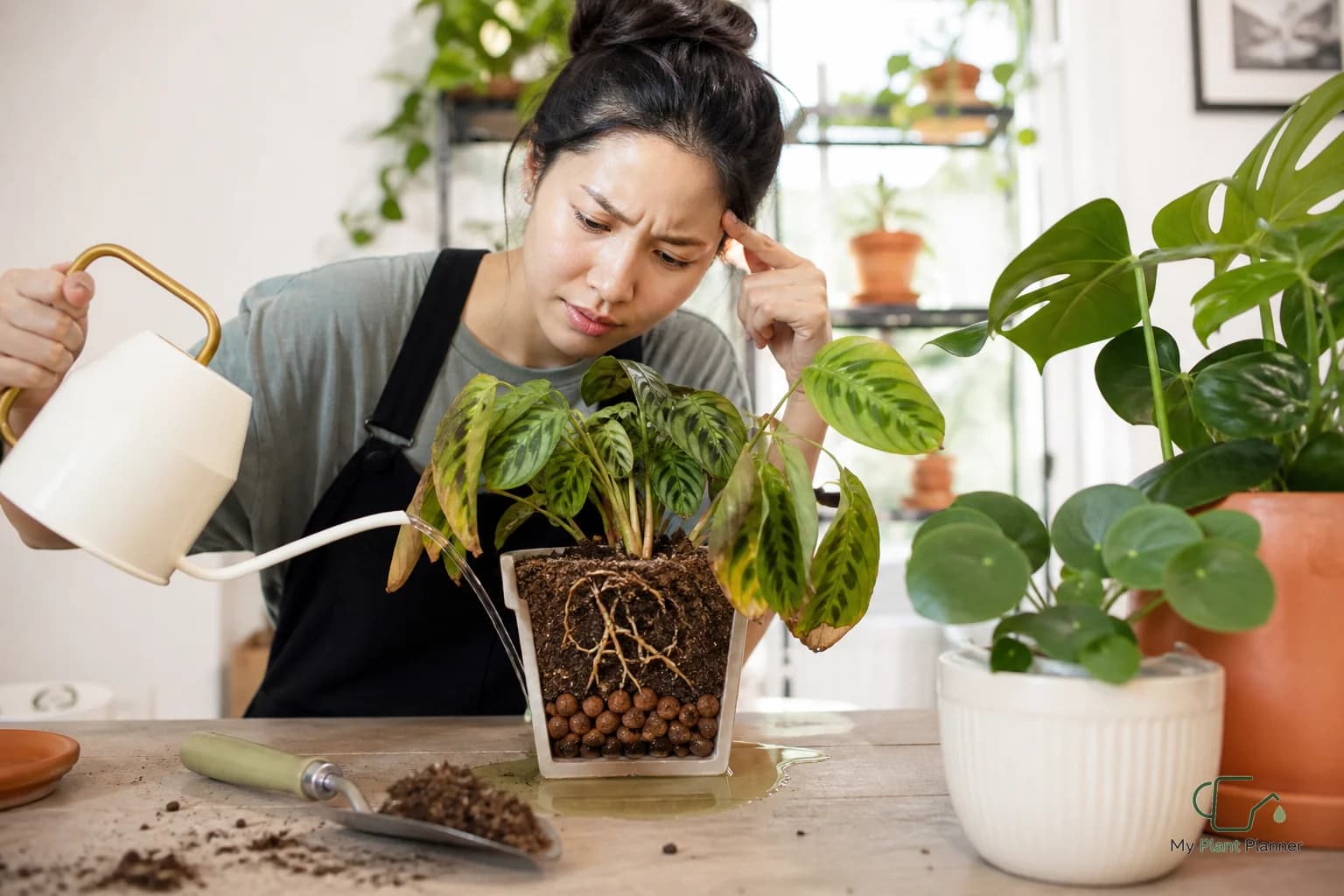
A struggling plant can make even calm people panic water. A leaf droops, a stem leans, the pot looks sad, and suddenly the watering can is in your hand.
That reaction is understandable. It is also where a lot of indoor plant trouble starts.
Watering is not a mood booster for plants. It only helps when the root zone is actually ready for more moisture. Before you add water to a plant that looks off, pause for one minute and check three things: soil depth, pot weight, and recent light.
The direct answer
Before watering a struggling houseplant, check whether the soil is dry below the surface, whether the pot feels lighter than it did after watering, and whether the plant has recently had less light, more heat, or a seasonal change.
If the soil is still damp below the top layer, the pot still feels heavy, or the plant has been sitting in lower light, watering may make the problem worse. If the soil is dry deeper down and the pot feels noticeably lighter, watering may be reasonable.
This is not about finding a perfect date. It is about choosing a better check window, then adjusting after a couple of cycles.
Check 1: soil depth, not just the top
The top of the soil lies all the time.
It can dry fast because it is exposed to air, while the lower root zone stays damp. That is especially common in deeper pots, dense potting mix, cachepots, and rooms with weak airflow.
For many common leafy houseplants, use your finger, a wooden chopstick, or a moisture meter as a rough check below the surface. You are trying to learn whether the root zone is still moist, not whether the top dusting of soil looks dry.
For drought tolerant plants like snake plants, ZZ plants, and aloe, the check should usually go deeper. These plants store water and often resent being watered just because the top inch dried out.
If you are not sure whether your symptoms point to too much or too little water, read Is your houseplant overwatered or underwatered for a broader comparison.
Check 2: pot weight
Pot weight is boring, which is why it works.
A watered pot feels heavier. As the plant uses water and moisture evaporates, the pot gets lighter. That weight change tells you more than a calendar reminder ever will.
After you water, pick up the pot if it is small enough to lift safely. Notice the weight. Then check again a few days later. You are building a feel for that specific plant in that specific room.
This is especially useful when the soil surface is confusing. A pot can look dry on top but still feel heavy because the lower mix is holding water. Or it can look fine on top but feel very light because the whole root zone has dried.
Pot size changes this whole rhythm. A large pot around a small root system can stay wet much longer than people expect. If that is your setup, this guide on How pot size affects indoor plant watering frequency is worth reading next.
Check 3: recent light and room changes
Plants do not drink on a fixed schedule. They drink based on conditions.
A plant in brighter indirect light usually uses water faster than the same plant in a dim corner. Warm rooms, active growth, small pots, and dry indoor air can shorten the time between checks. Low light, cool rooms, large pots, winter conditions, and humid air can stretch it out.
So before watering a struggling plant, ask what changed.
Did you move it away from a window? Did curtains stay closed during a hot week? Did air conditioning start running all day? Did the season shift? Did you repot into a larger pot?
A plant that looked fine in June may need a different check window by late August. A plant moved three feet from bright indirect light into a darker spot may slow down quickly. Same plant, different room, different water use.
Common mistakes that make struggling plants worse
The biggest mistake is treating every sad leaf like a thirst signal.
Drooping can happen when soil is too dry, but it can also happen when roots are sitting too wet and cannot function well. Yellowing, softness, curling, and limp growth can overlap too. Leaf symptoms are clues, not a verdict.
Another mistake is watering a little bit every time you feel nervous. Small nervous sips can keep the top layer damp while never giving you a clear wet to dry cycle. For many plants, that creates more confusion.
A third mistake is trusting a weekly schedule without checking the pot. Weekly watering may work for one plant in one bright room during active growth. It may be too much for a slow growing plant in low light or a large pot.
The last mistake is ignoring drainage. If water cannot leave the pot, your check window gets messy fast. Drainage holes and an empty saucer matter more than fancy watering tricks.
Questions to ask before you water
Use these when your plant looks off and you are tempted to act fast:
- Is the soil dry below the surface, or only dry on top?
- Does the pot feel lighter than it did after the last full watering?
- Has the plant been in lower light recently?
- Is the room cooler, darker, or more humid than usual?
- Is the pot much larger than the root system?
- Did the last watering drain freely from the bottom?
- Has the plant improved, declined, or stayed the same since the last watering?
If most answers point to damp soil and slow drying, wait and recheck. If most answers point to a dry root zone and a light pot, water thoroughly and let excess drain.
A simple pre watering checklist
Before you water a struggling houseplant:
- Check below the top layer of soil.
- Lift the pot or tilt it gently to judge weight.
- Look at recent light, temperature, and season changes.
- Make sure the pot has drainage.
- Empty standing water from the saucer or outer pot.
- Water only if the root zone is ready for that plant type.
- After watering, note how many days pass before the next good check.
Do this for two or three cycles and patterns start to show up. You may learn that your pothos wants checking sooner than expected, while your snake plant should be left alone much longer.
Start with evidence, then adjust
A struggling houseplant does not need panic. It needs a better read on the pot.
Soil depth tells you what is happening below the surface. Pot weight tells you whether the root zone has actually lost moisture. Recent light tells you whether the plant is likely using water quickly or slowly.
Those three checks will not diagnose every plant problem. They also will not guarantee an exact watering date. But they can stop you from pouring water onto a plant that needed time, drainage, brighter light, or simply a slower routine.
If you want help setting a practical starting check window by plant type, light, pot size, season, and indoor climate, try My Plant Planner: https://myplantplanner.com/?utm_source=mdx
Practical note
This article is general indoor plant care information. Watering windows are starting points, not guarantees. Your plant, pot, soil, light, season, and home climate can all change the right timing.
My Plant Planner gives general indoor plant-care guidance. Always check soil and plant condition before watering.